
From a ₹30 Brief To Nation’s Conscience: MK Gandhi’s Humble First Case in Court
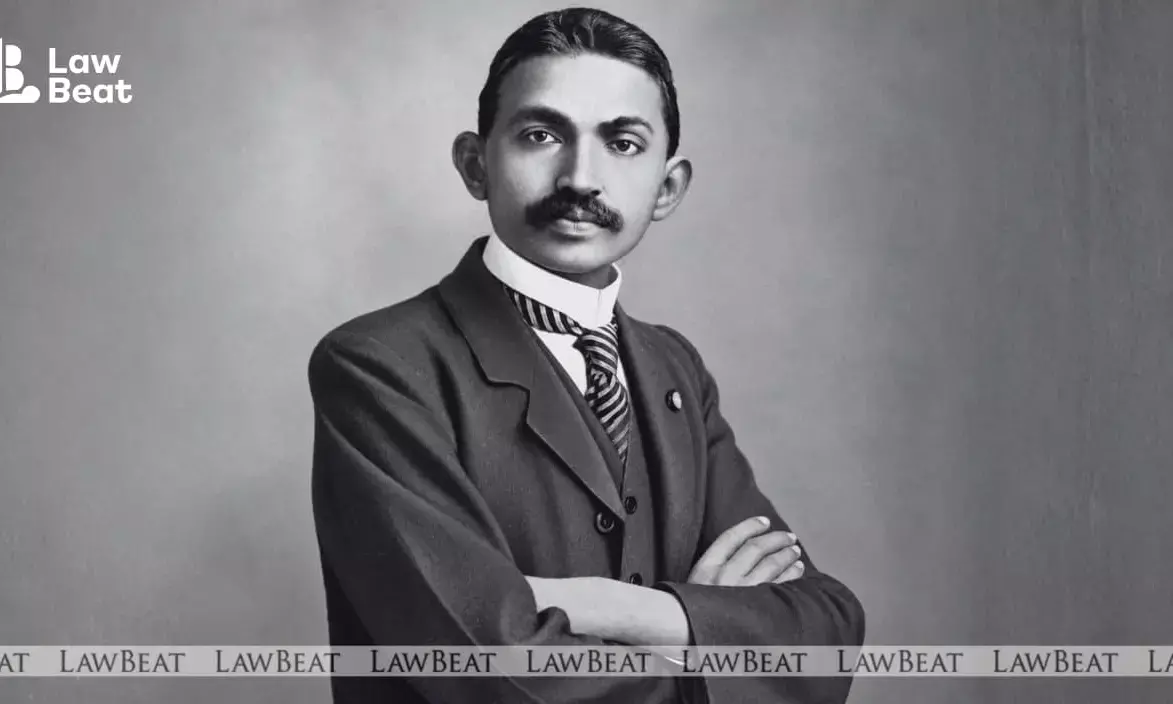
MK Gandhi's first courtroom experience was not a story of instant brilliance, but of failure which he acknowledged with full honesty.
Long before Mohandas Karamchand Gandhi became the "Mahatma" and one of the most influential figures of the freedom movement, he began his professional life as a young and deeply nervous lawyer struggling to find his voice in a Bombay courtroom.
After Gandhi returned to India in the 1890s, hoping to establish himself as a lawyer, he got his first case, a modest one — a claim on behalf of a client named Mamibai. The brief carried a fee of ₹30.
But when he stood up to cross-examine the opposing witness, he simply could not think of the questions he was expected to ask. Overcome by nervousness, he handed the brief to another lawyer, returned the fee to his client and left the court.
It was hardly the beginning one would associate with a man who would eventually lead a mass movement, challenge an empire and leave an enduring imprint on India’s constitutional and political imagination.
Gandhi's first courtroom experience was not a story of instant brilliance, but one of hesitation, self-doubt and failure — followed by the willingness to acknowledge it honestly.
For young lawyers, the first appearance before court can be intimidating. Gandhi's first case is therefore a reminder that professional journeys rarely begin with perfection.
Gandhi's autobiography repeatedly records his failures and shortcomings, making self-reflection an important part of his account of personal and professional growth. That quality remains relevant to the legal profession today.
Bharat Chugh, Founder, The Chambers of Bharat Chugh, has said this is a lovely little story from Gandhi’s early days at the Bar where he took a brief, got up to cross-examine, totally blanked out and froze completely, sat down dejected and returned the fee. "The lesson from this is clear: Know what you don’t know. Know when you are not ready. And have the integrity to say so. The profession could do with more of that self-awareness and humility. We need to have the moral courage and compass of Gandhi living-on in us. And, what’s particularly delightful is Gandhi doesn’t project this is a great moral virtue but simply something that was just and fair," Chugh added.
Contemporary courtrooms are increasingly complex. Lawyers deal with constitutional questions, rapidly evolving technology, artificial intelligence, digital evidence, commercial disputes and cases involving competing questions of individual rights and public interest. In these times, it is important to remember that advocacy is not merely about speaking forcefully. It also requires intellectual honesty and the ability to recognise when an argument has limitations.
Gandhi's ₹30 case offers an unusually human reminder of that distinction. He did not pretend that he had performed well. He did not manufacture confidence after the event. He returned the money and candidly recorded what happened.
At a time when professional success is often measured through visibility and the ability to command attention, Gandhi's first case offers a quieter lesson. His ₹30 brief did not produce a spectacular courtroom performance but an experience of failure that he remembered and recorded.
For today's lawyers, law students and young professionals entering courtrooms, that story can be a reminder that nervousness is not necessarily the opposite of competence, and that an unsuccessful beginning need not determine the course of a career.
Gandhi's first case ended with a young lawyer leaving the courtroom. His larger journey had only begun.