
Representation Of Women In Higher Judiciary
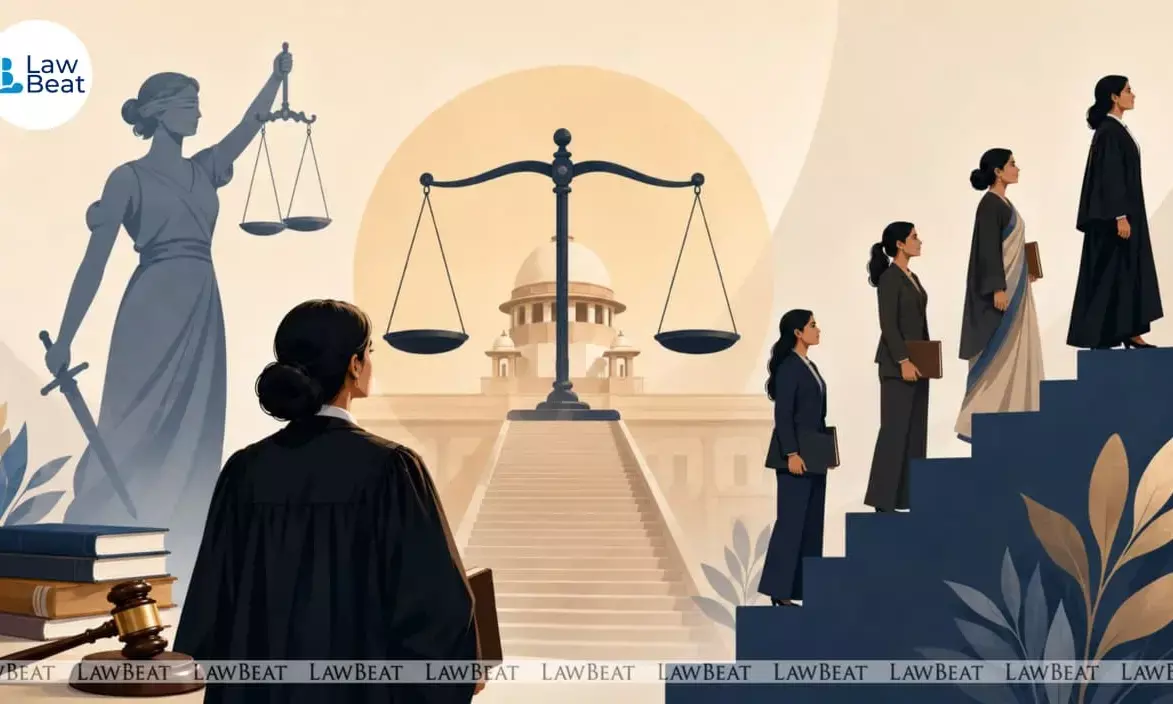
Women Representation in Indian Judiciary
When a common man faces injustice, he turns to the law. The law, which upholds the rights of every citizen, is interpreted by the judges. It wouldn’t be wrong to assume that the very system designed to interpret the law would ever let injustice befall upon a strata of the society. However, the results are inconsistent with this when we talk about the representation of women in the higher judiciary.
History:
Though the legal profession is centuries old, women were included in it just a century ago. In 1923, The Legal Practitioners (Women) Act officially enabled women to practice law in British India after decades of struggle led by pioneers like Cornelia Sorabji. In 1959, Justice Anna Chandy became the first female High Court judge in India, and the Commonwealth, and was appointed to the Kerala High Court. In 1989, Justice M. Fathima Beevi became the first female judge appointed to the Supreme Court, 39 years after its establishment. In1994, Justice Leila Seth made history by becoming the first female Chief Justice of a High Court (Himachal Pradesh).
Present Scenario:
As of 2026, 4 High Courts (Andhra Pradesh, Gujarat, Meghalaya, and Patna) have women Chief Justices. Out of 36 judges, the Supreme Court has only 2 sitting women judges: Justice B.V. Nagarathna, and the recently appointed Justice V. Mohana. Justice B.V. Nagarathna is set to become the first female Chief Justice of India in 2027. Her tenure will last only 36 days.
Constitutional Provisions:
The appointment of judges in High Courts and Supreme Courts is governed by Articles 124, 217 and 224 of the Constitution. These articles merely prescribe the procedure. None of them provide for reservation for women or any other class of citizens. The Ministry of Law and Justice, in its press release, urged the Collegium to make way for the minorities and women in the judiciary.
Challenges:
The question regarding women's representation in the higher judiciary is not only about the increase in numbers on the Bench, but also about ensuring that the institution is empowered to protect constitutional rights that reflect the society whose disputes are resolved.
The expected appointment of Justice B.V. Nagarathna as India's first woman Chief Justice in 2027 marks an important achievement in the judicial system. However, the fact that such a historic moment is occurring more than seventy-five years after independence reflects the slow pace of progress. A judiciary that reflects social diversity, inspires greater public confidence and strengthens the justice delivery system is running at a slow pace till now.
Even India's Constitution provides equality before the law under Article 14 and prohibits discrimination on the basis of sex under Article 15. But the composition of higher courts had historically remained male dominated. As of 2026, women constituted less than one-fifth of judges serving across India's High Courts, while only two women judges are serving at Supreme Court. These figures actually reveal a wide gap between constitutional reality and institutional bench.
In Secretary, Ministry of Defence v. Babita Puniya (2020), the Supreme Court rejected the stereotypes regarding women's capabilities by observing that constitutional equality cannot exist with institutional barriers based on outdated assumptions and sources. The principle is equally relevant in judicial appointments, but a striking reality is that women today are entering law schools in unmatched numbers. In several leading law schools, the females constitute nearly half of the student population. Yet their representation gradually declines in their careers. By the time of appointments to High Courts and the Supreme Court, the criteria of eligible women candidates significantly narrow. This phenomenon is often described as the 'leaky pipeline' in the legal profession. The historical record shows that the inclusion and increase in number of women in higher judiciary is at a slow pace of progress. It took the Supreme Court almost four decades after its establishment to appoint a woman judge, Justice M. Fathima Beevi being the first in 1989. Since then, only a few women have reached that position.
Another challenge is that the success in legal field often depends on mentorship, networking, and visibility before senior members of the Bar and Bench. However, these networks have been male-dominated, creating barriers for women advocates. The societal stereotypes like the legal field being associated with masculinity deprive women from their strength. Work-life balance, societal expectations regarding care giving responsibilities, and the absence of transparency in the appointments further contribute to under representation. Such factors collectively don't give women an opportunity.
Reforms and Future Roadmap:
If India's constitutional promise of equality is to be meaningfully realized, reforms must focus on creating a stronger and more powerful pathway for women from law schools to constitutional courts.
One encouraging development is to increase the recognition of diversity within the Collegium's system of appointment. Intentionally increasing the ratio of women's representation can help women to showcase their work in the higher judiciary. While merit must remain the primary focus, diversity should be viewed as an important component for an effective representation of women in the higher judiciary.
If there is transparency in appointments, the opportunities for women will increase. This will improve public confidence and encourage broader participation. Judicial institutions and bodies should also invest in mentorship programs, leadership opportunities, and professional support systems for the women advocates. The establishment of Bar Council quotas can guarantee the empowerment of women in legal aspects.
Gender-sensitive workplace policies, including childcare support and effective mechanisms against workplace harassment, can help talented women in the profession. Along with that, the general panel preference for strong and capable women's advocates might ensure the participation of capable women lawyers.
It is equally important to encourage women to pursue litigation and judicial careers through internships, scholarships, and academic support.