
Women’s Reservation and Delimitation: A Law in Force, A Right Deferred
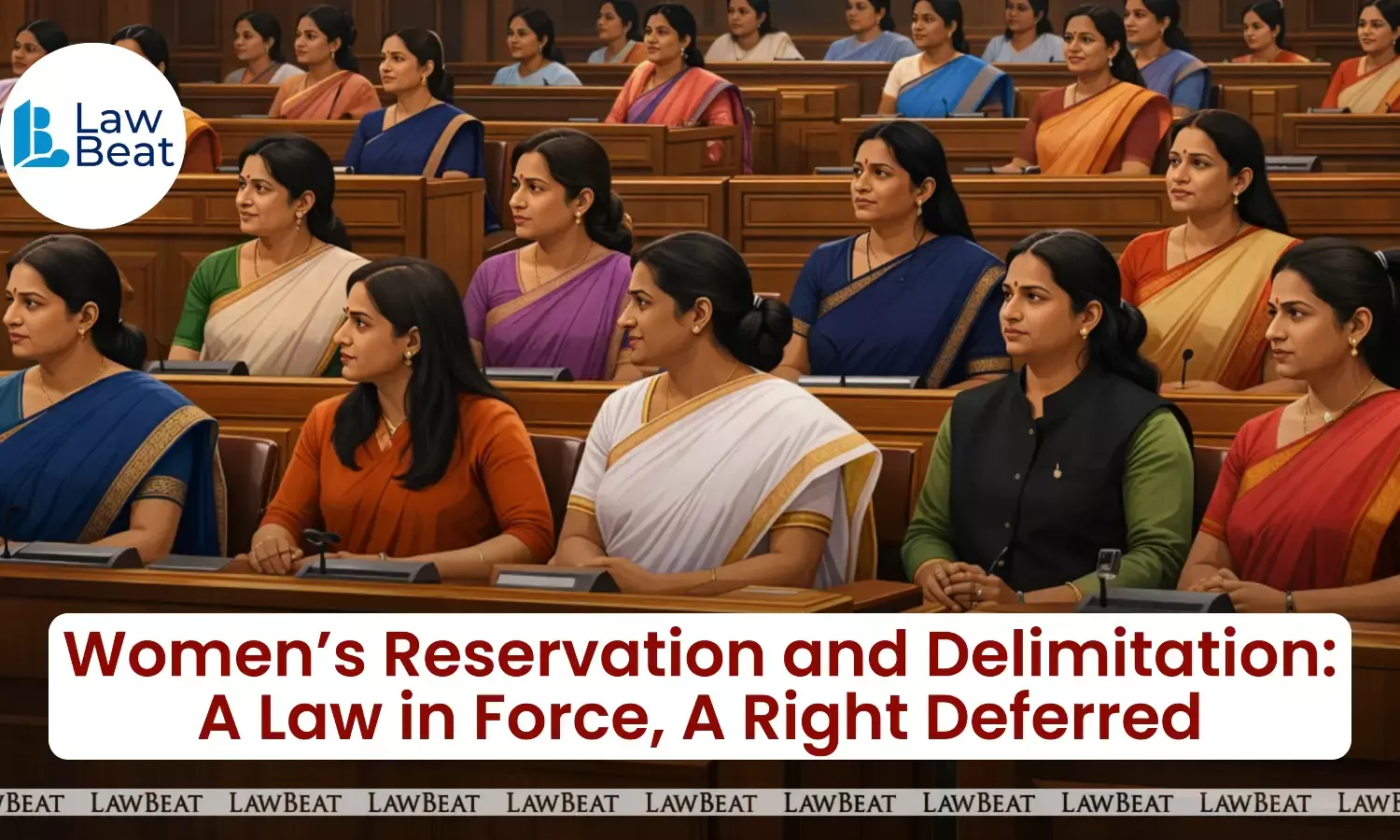
A constitutional mandate in place, but women’s reservation awaits delimitation to take effect
When Parliament passed the Constitution (106th Amendment) Act, 2023, it appeared to close a debate that had stretched for nearly three decades. One-third of seats in the Lok Sabha and State Assemblies would be reserved for women.
That much is settled. What remains unsettled is when this will actually take effect.
The confusion is not accidental, it flows from the structure of the law itself. The amendment creates a constitutional mandate, but makes its operation dependent on a future exercise. The result is a framework where the law exists, but its consequences do not yet.
Much of the current confusion stems from the impression that the requirement of delimitation is a recent addition or a subsequent delay. It is not. The linkage between reservation, Census, and delimitation was part of the amendment as passed in 2023.
What the Amendment Provides
The amendment inserts Articles 330A and 332A, extending reservation to women in the Lok Sabha and State Legislative Assemblies. It also amends Article 239AA to cover the Delhi Assembly. It mandates the reservation of one-third of seats for women, includes women within existing SC/ST quotas, and provides for a 15 year duration, subject to extension by Parliament.
At present, women make up roughly 15 percent of the Lok Sabha. The amendment, if implemented, would more than double that number. This is not a symbolic provision, it creates a binding constitutional requirement.
Why It Has Not Taken Effect
The amendment does not provide for immediate implementation, instead, it links reservation to two steps.
First, the publication of data from the next Census conducted after the amendment.
Second, a delimitation exercise based on that data.
Only after delimitation identifies which constituencies are to be reserved will the quota apply.
During the parliamentary debate, Union Home Minister Amit Shah stated that the reservation would be implemented after the Census is completed and delimitation is undertaken. The sequencing is not incidental, it is built into the law.
In legal terms, the amendment has come into force, but its operation is contingent.
The Role of Delimitation
Delimitation is the process of redrawing electoral constituencies to reflect population changes. It determines the number of seats assigned to each state, the boundaries of constituencies, and the allocation of reserved seats.
India has not undertaken a full redistribution of seats based on fresh population data since the 1970s. Through the 42nd Amendment and subsequent extensions, the allocation of seats was effectively frozen to ensure that states which controlled population growth were not penalised.
That freeze is set to end after 2026. The present amendment ties women’s reservation to this next round of delimitation, it also provides that reserved seats will be rotated after each such exercise.
The choice is deliberate. Reservation is to operate on a revised electoral map, not the existing one.
Delay by Design or Necessity
The controversy around the law stems from this linkage. India’s 2021 Census has been delayed, and there is no confirmed timeline for its completion. Delimitation, which must follow, requires the constitution of a Delimitation Commission and a detailed redrawing of constituencies.
Opposition members raised this concern in Parliament questioning the delay, arguing that linking the law to delimitation could push implementation years into the future.
The government’s position has been that delimitation is necessary to ensure a rational and uniform application of reservation. Law Minister Arjun Ram Meghwal stated that without such an exercise, implementation would lack consistency.
Both positions reflect the same reality. The timeline is uncertain.
The Federal Question
Delimitation is not a neutral exercise, it’s a fresh redistribution of seats based on current population data that is expected to alter the balance of representation between states.
States with slower population growth have expressed concern that they may see a relative reduction in their parliamentary weight. This has turned delimitation into a politically sensitive issue, with implications for federal balance because women’s reservation is tied to delimitation, the two questions are now inseparable. The implementation of one depends on the resolution of the other.
What the Law Guarantees
Three points are clear that the amendment has been enacted and is part of the Constitution, it has not been held back.
Reservation has not yet been implemented, because the conditions required for its operation have not been met. The linkage to delimitation is not a later addition, it is written into the amendment itself.
What the law creates, therefore, is a constitutional guarantee with deferred application. The right exists, but its exercise depends on the completion of institutional steps that have not yet begun.
The Larger Choice
The design of the amendment reflects a choice. Immediate implementation would have prioritised speed, applying reservation within the existing constituency framework. The present model prioritises structural alignment, ensuring that reservation operates within a freshly delimited system.
That choice carries consequences. It avoids inconsistencies, but introduces delay. It secures a framework, but postpones its effect.
Conclusion
The Women’s Reservation law marks a significant shift in India’s constitutional framework. For the first time, it mandates a fixed share of legislative representation for women.
But its impact lies ahead. The law is in force, but not in operation. The mandate is clear, but its execution is pending between the two stands delimitation, a process that is both necessary and contested.
Until that process is completed, the promise of one-third representation will remain constitutionally certain, but electorally absent.