
Dr. S. Jaishankar Calls For Predictable Legal Frameworks To Strengthen Global Trade At UNCITRAL Conference
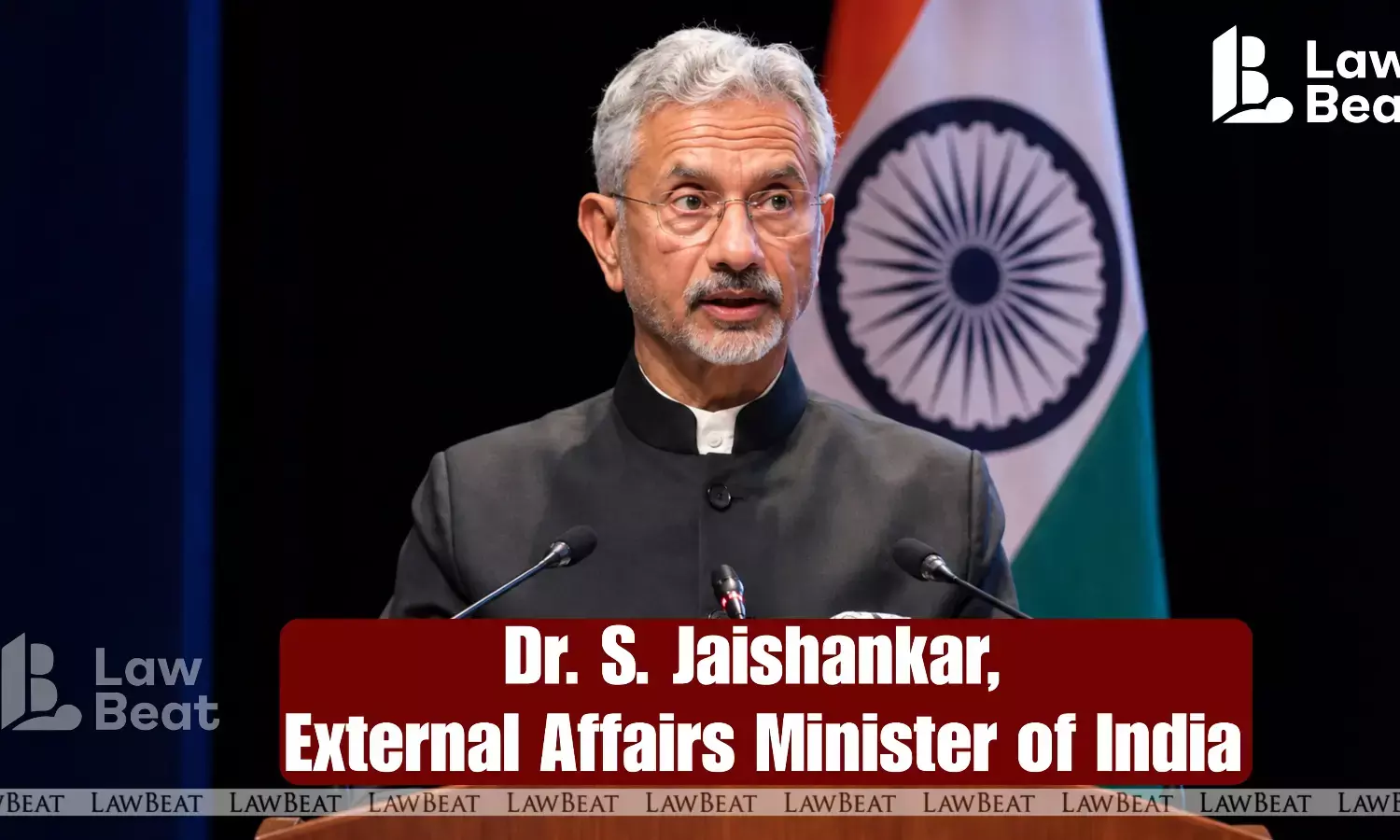
India Supports Rules-Based Global Trade Architecture, Says Jaishankar At UNCITRAL Meet
External Affairs Minister Dr. S. Jaishankar on Friday stressed the need for predictable and harmonised legal frameworks to support international trade, saying the world today requires legal certainty more than ever as geopolitical tensions, supply chain disruptions and rapid technological changes reshape the global economy.
Addressing the inaugural session of the International Conference commemorating the 60th anniversary of the United Nations Commission on International Trade Law (UNCITRAL), Jaishankar said international trade law must evolve to remain inclusive, democratic and responsive to the concerns of developing nations.
Welcoming delegates from across the world, the Minister described the conference as an important milestone marking six decades of UNCITRAL's contribution to international trade law. He said the Commission had emerged as one of the most successful institutions within the United Nations system by developing modern laws, conventions, legislative guides and legal standards that have significantly harmonised and modernised international commercial law.
Highlighting the changing global economic landscape, Jaishankar observed that technological innovation, digital commerce, evolving supply chains and new investment patterns have made UNCITRAL's work increasingly relevant. According to him, the Commission has consistently adapted to emerging realities while preserving the principles of inclusivity, consensus and respect for diverse legal traditions.
The Minister also underlined India's long-standing engagement with UNCITRAL, noting that the country remains one of only eight nations with continuous membership of the Commission. He said India has actively contributed to the development of international trade law over the years and has also incorporated several UNCITRAL principles into its domestic legal framework.
Referring to reforms undertaken in India, Jaishankar said successive changes in arbitration, commercial dispute resolution and insolvency laws reflect the country's commitment to creating a modern, transparent and internationally compatible legal environment. These reforms, he said, support India's broader vision of becoming a developed nation under the Viksit Bharat 2047 initiative.
"Achieving these objectives requires predictable legal frameworks that facilitate international trade, investment and commercial cooperation," Jaishankar said while emphasising that economic growth must be supported by stable legal systems capable of fostering investor confidence and cross-border business.
The External Affairs Minister reiterated India's support for UNCITRAL's consensus-based functioning and said the country's active participation across various working groups reflects its belief that international legal norms should be shaped through inclusive dialogue and broad participation. He added that countries of the Global South have an important stake in ensuring that the development of international trade law reflects their developmental priorities and practical realities.
Drawing attention to current global challenges, Jaishankar said the international community is witnessing unprecedented geopolitical volatility, disruptions in supply chains and rapid technological shifts that are transforming the movement of goods, services, capital and data across borders. These developments, he noted, expose governments and businesses to risks that no country can effectively address in isolation.
He observed that legal development cannot remain insulated from these changing realities. "What nations are seeking is not just infrastructure and connectivity, but most of all, legal predictability," Jaishankar said. He added that countries are looking for a harmonised, rules-based legal architecture capable of ensuring seamless trade, data flows and enforcement of commercial contracts across jurisdictions.
According to the Minister, harmonised legal frameworks, efficient dispute resolution mechanisms and greater certainty in cross-border transactions are essential for maintaining resilient global commerce during periods of uncertainty. He further remarked that as the global economic centre of gravity continues to shift, the legal architecture of the future must become "more democratic, inclusive, and sensitive to the realities of the Global South."
Expressing confidence in the conference, Jaishankar said the deliberations would generate fresh ideas, strengthen international partnerships and contribute meaningfully to UNCITRAL's future work. He also hoped the event would inspire greater participation from the region and encourage the next generation of legal scholars, jurists, practitioners and policymakers to contribute to the progressive development of international trade law.
Event Name: International Conference commemorating 60th anniversary of the United Nations Commission on International Trade Law
Event Date: July 24, 2026