
Were the Vedas Really Religious or Legal Texts? Solicitor General Tushar Mehta Says That's a Myth
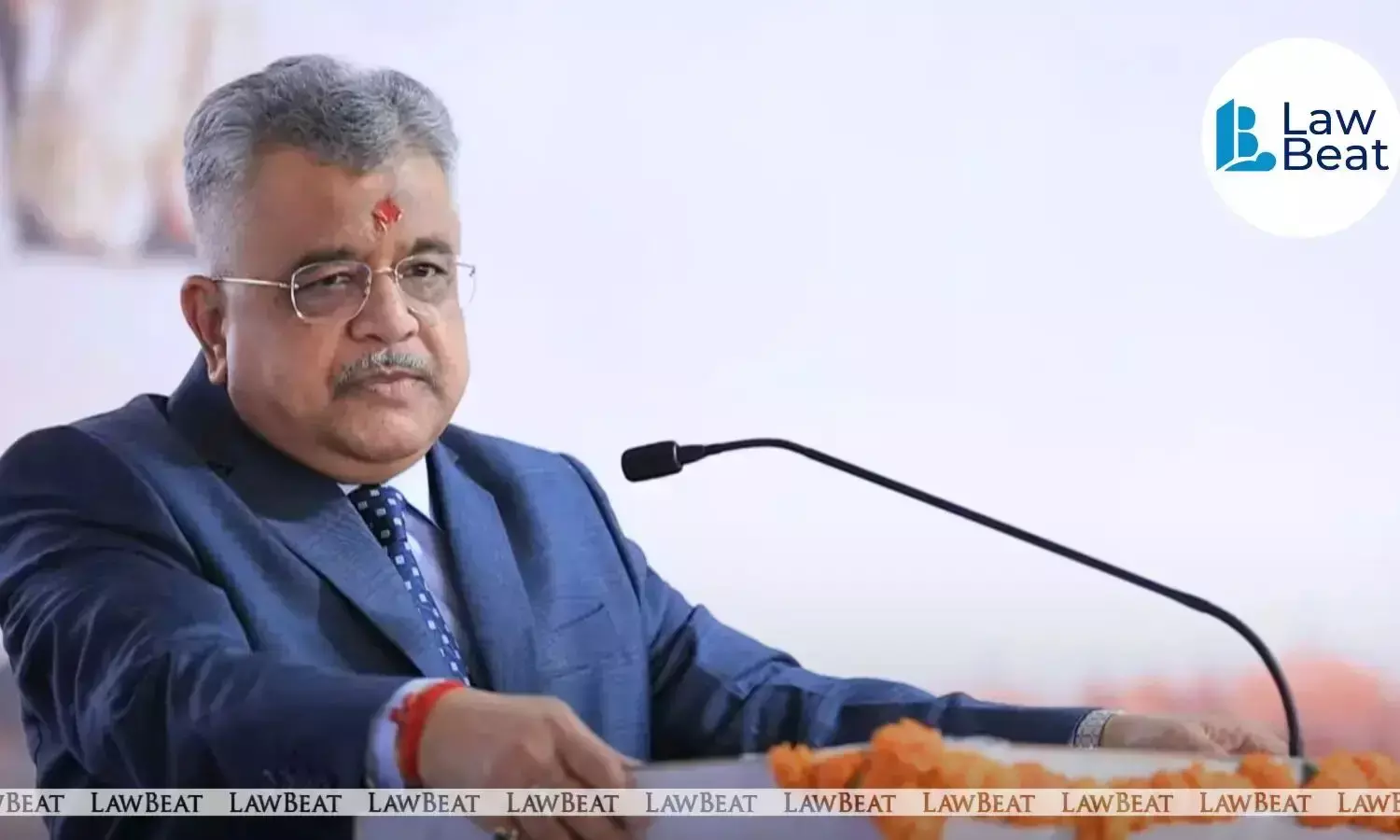
Solicitor General Tushar Mehta said the Vedas were never intended to be legal or religious texts but were guides on how human beings should live responsibly, adding that India's legal traditions later evolved through the Smritis.
Emphasising the need to debunk prevailing myths about India's legal history, Solicitor General Tushar Mehta stated that the Vedas, despite being the world's oldest written scriptures, had nothing to do with law or religion. Instead, he stated that they focused entirely on the way we live our lives as good human beings.
Delivering a lecture on "Ancient Wisdom and Legal Intelligence" on Saturday, SG Mehta highlighted that India is among the few countries in human history in which the law has developed systematically.
Addressing the audience, the Solicitor General observed that while Indians frequently express pride in their cultural heritage, it is often done merely out of habit rather than a deep understanding of historical facts.
"We repeatedly say that we are proud of India. We are proud of our cultural heritage. We are proud of our past. Many times we do it out of habit, because we have heard it long enough, but we do not really know that we must mean what we say" SG Mehta remarked, urging people to truly understand the history they take pride in.
Busting Myths About The Vedas
Tracing the origins of written text, SG Mehta noted that there is no dispute, even among non-believers, that the first written word in the world appeared in the form of the Vedas. However, he sought to clarify a major misconception surrounding them.
"There is a myth that Vedas constituted laws. That's a myth. Vedas had nothing to do with laws. Vedas had nothing to do with religion" he stated. Instead, he explained "Vedas had everything to do with the way in which we live our lives as good human beings, as responsible citizens, coexisting with nature, etc".
The Evolution of Law: Smritis and Shrutis
Detailing how ancient wisdom eventually transformed into legal texts, the Solicitor General drew a sharp contrast between India's ancient legal framework and that of Western nations.
"So America is just born 300 years before, and we are reverentially-most of us, not all of us, but many of us-reverentially follow what America does, what America says, and what America believes" he observed.
In contrast, SG Mehta pointed out that dating back to 700 AD and earlier, India had learned scholars in both law and religion who authored the Smritis and the Shrutis.
He described Smritis as written texts and commentaries authored by experts, based not only upon the Vedas but also on their own wisdom of life and thoughts on how society and citizens should be governed.
He further elaborated that the foundation of Hindu law rests on the Smritis, including authoritative works such as the Yajnavalkya, Manu, Narad, and Parasara Smritis, which he described as analytical commentaries composed by ancient legal scholars.
Praising the enduring relevance of these ancient legal commentators, SG Mehta concluded by saying that "the writers were geniuses of their own time, and they were contemporary. Even in the present scenario, present circumstances, present fact situation, they are equally as relevant as they were so many hundreds of years back".