
Article 22(1) | Written Grounds Of Arrest Not Given, But That Alone Won't Get You Bail: MP High Court
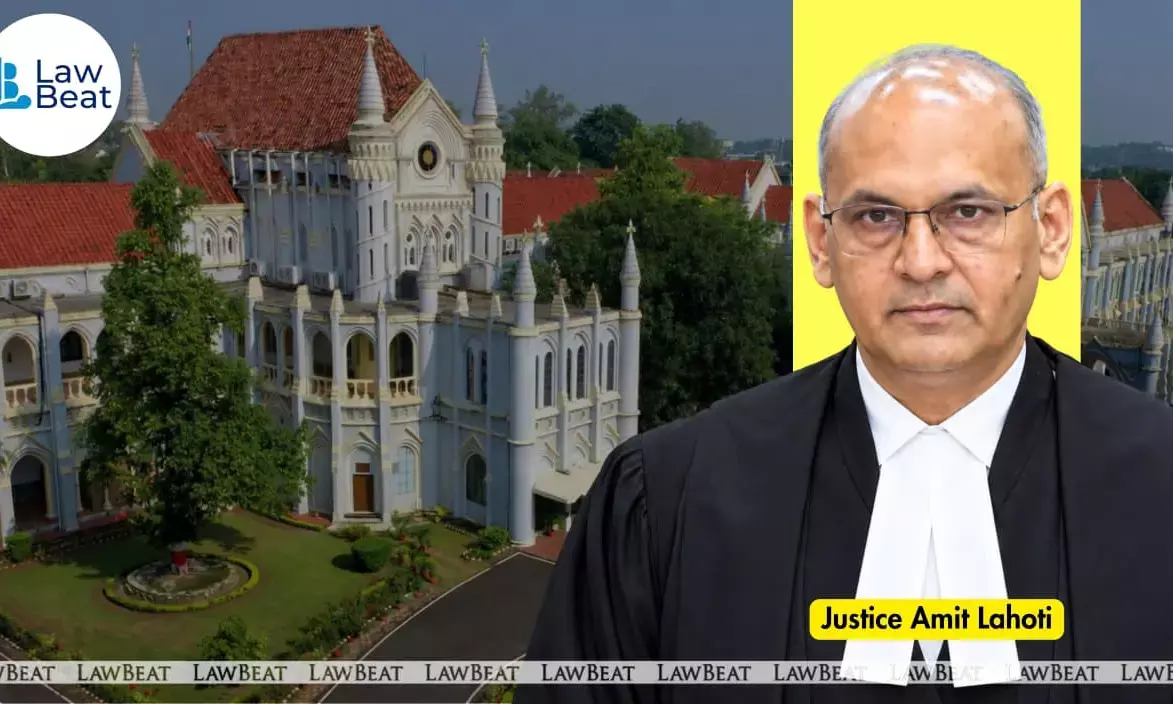
"Liberty Is Not Absolute," Says MP High Court, Denying Bail to Murder Accused
The Madhya Pradesh High Court has dismissed the first bail application of a man accused of murder, holding that even though the grounds of his arrest were not furnished to him in writing, this procedural lapse by itself would not entitle him to bail in the absence of any demonstrated prejudice.
Justice Amit Lahoti was dealing with a bail plea moved by applicant Raju Sonker, who has been in custody since January 22, 2026 in connection with a case registered under Sections 296(b), 109(1), 103(1) and 3(5) of the Bharatiya Nyaya Sanhita, 2023 (Section 294, 307, 302 and 34 of IPC), along with Section 25 of the Arms Act.
According to the prosecution, on January 20, 2026, the applicant and a co-accused confronted the deceased outside his house over a prior dispute. When the deceased protested after being verbally abused, the applicant allegedly caught him from behind while the co-accused pulled out a knife and stabbed him in the right armpit. When the complainant intervened, the co-accused allegedly attacked him too, injuring the fingers of his left hand. The deceased was first taken to Civil Hospital, Ranjhi, and later shifted to Hyderabad Omega Hospital, Jabalpur, where he was declared dead.
Appearing for the applicant, Senior Advocate Mrigendra Singh, along with Advocates Akbar Hussain Usmani and Guncha Rasool, argued that the fatal knife blow was attributed solely to the co-accused, that the eye-witness evidence had already been recorded, and that there was no longer any apprehension of witness tampering. It was further argued that the grounds of arrest were never communicated to the applicant in writing, either at the time of arrest or before he was produced for remand, in violation of Article 22(1) of the Constitution.
Reliance was placed on the Supreme Court's rulings in Prabir Purkaystha v. NCT of Delhi, Vihaan Kumar v. State of Haryana, and Mihir Rajesh Shah v. State of Maharashtra, the last of which held that failing to inform an arrested person of the grounds of arrest "would amount to the violation of his fundamental rights thereby curtailing his right to life and personal liberty under Article 21."
Government Advocate Naveen Thakur, appearing for the State, countered that the applicant had an active role in the offence and a criminal record of 25 prior cases. He submitted that the grounds of arrest were in fact orally communicated to the applicant, that his wife was informed, and that the investigating officer had placed the grounds before the remand Magistrate, none of which was objected to by the applicant at any stage, including before the trial court.
He relied on the Supreme Court's more recent ruling in State of Karnataka v. Sri Darshan, which held that a written-grounds lapse must be tested for actual prejudice, and on State of Meghalaya v. Sonal Raghuvanshi, which distinguished between non-service of grounds and non-furnishing of adequate reasons.
Advocates Hiimanshu Tiwari and Ankit Dubey appeared for the complainant.
Examining the record, Justice Lahoti found that the applicant had indeed not been supplied written grounds of arrest, calling this a violation of Article 22(1) as laid down in Mihir Rajesh Shah. However, applying the "prejudice test" from Sri Darshan, the Court noted that the applicant was legally represented from the outset, applied for bail shortly after arrest, and had never raised this objection at any earlier stage, showing no demonstrable prejudice.
"Though personal liberty is the cherished constitutional value... it is not absolute in the sense that liberty must yield where it poses a threat to the collective interest of the society," the Court observed, weighing the gravity of the charge under Section 103 of the BNS (Section 302 of IPC), the applicant's alleged active role in the killing, and his criminal antecedents.
Holding that the applicant did not deserve bail on merits either, given his active participation corroborated by medical evidence, the Court dismissed the application, leaving him to pursue his liberty only after the trial concludes.
Case Title: Raju Sonker vs. The State of Madhya Pradesh
Date of Order: September 18, 2026
Bench: Justice Amit Lahoti