
Ayush Malik Conversion Case: UP Police Files FIR Against 6 Persons Over Posts Claiming Allahabad HC 'Flogged' Police
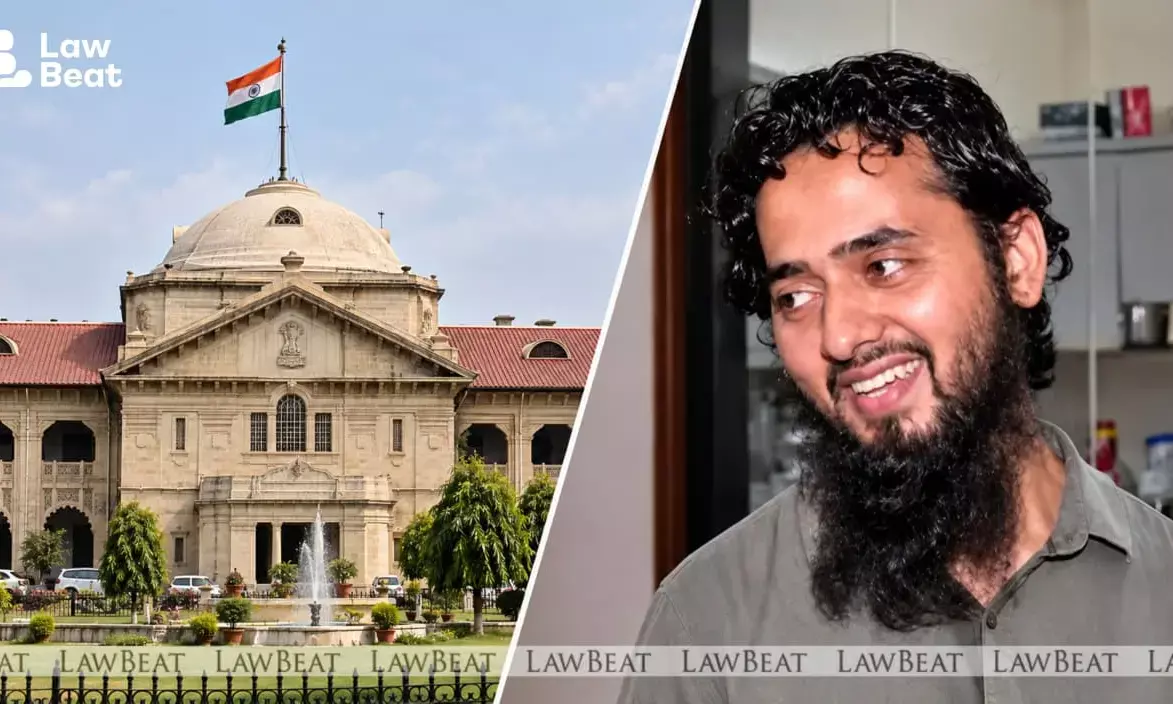
Uttar Pradesh’s Shamli Police have registered an FIR against five X handles and one Facebook profile for allegedly circulating “misleading and factually incorrect” information about the Allahabad High Court proceedings in the Ayush Malik case, claiming that the High Court had flogged the Shamli Police.
The police, however, have denied that the High Court reprimanded the force and said the social media posts distorted the Court's order.
According to the police, the FIR has been registered against X accounts associated with Karishma Aziz, Nikhat Ali, The Muslim, Wasim Akram Tyagi and Syed Kaif Hasan, and a Facebook profile operated by Nadeem Saifi.
The case has been registered under Section 353(2) of the Bharatiya Nyaya Sanhita (BNS). The police's action followed the Allahabad High Court's September 16 order in a habeas corpus petition concerning 31-year-old Ayush Malik, a Bachelor of Pharmacy graduate from Shamli.
What has Shamli Police said?
In a statement posted on its official X account, Shamli Police said that on June 6, 2026, Ayush's father Devraj Singh Malik had lodged an FIR at Kotwali Shamli alleging that Chandni Qureshi, her father and other family members had got his son converted to Islam for property-related reasons.
The police said Chandni Qureshi and her father Islam Qureshi were arrested and sent to jail on June 7, and were subsequently granted bail by the District and Sessions Judge, Shamli at Kairana, on July 24.
Thereafter, Ayush's friend Sultan Qari approached the Allahabad High Court on September 9, seeking Ayush's production before the Court, recording of his statement and his release so that he could live independently.
The High Court directed that Ayush be produced before it on September 16.
Shamli Police said that, in compliance with the order, Ayush and his father were produced before the High Court on September 16.
According to the police, after hearing both sides, the High Court granted Ayush freedom to move and reside wherever he wished.
The police statement said: "misleading news was being circulated on social media claiming that the Hon’ble Court had reprimanded the Shamli Police, which is misleading and factually incorrect”
The police further said that the High Court had not required any counter-affidavit or reply from the police and that no such affidavit had been filed.
“The Hon’ble Court had not required any counter-affidavit/reply to be filed on behalf of the police, nor had any counter-affidavit/reply been filed by the police” the police statement reads.
The police warned that persons who present the Court's order “तथ्यों के विपरीत” and circulate misleading or false information would be identified and legal action would be taken against them.
What The Allahabad High Court Actually Held?
The High Court's September 16 order arose from the habeas corpus petition filed by Ayush's friend Sultan.
On September 9, Justice Sandeep Jain had directed that Ayush be produced before the Court after the petition alleged that he was being illegally confined by his father following his decision to embrace Islam and marry Chandni Qureshi.
The Court had then observed that the allegations regarding his detention and involvement of State authorities were serious in nature and required immediate consideration.
When Ayush was produced before the Court on September 16, he stated that he had voluntarily embraced Islam and that his decision was not the result of threat, coercion, undue influence or inducement.
The Court observed: “A person who has attained majority is ordinarily entitled to determine his faith according to his own conscience. Such a choice, being an expression of individual autonomy and freedom of conscience, cannot be displaced merely because it is not acceptable to his family members.”
On the question of choosing a life partner, the Court said: “The choice of an adult as to whom he or she wishes to marry or with whom he or she wishes to establish a relationship is a matter of individual autonomy. The mere fact that such choice may be contrary to the wishes or expectations of the family cannot, by itself, furnish a legitimate basis for curtailing such choice.”
The Court also observed that the concern expressed by Ayush's father regarding his welfare was “understandable” in the context of the familial relationship, but such concern could not override the constitutionally protected autonomy of an adult competent to take decisions concerning his faith, residence and choice of life partner.
The Court ultimately found no lawful justification for continuing any restraint upon Ayush's personal liberty and set him at liberty to reside at a place of his choice, with a person of his choice, practise the religion of his choice and take a decision regarding his matrimonial relationship in accordance with law.
The habeas corpus petition was accordingly disposed of.