
Calcutta HC Rejects Abhishek Banerjee's Plea To Travel Abroad For Eye Treatment
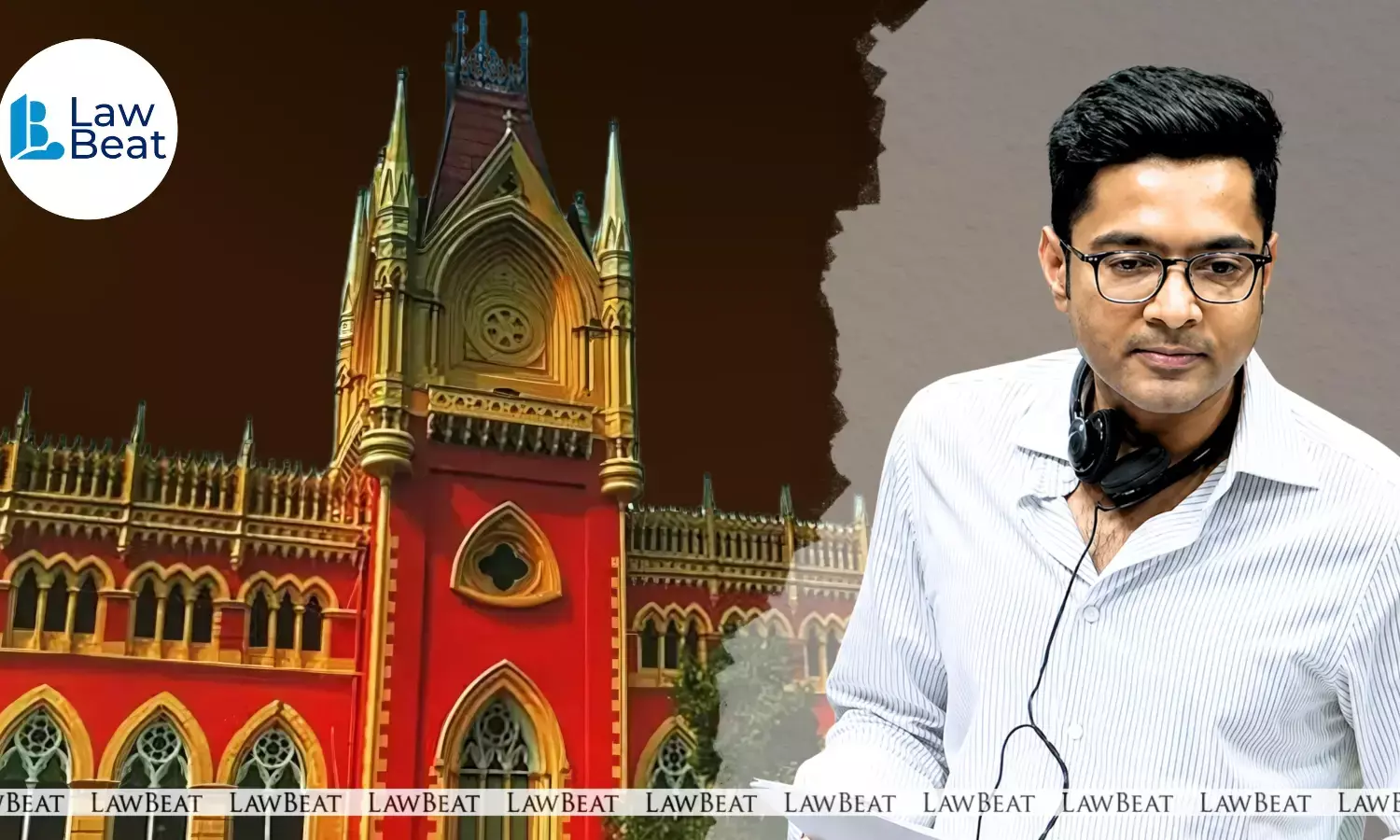
Abhishek Banerjee Can't Travel Abroad Without Court Permission: Calcutta HC Dismisses Plea
The Calcutta High Court on Wednesday dismissed Trinamool Congress MP Abhishek Banerjee's application seeking relaxation of a condition restraining him from travelling abroad without the Court's permission after he declined to appear before a medical board constituted to assess whether treatment outside India was medically necessary.
Justice Saugata Bhattacharyya had proposed that Banerjee be examined by a medical board headed by the Head of the Ophthalmology Department at IPGMER and SSKM Hospital, Kolkata, so that the Court could obtain an expert opinion on whether he required treatment abroad or whether adequate treatment could be administered in India.
The application was taken up in terms of the Supreme Court's order dated August 3, whereby the apex court requested the Calcutta High Court to hear and decide Banerjee's application within one week.
Banerjee had sought relaxation of the condition imposed by the High Court in May this year directing that he shall not travel abroad without the Court's leave.
He submitted that he had been cooperating with the investigating agency and required permission to travel abroad for about three weeks for continuation of treatment relating to his eye condition.
In support of his plea, reliance was placed on medical documents, including records from Johns Hopkins Medicine, as well as a 2023 Supreme Court order permitting him to travel abroad for treatment in another matter.
The State opposed the application, submitting that apart from the Bidhannagar Cyber Crime Police Station case in which the travel restriction had been imposed, around fifteen other criminal prosecutions had been registered against Banerjee, with several proceedings pending before different courts, including the High Court.
It also argued that the medical documents did not indicate any emergent situation requiring immediate overseas treatment.
The de facto complainant also opposed the plea, contending that one of the medical documents relied upon by Banerjee ought not to be given credence as the physician who issued it had not indicated his registration number.
While considering the request, the High Court observed that an independent medical opinion was necessary because neither the Court nor the counsel appearing in the matter possessed medical expertise.
“The Court is not medical expert neither learned Senior Advocate representing the applicant. At this stage what is important is treatment of the applicant, where it will be administered is immaterial” Justice Bhattacharyya observed.
The Court acknowledged the submission that it was the applicant's right to choose the doctor and medical establishment where he wished to undergo treatment. However, it held that it could not "brush aside" the prevailing circumstances, particularly the pendency of several criminal prosecutions and ongoing investigations against him.
It also distinguished the Supreme Court's 2023 order permitting Banerjee to travel abroad, observing that the present factual situation was materially different because multiple criminal proceedings were presently pending.
The Court was subsequently informed by Banerjee's senior counsel, on instructions, that he was unwilling to appear before the medical board scheduled at SSKM Hospital on August 6.
The Court observed that had he appeared, the medical board's opinion would have enabled it to determine whether treatment abroad was genuinely required.
Holding that the application ought not to remain pending in view of Banerjee's refusal to undergo the medical assessment, the Court dismissed the plea.
Background
The matter reached the Supreme Court after the Calcutta High Court had earlier declined to grant Banerjee immediate permission to travel abroad.
At that stage, the High Court had observed that his request would be considered only after SSKM Hospital assessed whether the required eye treatment could be provided in Kolkata.
Before the Supreme Court, Senior Advocate Gopal Sankaranarayanan, appearing for Banerjee, submitted that the High Court might take considerable time to decide the matter due to its heavy docket, stating that "1500 cases are there in the combined list."
Solicitor General Tushar Mehta, appearing for the State of West Bengal, suggested that the matter could instead be fixed for hearing on a specific date.
Accepting that course, a Bench comprising Chief Justice of India Surya Kant, Justice Joymalya Bagchi and Justice V. Mohana requested the Calcutta High Court to take a final call on Banerjee's application within one week, following which the matter was listed before the High Court and decided on Wednesday.
The restriction on Banerjee's foreign travel forms part of proceedings arising from his challenge to an FIR registered over his alleged remarks against BJP leaders and workers at a public meeting held on April 27 during the campaign for the second phase of the West Bengal Assembly elections.
Separately, the High Court has also been hearing Banerjee's plea seeking protection from multiple FIRs registered against him since May.
In those proceedings, the Court directed that no coercive steps be taken against him till the next hearing and called upon the police to place before it details of all FIRs registered against him.
Banerjee has contended that the multiple FIRs constitute a coordinated campaign against him, while the State has opposed the plea, arguing that unrelated FIRs cannot be challenged together in a single omnibus petition.