
Christian Woman Can't Seek Restitution Of Conjugal Rights Under HMA Against Hindu 'Husband': Madras HC
The Madras High Court has held that a Christian woman cannot invoke Section 9 of the Hindu Marriage Act, 1955 (HMA), to seek restitution of conjugal rights against a Hindu man whom she claims to be her husband, observing that the HMA applies to Hindus and marriages solemnised in accordance with the statutory requirements governing Hindu marriages.
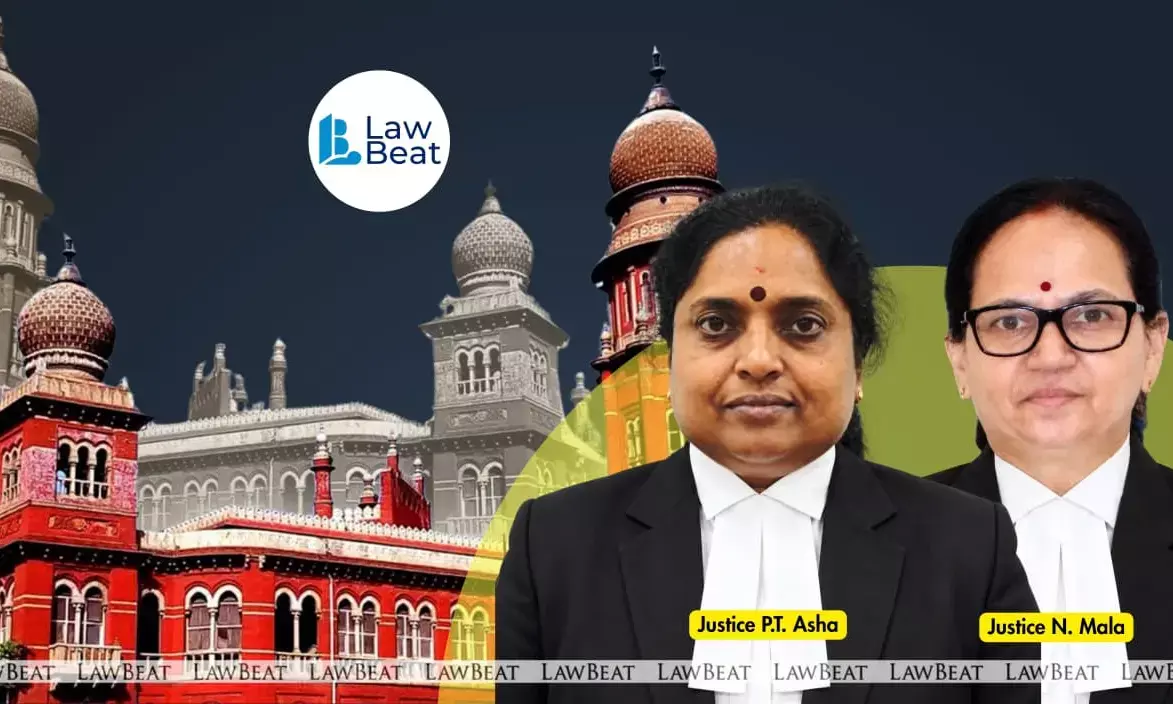
A Division Bench of Justice P.T. Asha and Justice N. Mala made the observation while dismissing a civil miscellaneous appeal filed by a woman challenging the Family Court, Villupuram's dismissal of her petition seeking restitution of conjugal rights.
What are the facts of the case?
The petitioner claimed that she married the respondent on July 10, 2008, according to Hindu rites and customs at a temple near Villupuram.
She claimed that after the marriage, they lived together for some time, but the respondent subjected her to cruelty, and that his mother and sister physically abused her.
She alleged that she was subsequently driven out of the matrimonial home and, despite several attempts to return, was unable to resume cohabitation with the respondent.
She therefore approached the Family Court seeking restitution of conjugal rights under Section 9 of the HMA.
The respondent/alleged husband denied the allegations, including the alleged relationship, pregnancy and marriage. He also contended that the petitioner was a Christian and therefore the alleged marriage could not be treated as a valid Hindu marriage under the HMA.
What did Family Court observe?
The Family Court examined the evidence and held that the petitioner had failed to establish the alleged marriage. It also found that the petitioner was a Christian by religion and that the marriage between the parties was not valid under the Hindu Marriage Act.
Consequently, the Family Court held that she was not entitled to seek restitution of conjugal rights or any other relief under the Act.
The High Court also agreed with these findings. The Bench noted that school records described the petitioner as a Christian belonging to the Adi Dravidar community.
Her own nephew had also testified that their family professed Christianity. On the basis of this documentary and oral evidence, the Court concluded that the petitioner was a Christian.
Counsel argues Section 9 uses 'Husband' and 'Wife'
Before the High Court, counsel for the petitioner/Woman advanced an argument based on the language of Section 9.
It was argued that Section 9 uses the expressions "husband" and "wife" without qualifying them as "Hindu husband" and "Hindu wife". Therefore, it was submitted that both parties need not necessarily be Hindus for a petition under Section 9 to be maintainable.
What did High Court observe?
The Bench rejected the argument, holding that Section 9 cannot be treated as a standalone provision.
The Court referred to the Preamble and Sections 2, 5, 7 and 9 of the Hindu Marriage Act to determine the overall scheme of the legislation. The Bench observed: "It is trite that in legal interpretation of statutes an independent provision of law cannot be read in isolation to the rest of the statute."
It held that the Preamble, related provisions and the overall scheme of the legislation must be considered while determining the true scope of an individual provision.
The Court noted that the Preamble describes the legislation as an Act to amend and codify the law relating to marriage among Hindus. Section 2 specifies the persons to whom the Act applies, while Section 5 provides that a Hindu marriage may be solemnised between "any two Hindus", subject to the statutory conditions.
'Husband' and 'Wife' in Section 9 cannot expand HMA: HC
The Bench specifically rejected the argument that the absence of the word "Hindu" before "husband" and "wife" in Section 9 means that the provision applies to non-Hindus.
It held that the use of common nouns in Section 9 cannot override the scheme of the Act. The Court observed: "Even though the common noun, 'husband' or 'wife' are employed in Section 9, we are of the view that the jurisdiction to invoke Section 9 is based on the satisfaction of the provisions of Sections 2, 5 and 7 of the Act."
The Bench further held that the provisions of the Act consistently contemplate marriage between persons covered by the statute and concluded: "Unless and until both the parties to a marriage belong to Hindu religion, it cannot be called as Hindu marriage and hence the Hindu Marriage Act shall not apply."
Therefore, it concluded that the marriage between the petitioner and the respondent was not a valid marriage as per the HMA as the petitioner/woman was a Christian.
The High Court relied upon its earlier Division Bench ruling in K. Shanmugha Raja @ Raja v. Shanthakumar, which had held that proceedings under the Hindu Marriage Act concerning a marriage between a Hindu and a Christian were not maintainable under the Act.
Ultimately, the Bench held that the petition filed by the Christian woman under Section 9 of the HMA was "per se not maintainable".
The Court therefore found no error in the Family Court's decision to reject her plea for restitution of conjugal rights. Her plea was dismissed.
Case Title: S.Rani v. Sampath
Date of Judgment: August 19, 2026
Bench: Justice P.T. Asha and Justice N. Mala