
'Dhruv Rathee On A Mission To Defame My Religious Feelings': Advocate Files Defamation Suit In Delhi Court Over Hindu Deities Video
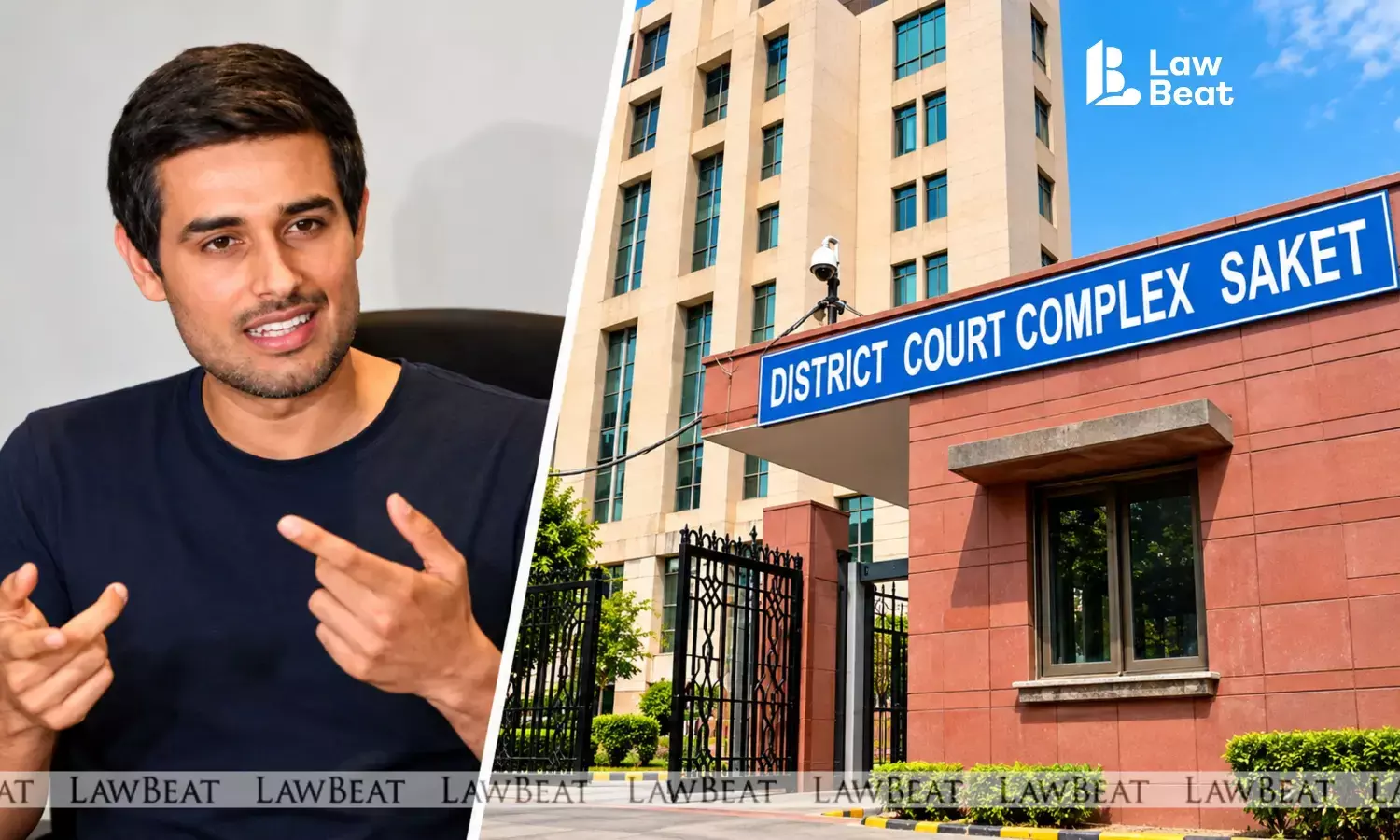
A Delhi court has heard a civil defamation suit filed by advocate Amita Sachdeva against YouTuber Dhruv Rathee over a video on Hindu deities. The matter is listed for November 5.
Plaintiff’s counsel submitted that if someone defames a deity, Lord Rama will not approach the court. Somebody will have to approach the court
A Delhi court today briefly heard submissions in a civil defamation suit filed by advocate Amita Sachdeva against YouTuber Dhruv Rathee over a video concerning Hindu deities, in which the plaintiff has sought a declaration, damages and other reliefs.
During the hearing, counsel for Sachdeva submitted that Rathee was allegedly "on a mission" to defame the plaintiffs' religious feelings and argued that the complained-of conduct could give rise to civil liability, apart from criminal consequences.
The hearing before District Judge Mohinder Virat also saw arguments on whether a person's religious identity could be protected as part of their legal character under Section 34 of the Specific Relief Act, 1963.
'My Religious Identity Is My Legal Character'
Counsel for Sachdeva argued that religious identity forms part of a person's legal character and that a civil court should examine the alleged defamation of religious sentiments.
" My religious identity is my legal character. This has to be tested " counsel submitted.
Drawing a comparison with professional reputation, counsel questioned why alleged defamation of religious identity should not also give rise to a civil claim.
" If my professional defamation is a part of my personality, my religious defamation, is it not a part of my personality? " counsel asked.
Counsel also submitted that the defendants had allegedly made it a mission to defame the religious feelings of the plaintiffs.
The court questioned whether the suit was effectively being pursued on behalf of society at large. Counsel responded that the plaintiffs were seeking to protect their own rights and religious identity.
During the hearing, counsel referred to Section 299 of the Bharatiya Nyaya Sanhita (BNS), which criminalises deliberate and malicious acts intended to outrage the religious feelings of any class of citizens by insulting their religion or religious beliefs.
Counsel argued that conduct alleged to constitute an offence under criminal law could also be examined as a civil wrong.
" If the conduct of the defendants is covered by Section 299, if the criminal law treats it as a wrong, I say that it is a civil wrong also " counsel submitted.
Acknowledging that the argument raised a new jurisprudential question, the counsel said the issue deserved judicial consideration even though no directly applicable precedent could be found.
"This is a new jurisprudential concept. I am quite conscious of that. But let it be tested" counsel said.
The plaintiff's counsel also referred to earlier proceedings before the Delhi High Court concerning the same video and submitted that the High Court had granted liberty to pursue appropriate legal remedies.
The court also referred to Section 34 of the Specific Relief Act, which allows a person claiming entitlement to a legal character or a right concerning property to seek a declaration against someone denying, or interested in denying, that entitlement.
The provision also restricts the grant of a mere declaration where the plaintiff is able to seek further relief but omits to do so.
The court sought clarity on the precise declaration sought by the plaintiff and the legal basis for the damages claimed. It also questioned the scope of the relief that could be granted in the suit.
Counsel urged the court to issue summons to the defendants, contending that they should be given an opportunity to respond to the allegations.
" There was a doubt as to whether a deity could own an asset. The Supreme Court has settled that issue. Likewise, if somebody defames a deity, it is not Lord Ramchandra who will approach the court. Somebody will have to approach the court " Sachdeva’s counsel argued.
Background: Delhi High Court Proceedings Over The Video
Sachdeva had earlier approached the Delhi High Court seeking action concerning Rathee's video on Hindu deities.
On July 3, 2026, the High Court directed the Center's Grievance Appellate Committee (GAC) to decide her appeal seeking removal of the video, preferably within 15 days. The court left the rights and contentions of the parties open.
In an order dated August 11, 2026, the High Court noted that YouTube had restricted access to the video in India. The court also permitted Sachdeva to send links of re-uploaded versions to the platform, which was directed to examine them in light of the GAC's order and take appropriate action in accordance with law.
The present civil defamation suit raises a separate question concerning the plaintiff's claim to declaratory and monetary relief for the alleged defamation of religious sentiments.
The matter is now listed for November 5
Next Story