
DNA Report Doesn't Match, MP High Court Acquits Man Convicted Of Raping Mentally Disabled Neighbour
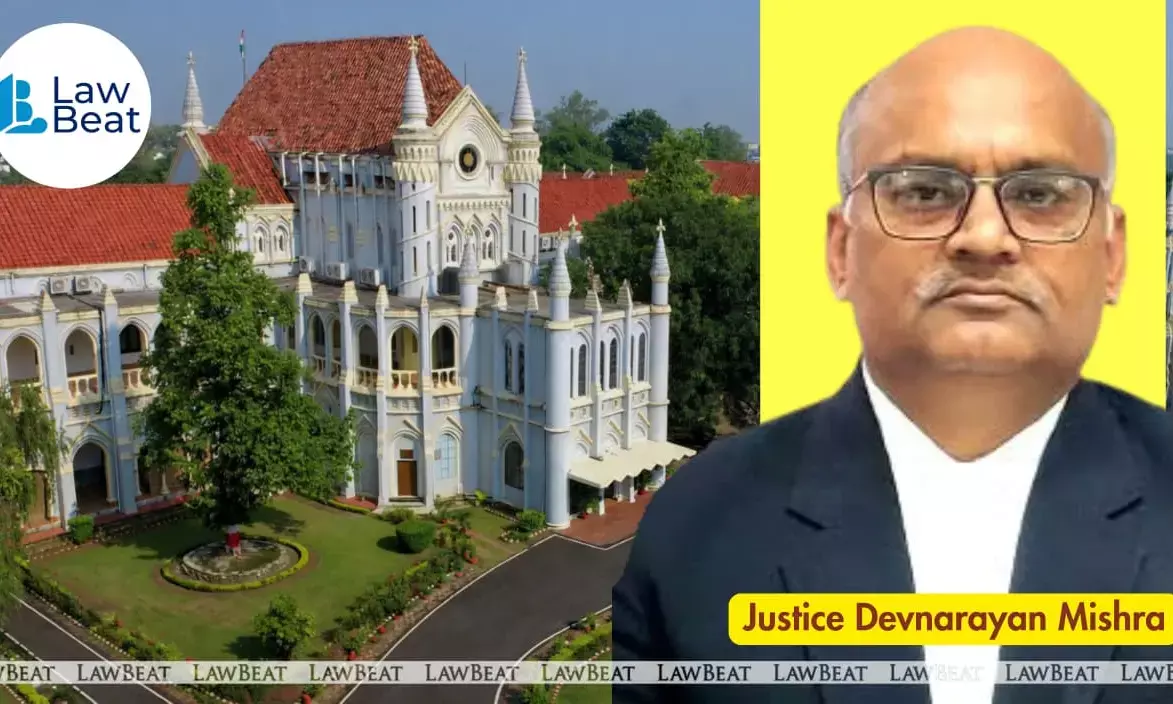
Negative DNA Report Gets Man Acquitted In Rape Case, Rules MP High Court
The Madhya Pradesh High Court's Jabalpur bench has acquitted a man convicted of raping his mentally disabled neighbour, holding that a negative DNA report excluding him as the biological father of her child, combined with contradictions in the testimony of the victim and other prosecution witnesses, entitled him to the benefit of the doubt.
Justice Devnarayan Mishra thus set aside the conviction and sentence handed down by the First Additional Sessions Judge, Lakhnadon, District Seoni, in a judgment dated December 12, 2024, allowing the criminal appeal filed by Teerath alias Chotu Tekam. The trial court had convicted Tekam under Sections 450, 376(1), 376(2)(l) and 376(2)(f) IPC, sentencing him to ten years of rigorous imprisonment along with fines.
The case arose out of an FIR registered at Police Station Ghansaur in Seoni district in 2020, after the victim, who was suffering from a mental disability, was found to be pregnant. Her parents, who had been away working as labourers in Nagpur around Diwali, returned home during Holi to discover her condition. On being informed, the village panchayat advised lodging a police complaint. The FIR named Tekam, a neighbour, as the accused, after the victim identified him to the investigating officer.
Appearing for the appellant, advocate Manoj Kushwaha argued that there was no real evidence against his client. He pointed out that the case rested largely on suspicion, since witnesses claimed to have seen Tekam remove a light bulb from its holder in the victim's house, plunging the room into darkness, but none could say what happened afterwards. Kushwaha relied heavily on the forensic report, which showed the newborn's DNA did not match that of the appellant, indicating he was not the biological father. He submitted that another person was actually responsible, and Tekam had been falsely implicated because he lived nearby.
The court examined the testimony of the victim's mother, brother and father, all of whom admitted in cross-examination that their knowledge of the appellant's role came largely from what the victim had told them, and from suspicion over the light being switched off. The victim's brother, in his cross-examination, stated that the appellant had only removed and then replaced the bulb, and that "no offence was committed."
The victim, in her own testimony, alleged that the appellant had disrobed and assaulted her. However, the court noted, she admitted under cross-examination that her mother had told her to name the appellant as the offender, and remained silent when asked whether she had also been instructed to name him before the police. The investigating officer, in cross-examination, further admitted that neither the victim nor her brother had stated in their earlier recorded statements that the appellant had committed sexual assault.
Justice Mishra observed that the alleged relationship between the appellant and the victim's family, projected as that of an aunt's son, was never independently established through evidence. On the forensic question, the judgment records that while blood and vaginal samples of the victim were matched against samples of the newborn, "the blood sample Article D, which is the blood sample of the newly born baby, matches with the DNA of the victim, but it doesn't match with the sample of the appellant."
The court concluded that the victim, "though partially mentally disabled," could not be treated as a fully trustworthy witness, given that scientific evidence pointed clearly to another person's involvement, one whom she had never named. "In these circumstances, the appellant is fully entitled to get the benefit of doubt," the court held, "as the scientific evidence is not available and is not against the appellant and the victim is not a fully trustworthy witness."
Dy. Government Advocate Atmaram Bain, for the State, had argued that the conviction should be upheld since the victim had clearly named the appellant. The court disagreed, allowing the appeal, acquitting Tekam of all charges, and directing his release forthwith unless required in any other case.
Case Title: Teerath @ Chotu Tekam v. State of Madhya Pradesh
Date of Judgment: September 17, 2026
Bench: Justice Devnarayan Mishra