
Mere Participation In Protest March Doesn't Make One Part Of Unlawful Assembly: HP High Court Quashes Rioting FIR
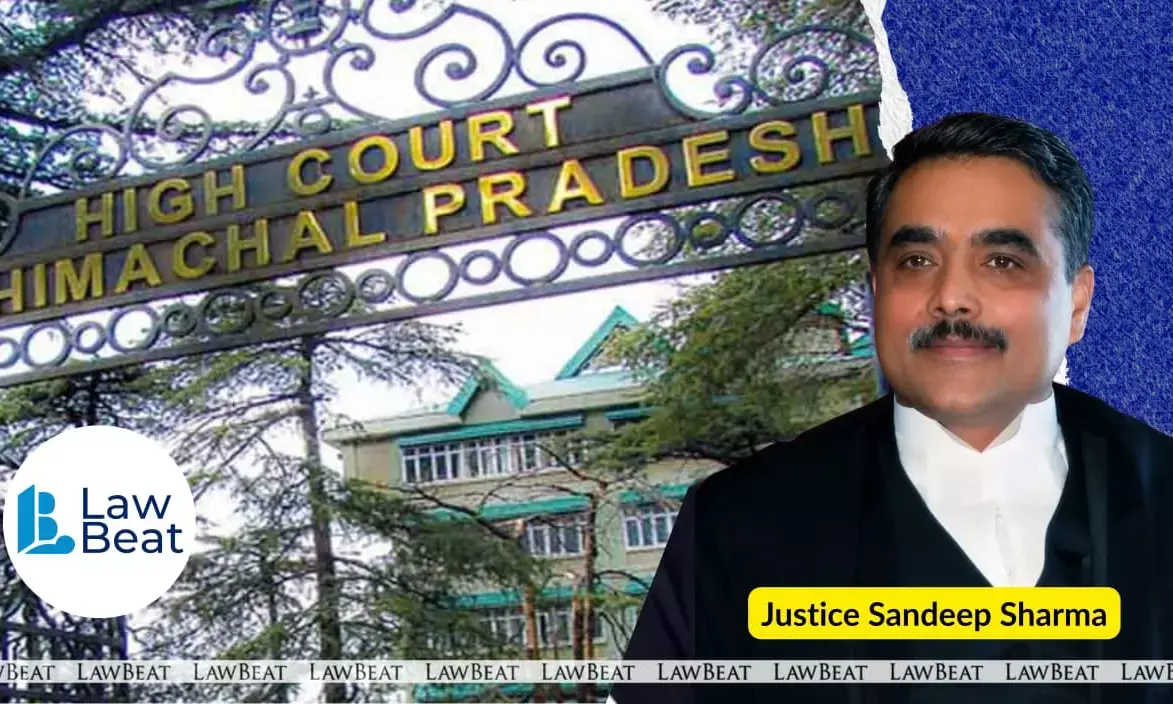
HP High Court Quashes FIR, Says Mere Presence at Protest Not Enough for Section 149 IPC Liability
The Himachal Pradesh High Court has held that mere participation in a protest march does not by itself make a person a member of an unlawful assembly, observing that criminal liability under Section 149 IPC can be fastened only where it is established that the accused shared the unlawful assembly's common object.
The ruling came while quashing an FIR against three persons accused of being part of a mob that allegedly indulged in rioting and assaulted teachers during a protest over allegations of sexual assault against a school teacher.
Finding that 2 of the petitioners had distanced themselves from the mob after violence broke out and attempted to save the teachers, while there was no material implicating the third petitioner in the assault or showing that he shared the unlawful assembly's common object, the Court quashed the FIR and all consequential criminal proceedings against them.
Justice Sandeep Sharma passed the order while allowing a petition filed under Section 528 of the Bharatiya Nagarik Suraksha Sanhita (BNSS), (corresponding to Section 482 of the Code of Criminal Procedure), seeking quashing of an FIR registered under Sections 452, 353, 332, 143, 147, 149, 504 and 506 of the IPC.
What were the allegations against the petitioners?
The case arose out of an incident on July 29, 2017, when residents of the area organised a protest march after allegations of sexual assault were made against a teacher of Government Senior Secondary School, Khushinagar, who was then in police custody.
According to the complaint lodged by the school's officiating principal, the protesters entered the school premises, raised slogans, asked students to leave their classrooms and created panic.
It was alleged that some members of the crowd assaulted several teachers despite efforts by the complainant and the Sub-Divisional Magistrate to maintain peace and prevent the situation from escalating. An FIR was subsequently registered against several persons, including the present petitioners.
The petitioners, however, contended that although they had participated in the protest march, they had neither assaulted any of the teachers nor shared the common object of those members of the crowd who turned violent.
They argued that the complaint itself recorded that two of them were standing with the Sub-Divisional Magistrate and had attempted to save the teachers from the mob.
They also pointed out that none of the injured teachers had named them as assailants in their statements or medical records, while the third petitioner was not even named in the complaint.
The State opposed the plea, submitting that since the petitioners were admittedly part of the crowd that created the disturbance, whether they had personally assaulted any of the teachers could only be determined during trial and, therefore, the FIR ought not to be quashed at the threshold.
What did the Court observe?
Examining the complaint and other material collected during the investigation, the High Court found that the prosecution's own material did not support the allegation that the petitioners had participated in the assault.
The Court noted that the complainant himself had stated that petitioners Dildar Ali Batt and Parvej Ali Batt were standing near the Sub-Divisional Magistrate and had tried to save two teachers from being beaten.
It further observed that the injured teachers had specifically identified the persons who allegedly assaulted them and had not named any of the petitioners, while the third petitioner (Hasan Mohammad alias Harun), did not figure either in the complaint or in the statements of the victims.
Rejecting the State's contention that mere participation in the protest was sufficient to invoke Section 149 IPC, the Court observed: "It is well-settled that mere presence at the crime scene would not ipso facto render a person member of the unlawful assembly to book him under Section 149 IPC. Liability would shift to the bystander only when he shared the common object with the unlawful assembly."
Referring extensively to recent Supreme Court decisions, including Zainul v. State of Bihar (2025) and Charan Singh v. State of U.P., the Court reiterated that the foundation of liability under Section 149 IPC is the existence of a common object and that constructive liability cannot be imposed merely because a person was present at the scene or part of a gathering.
It noted that while proof of an overt act is not always necessary, the prosecution must establish that the accused knew of or shared the unlawful assembly's common object.
Applying these principles to the facts of the case, the Court observed that although the protest had been organised by local residents to express anguish over the alleged sexual assault of a schoolgirl, only some members of the procession later turned violent.
The Court said: "Since petitioners herein, after having seen conduct of some of the persons, who allegedly gave beatings to the teachers, separated them from the march and attempted to save the teachers from beatings allegedly given to them by some unscrupulous persons, they cannot be said to be a part of unlawful assembly."
It further held that there was nothing on record to suggest that the petitioners were aware of the intention or common object of those members of the crowd who assaulted the teachers.
Noting that the complainant and the victims had themselves consistently identified the actual assailants and acknowledged that two of the petitioners had attempted to rescue the teachers, the Court concluded that the chances of the petitioners' conviction were "very bleak."
Accordingly, holding that continuation of the criminal proceedings would serve no useful purpose, the High Court quashed the FIR and all consequential proceedings against the petitioners.
Case Tilte: Dildar Ali Batt & Ors. v State of Himachal Pradesh & Anr.
Date of Judgment: July 20, 2026
Bench: Justice Sandeep Sharma