
MP High Court: Civil Court Can Direct FIR In Forgery Cases, Refuses To Quash Will Forgery Case
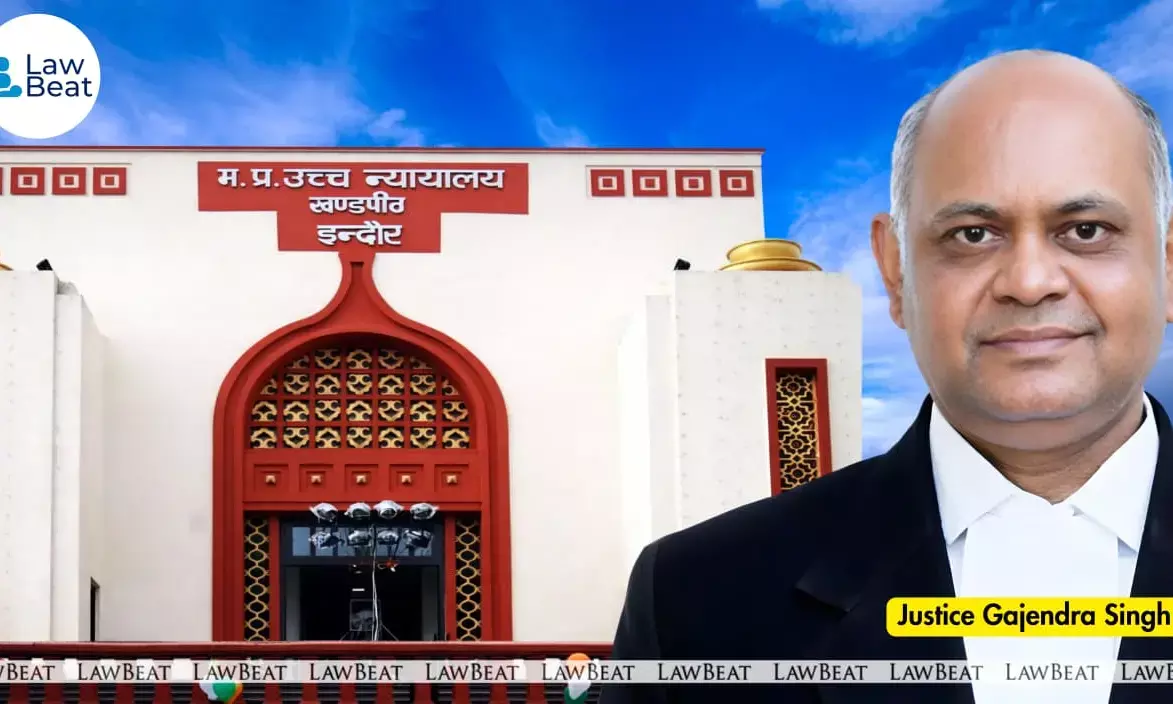
Forgery Committed Outside Court Doesn't Need Prior Complaint, Police Can Register FIR: MP High Court
The Madhya Pradesh High Court's Indore Bench has dismissed a plea by four family members accused of forging their late father's will, holding that police were within their rights to register a criminal case even though the forgery surfaced during a civil suit.
Justice Gajendra Singh was hearing a petition under Section 528 of the Bharatiya Nagarik Suraksha Sanhita (BNSS), 2023, seeking quashment of an FIR for offences under Sections 61(2), 336(3), 338 and 340(2) of the Bharatiya Nyaya Sanhita, 2023 (corresponding to Sections 120B, 468, 467 and 471 of IPC), registered at Police Station Dharampuri, Dhar district.
The dispute arose within a family. Petitioners Himmat Singh and Narendra Singh and the respondents are siblings. The sisters had filed a civil suit before the 2nd Civil Judge, Senior Division, Dharampuri, seeking declaration of title over agricultural land at villages Lunhera Khurd and Pipalnakgarhi. In their defence, the brothers relied on a will dated February 19, 2019, purportedly executed by their father Shersingh in favour of Narendra Singh, with Shivraj Singh and Dharmendra Singh as attesting witnesses.
On July 28, 2026, the trial court decided the suit and found the will had been forged after it was filed. It directed that an FIR be lodged against the petitioners, adding that anyone else found involved should also be made accused. Police registered Crime No.242/2026 accordingly.
Before the High Court, counsel for the petitioners, Aditya Verma, argued that a finding in civil proceedings, based on preponderance of probabilities, could not form the sole foundation for a criminal prosecution that must independently meet the higher threshold of proof beyond reasonable doubt. He contended that since the will was exhibited during the pendency of the very same suit, the case fell within the bar under Section 215(1)(b) read with Section 379 of the BNSS, which requires a forgery allegation relating to a document produced in court to proceed only through a written complaint by that court, not a police FIR. It was also argued that adverse findings were recorded without a hearing, violating Article 21, and that the dispute was essentially a family property matter given a criminal colour.
Counsel for the State, Romil Verma, opposed the petition, submitting that the petitioners had jointly committed fraud and forgery, and that the trial court had rightly directed registration of the FIR.
Examining the law, the Court turned to the Supreme Court's ruling in Sachida Nand Singh vs. State of Bihar, which clarifies that the bar on private complaints applies only where the offence is committed while the document was in the custody of the court, or "custodia legis". The Court noted that here, the alleged forgery was committed outside the court, before the will was produced in the civil suit. "In this case, the forgery was committed out side of the Court. Accordingly, it was not required to conduct preliminary enquiry as per Section 340(1) of Cr.P.C., 1973/corresponding section 379 of BNSS, 2023 and there can be no impediment for the police to register the case," the Court held.
The Court also addressed whether a civil court can direct registration of an FIR. Relying on the Constitution Bench ruling in Manohar Lal Chopra vs. Rai Bahadur Rao Raja Seth Hiralal, it held that a civil court's inherent powers under Section 151 CPC extend to directing a party or witness to forward a complaint to police where a serious offence such as forgery is alleged, since "forgery is a fraud and so the power of the Court, to unearth the fraud and to bring to book the culprits shall find no barriers."
The Court observed that accused persons routinely approach it under quashment provisions once a civil court orders an FIR in forgery cases, and that allowing such pleas too readily lets offenders "escape, from the clutches of law and goes scot-free." Clarifying that civil courts hold the power to direct such complaints in appropriate cases, the Court found no ground to interfere and dismissed the petition.
Case Title: Himmat Singh and Others vs. The State of Madhya Pradesh and Others
Date of Order: September 11, 2026
Bench: Justice Gajendra Singh