
MP High Court: Long Cohabitation Raises Presumption Of Valid Marriage
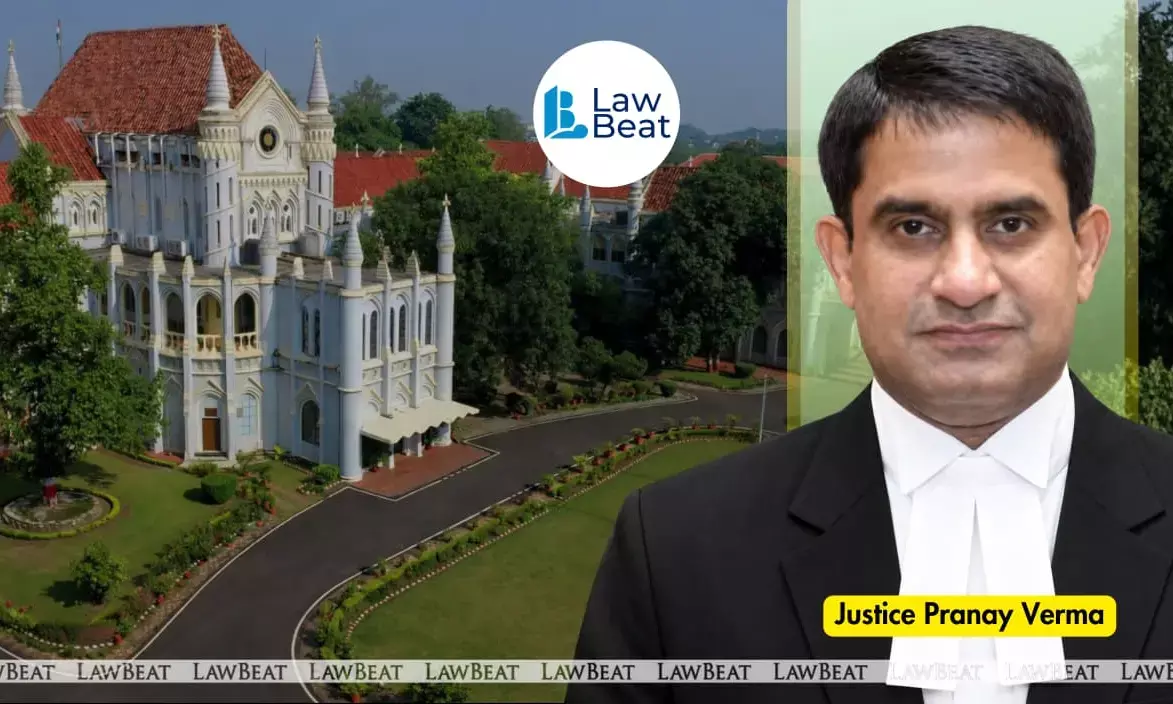
26 Years Together as Husband and Wife Enough to Presume Marriage: MP High Court
The Madhya Pradesh High Court at Jabalpur has held that a couple who cohabited as husband and wife for over two decades must be presumed legally married, even where the specific customary rite of marriage pleaded could not be proved through direct evidence.
Justice Pranay Verma dismissed a second appeal filed by a son challenging his half-siblings' claim to a two-fifths share in ancestral land and a house, holding that long cohabitation between his father and the father's second wife gave rise to a legal presumption of marriage that survived despite the customary rite going unproved.
The plaintiffs claimed to be sons of one Dhunna through his second wife, Rajiyabai, arrayed as defendant no.3. Dhunna's first wife, Nimiya, had died, from whose cohabitation defendant no.2 was born. Dhunna then married Rajiyabai under the Kari system, and the plaintiffs were born of this union, entitling them to equal shares in land Dhunna had received in a partition with his brothers.
The dispute arose after defendant no.2 sued Dhunna claiming half share in the property, culminating in a compromise granting him 1.50 acre of land and a one-third share in the house. The plaintiffs, who said they learnt of this compromise only in July 1991 and were never made parties to it, sued for declaration of their two-thirds share and symbolic possession.
While Dhunna and Rajiyabai admitted the plaintiffs' claim, defendant no.2 contested it, arguing that Rajiyabai was not Dhunna's legally wedded wife and the plaintiffs were illegitimate. The trial court thereafter only partly decreed the suit, but the first appellate court set this aside, holding that the plaintiffs had a two-fifth share in the property.
Defendant no.2 approached the High Court in second appeal, admitted on questions of law concerning whether a presumption of marriage under Section 114 of the Evidence Act could be drawn despite failure to prove the Kari form, and whether Dhunna's compromise as karta bound the plaintiffs.
Nitin Kumar Agrawal, for the appellant, argued that since the plaintiffs had pleaded a Kari marriage and failed to prove it, the alternative presumption from long cohabitation only weakened their case. He further contended that the property was joint family property in Dhunna's hands, entitling him to enter a binding compromise as karta.
Sanjeev Tuli, for the respondent plaintiffs, submitted that even though the Kari Pratha marriage was not strictly proved, the long cohabitation of Dhunna and Rajiyabai, recognised as such by society, was sufficient to raise a presumption of valid marriage. He argued that the suit land was Dhunna's self-acquired property from his partition with his brother, and the compromise decree, entered into without impleading the plaintiffs, was not binding on them.
Examining the evidence, the Court noted that Dhunna had stated Rajiyabai resided with him as his wife for twenty-six years, corroborated by independent witnesses who deposed that the two had lived as husband and wife since before defendant no.2 was born. Nothing on record suggested Rajiyabai lived as a "keep" or that any legal impediment existed, the Court adding that "the presumption would always be for legitimacy of the marriage rather than being for its illegitimacy."
Relying on the Supreme Court's decision in Chowdamma (dead) vs. Venkatappa, which reiterated that "a strong presumption arises in favour of wedlock where the partners have lived together for a long spell as husband and wife," the Court held such a presumption could only be displaced by unimpeachable evidence, a burden the appellant had failed to discharge.
The Court further held that since the plaintiffs were never made parties to the earlier compromise between Dhunna and defendant no.2, that decree could not bind them, as it was never established that the suit property was joint Hindu family property or that Dhunna had acted as karta.
Answering all three questions against the appellant, the Court affirmed the first appellate court's judgment and dismissed the second appeal, with no order as to costs.
Case Title: Fulla vs. Munna & Ors.
Date of Judgment: September 3, 2026
Bench: Justice Pranay Verma