
MP High Court Quashes Order For Wife's Medical Exam Sought At Final Arguments Stage In Divorce Case
Medical Examination Can't Fill Gaps In Evidence After Trial Ends, Says MP High Court
The Madhya Pradesh High Court's Gwalior Bench has recently set aside a trial court order permitting a husband to have his estranged wife medically examined at the fag end of divorce proceedings, holding that such an intrusive direction cannot be issued in the absence of a strong prima facie case and sufficient material on record.
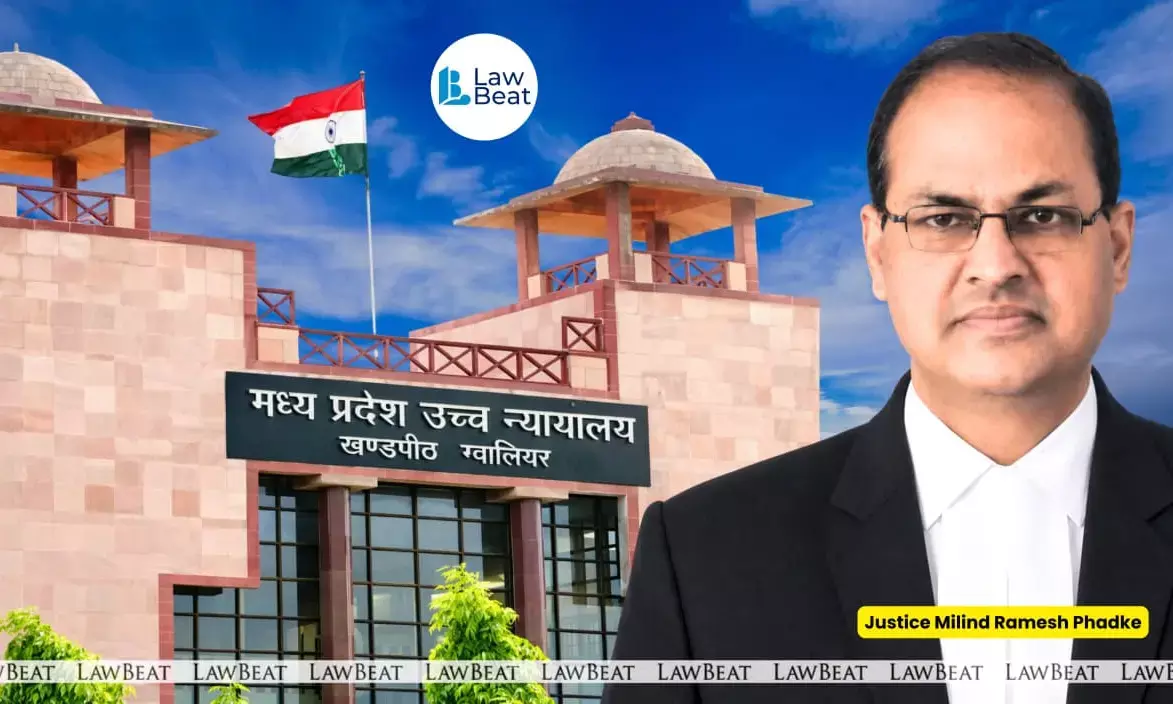
Justice Milind Ramesh Phadke heard a petition filed by Sadhna @ Priya challenging an order dated July 2, 2012, passed by the District Judge, Ashoknagar, allowing her husband Santosh Kumar Ojha's application under Section 151, CPC, seeking her medical examination.
The couple married in April 2004 at Ashoknagar and lived together till July 2011, after which the husband filed for divorce under Section 13 of the Hindu Marriage Act, alleging cruelty on the wife's part. The wife denied the allegations and expressed willingness to continue the marriage. Evidence from both sides was recorded and the matter was fixed for final arguments. It was only at that stage, in June 2012, that the husband moved an application seeking her medical examination, primarily referring to an allegation that she had undergone operations on three occasions.
Counsel for the wife, Madhur Bhargava, argued that the application was filed only after evidence had closed, that no foundation for it existed in the divorce petition or the husband's evidence, and that no witness had stated the operations occurred before the marriage. It was submitted that allowing the examination now would let the husband collect fresh evidence after the trial had concluded. Reliance was placed on the Supreme Court's ruling in Sharda vs. Dharampal, to contend that while matrimonial courts do possess the power to direct medical examination, this power cannot be exercised mechanically and must rest on a strong prima facie case.
The husband's side countered that the cruelty plea had specifically referred to the wife's alleged operations and her subsequent refusal to maintain marital relations, and that medical evidence was necessary for a just conclusion. It was argued that the power to direct medical examination flows from the court's inherent jurisdiction and needs no express statutory provision, relying on Samar Ghosh vs. Jaya Ghosh, on mental cruelty, and Ramesh Chandra Agrawal vs. Regency Hospital Limited, on the relevance of expert medical evidence.
Examining the record, the Court found the foundation for such an intrusive order "conspicuously absent." It observed that there was "no material available on record to establish that the respondent had ever asked the petitioner to accompany him to a doctor or to undergo any medical treatment or examination and the petitioner had refused to do so."
The Court held that the allegation of three operations did not, by itself, furnish sufficient ground for compelling a medical examination, especially since the wife had disputed the nature of the operations and maintained that the relevant treatment occurred after marriage, with the husband already aware of it. It noted that the application, moved only after both parties had closed their evidence, would "effectively permit the respondent to fill up the lacuna in his evidence."
The Court further noted that the trial court's order did not disclose any application of mind to the parameters governing such discretion, having "not recorded any specific finding as to what particular medical issue required determination." It cautioned that judicial power to seek medical evidence "cannot be converted into a means for conducting a roving or fishing inquiry," particularly where the direction touches upon "the personal liberty and bodily autonomy of a party."
Allowing the petition, the Court set aside the trial court's order and dismissed the husband's application for medical examination, directing that the matrimonial proceedings continue on the basis of the pleadings and evidence already on record.
Case Title: Smt. Sadhna @ Priya vs. Santosh Kumar Ojha
Date of Order: September 21, 2026
Bench: Justice Milind Ramesh Phadke