
Muslim Man's Second Marriage Under 'Special Marriage Act' Void If First Subsists: Karnataka HC
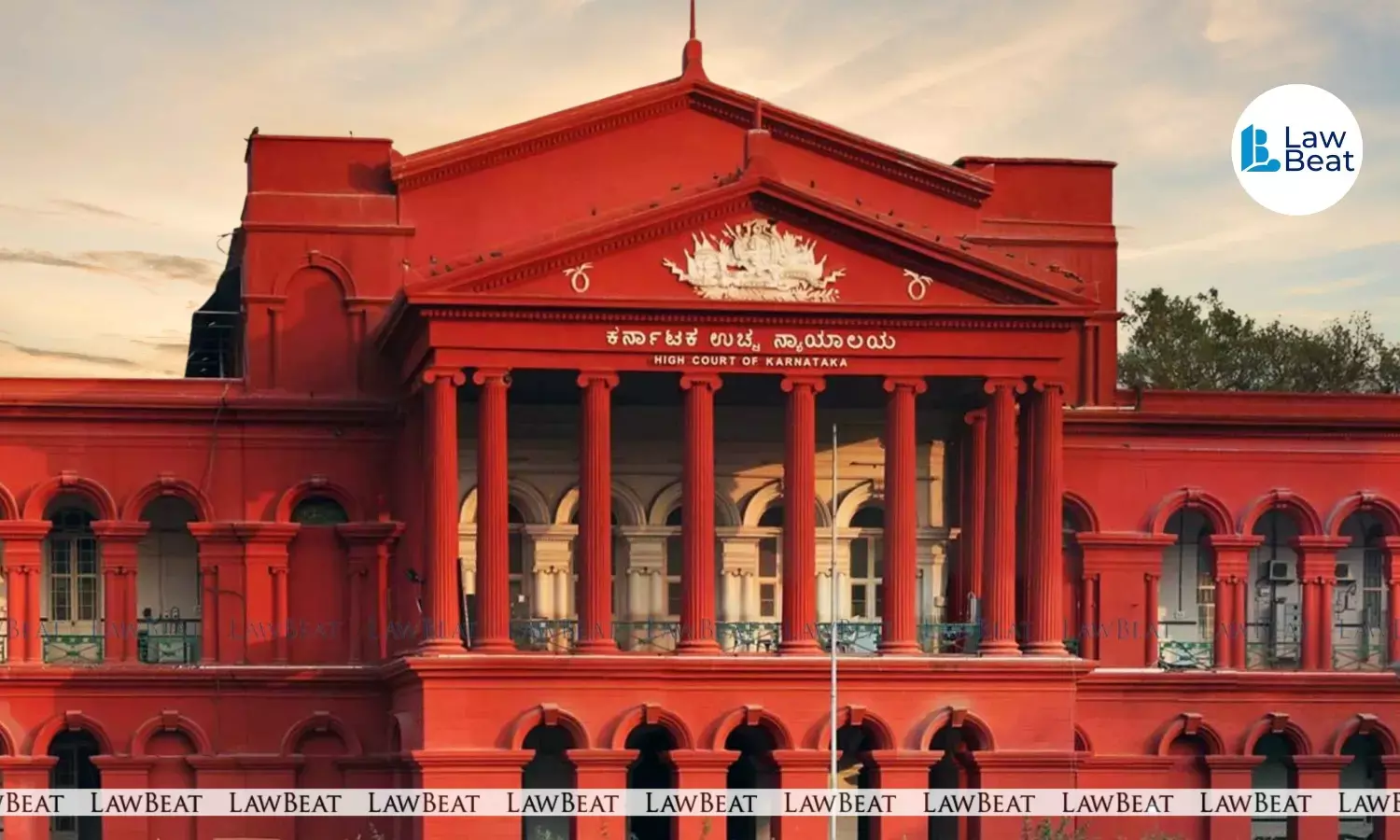
Karnataka High Court invalidates Muslim man's second marriage under SMA.
The Karnataka High Court has held that a Muslim man's second marriage solemnised under the Special Marriage Act, 1954, during the subsistence of his first marriage is void ab initio.
The High Court observed that parties who voluntarily choose to marry under the Act are governed exclusively by its statutory framework and cannot subsequently rely on personal law to validate such marriage.
Justice Sachin Shankar Magadum dismissed a writ petition filed by a woman claiming to be the second wife of a deceased (defendant) in a partition suit, upholding the trial court's refusal to implead her as his legal representative while affirming the impleadment of the daughter born from the relationship.
Also Read| Divorced Wife Can't Seek Maintenance Hike After Ex-Husband's Death: Bombay High Court
The dispute arose from a partition suit in which the petitioner's alleged husband died during the pendency of the proceedings. Claiming that her marriage with the deceased had been solemnised on April 24, 2008 under the Special Marriage Act, the petitioner sought to implead herself and her daughter as his legal representatives.
The trial court, after conducting an enquiry pursuant to an earlier remand by the High Court, found that the deceased's first marriage was subsisting on the date of the alleged marriage and consequently held that the petitioner's marriage was void ab initio.
While rejecting her impleadment application, it permitted the daughter to be brought on record.
Affirming that view, the High Court examined Section 4(a) of the Special Marriage Act, which mandates that "neither party has a spouse living" at the time of marriage.
"The statutory mandate is clear and unambiguous. One of the essential conditions for a valid marriage under the Act is that neither party should have a spouse living on the date of the marriage. The requirement is mandatory and admits of no exception" the Court observed.
The Court noted that the petitioner herself had admitted in her affidavit that she was the second wife of the deceased and had acknowledged the existence of his first wife. These admissions, the Court held, made the legal consequence inevitable.
"Once these foundational facts stand admitted, the inevitable consequence is that the alleged marriage dated 24.04.2008, though stated to have been solemnized under the Act, was in direct violation of Section 4(a) of the Act."
Rejecting the contention that the deceased's Muslim faith permitted multiple marriages, the Court drew a distinction between marriages governed by personal law and those solemnised under the Special Marriage Act.
"It is true that Mohammedan personal law, subject to the conditions and limitations recognised therein, permits a Muslim male to contract more than one marriage. Such permissibility, however, operates only within the domain of personal law governing marriages solemnized thereunder" the Court said.
The legal position, however, changes fundamentally once parties opt for the Special Marriage Act, it added :
"The Act is a secular and self-contained code governing the conditions, solemnization and consequences of marriages contracted under its provisions. Once parties consciously invoke the provisions of the Act instead of their personal law, they subject themselves to the mandatory statutory regime enacted by Parliament."
The Bench emphasised that the rights and obligations flowing from such marriages are determined exclusively by the Special Marriage Act and not by personal law.
Holding that Section 4 lays down an indispensable condition for the validity of marriages under the Act, the Court observed:
"Any marriage solemnized in derogation of this mandatory condition is rendered void ab initio... because the parties have voluntarily elected to be governed by a statutory code which insists upon monogamy as an indispensable pre-condition for a valid marriage".
Also Read|Can In-Laws Be Prosecuted For Husband's Second Marriage? Supreme Court Answers
The Court cautioned that accepting the petitioner's argument would enable parties to selectively invoke the advantages of the Special Marriage Act while simultaneously claiming exemptions under personal law.
"To hold otherwise would permit parties to selectively invoke the benefits of a special statute while simultaneously claiming exemptions founded upon personal law, a course wholly inconsistent with the scheme, object and legislative intent underlying the Act" the single Judge said.
The Court further held that a person seeking impleadment as the legal representative of a deceased litigant must establish a legally recognisable right to represent the estate.
"In the absence of a valid marital status, the petitioner cannot claim the status of widow of deceased defendant No.2. Consequently, she cannot insist upon being brought on record merely on the basis of an admittedly void marriage" it held.
At the same time, the Court approved the trial court's decision to implead the daughter, observing that children born from a void marriage are entitled to statutory protection and are competent to represent their legal rights in appropriate proceedings.
Finding no perversity or jurisdictional error in the trial court's reasoning, the High Court dismissed the writ petition and affirmed the impugned order.
Case title: K. MEENAKUMARI v SRI. M. ALLAH BAKASH And Ors
Order Date: July 15, 2026
Bench: Justice Sachin Shankar Magadum