
POCSO Accused Granted Bail After Victim Expresses Desire to Marry Him: HP High Court
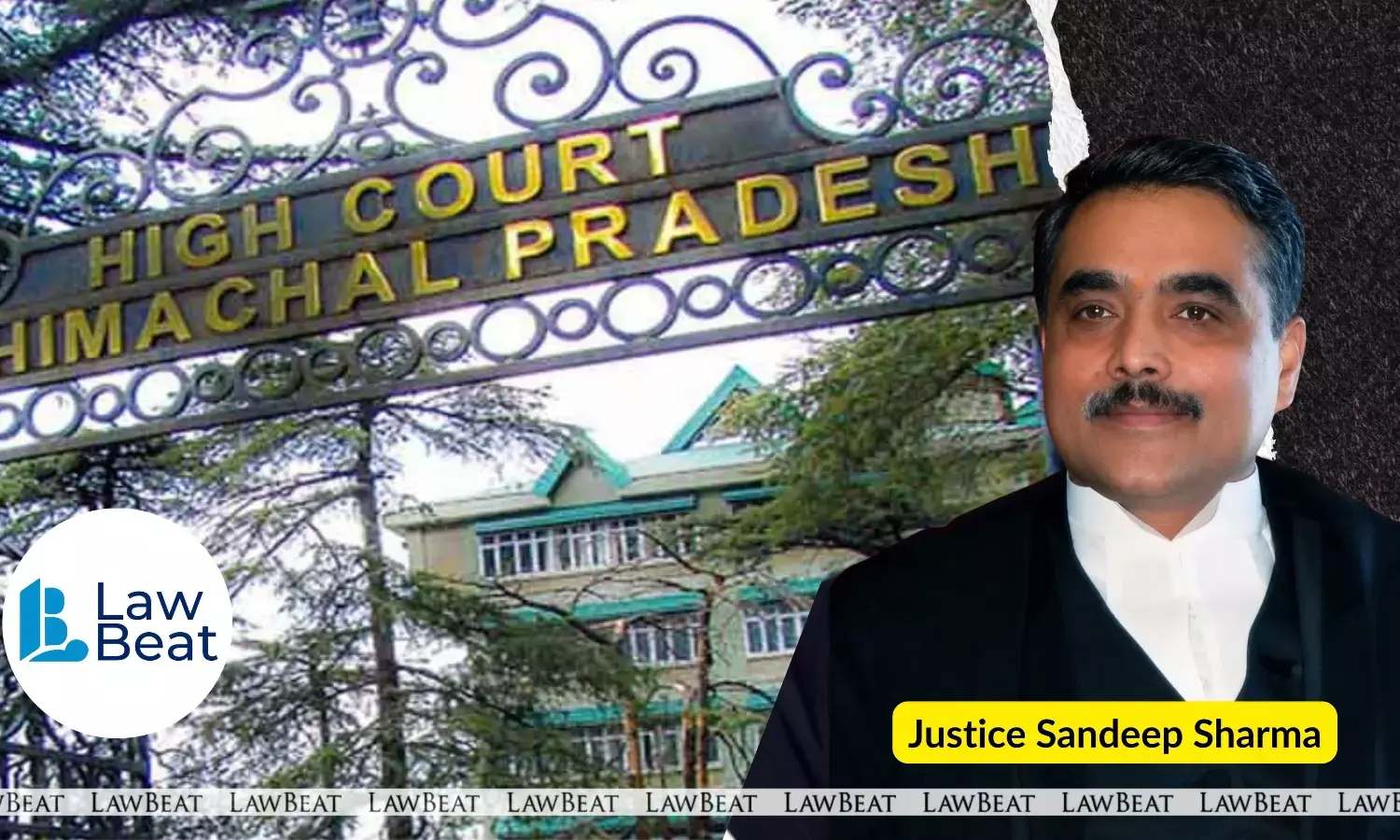
HP High Court Grants Bail in POCSO Case, Notes Victim and Infant Would Suffer From Continued Custody
The Himachal Pradesh High Court granted regular bail to a man accused under the POCSO Act, observing that continued incarceration during trial would adversely affect the victim-prosecutrix and their infant child.
The Court also noted that while a minor’s consent has no legal value, subsequent developments such as the birth of the child and the prosecutrix’s desire to marry the accused were relevant factors while considering bail.
Justice Sandeep Sharma passed the order while allowing a petition filed under Section 483 of the Bharatiya Nagarik Suraksha Sanhita, 2023, who had been arrested in March 2026 in connection with offences under Section 64 of the Bharatiya Nyaya Sanhita, 2023 and Section 6 of the POCSO Act.
The Court directed his release on bail subject to conditions, including furnishing a personal bond of Rs.50,000 with one local surety, while clarifying that any violation of conditions would entitle the prosecution to seek cancellation of bail.
According to the prosecution case, the matter came to light after the Medical Officer at Civil Hospital Dadahu informed the police that a girl, who claimed to be 18 years old, had been brought to the hospital for delivery.
Upon inquiry, the police found that her date of birth was 24.02.2008, making her a minor at the time of the alleged incidents.
The victim informed the police that she was studying in Class 10 and had turned 18 only in February, 2026.
She alleged that the accused had established physical relations with her on multiple occasions, as a result of which she became pregnant.
Based on her statement, the FIR was registered at Police Station Renuka Ji in Sirmaur district, following which the accused was arrested on 20.03.2026.
The police later completed investigation and filed the challan before the competent court.
Appearing for the petitioner, counsel argued that the accused had been falsely implicated and that the relationship was entirely consensual.
It was submitted that the prosecutrix had voluntarily accompanied the petitioner and intended to solemnize marriage with him.
Counsel further pointed out that after the birth of the child, the prosecutrix and the infant were residing with the petitioner’s family and that she no longer wished to pursue the criminal case.
The State opposed the plea, contending that the allegations involved a grave offence under the POCSO Act and that the prosecutrix was admittedly a minor at the relevant time.
The prosecution argued that even if the relationship was consensual, such consent carried no legal significance under the statute.
It was also submitted that the prosecutrix’s statement was yet to be recorded before the trial court and there existed a possibility of influence if the accused was enlarged on bail.
During the hearing, the prosecutrix herself appeared before the High Court along with her parents and the mother of the accused.
She stated on oath that she had voluntarily entered into the relationship and that the FIR had not been lodged by her or her family members but arose only after hospital authorities informed the police during her delivery.
She further told the Court that she wished to marry the accused and had no objection if he was granted bail.
Taking note of these facts, the court observed that although the prosecutrix was a minor at the relevant time and her consent therefore lacked legal validity, the material on record suggested that the relationship was not one involving coercion or exploitation.
The Court recorded that there were “strong reasons to presume and believe” that the accused and the prosecutrix were in love and intended to marry before the pregnancy came to light.
The High Court placed significant reliance on the Supreme Court’s decision in K. Kirubakaran v. State of Tamil Nadu, wherein the Top Court had observed that in peculiar circumstances where a child was born out of a consensual relationship and the victim desired a stable family life, “the law must yield to the cause of justice.”
Quoting extensively from the judgment, the High Court noted that continuation of criminal proceedings and incarceration could irreparably damage the family structure and adversely affect the victim and child.
The Court also observed that the prosecutrix, who had now attained majority, was residing with the petitioner’s family and intended to raise the child jointly with him.
Reiterating settled principles governing grant of bail, the Court emphasised that bail is not punitive in nature and that every accused is presumed innocent until proven guilty.
Referring to precedents including Sanjay Chandra v. CBI, Dataram Singh v. State of Uttar Pradesh, and Prasanta Kumar Sarkar v. Ashis Chatterjee, the Court observed that deprivation of liberty before conviction must remain an exception and not the rule.
Holding that the petitioner had made out a case for grant of regular bail, the High Court directed his release subject to conditions restraining him from tampering with evidence, influencing witnesses, or leaving India without prior permission of the court.
Case Title: Vikram Singh v. State of Himachal Pradesh
Bench: Justice Sandeep Sharma
Date of Judgment: 15.05.2026