
Section 66C IT Act | Creating Email ID in Another's Name Not Prima Facie Identity Theft: Allahabad HC
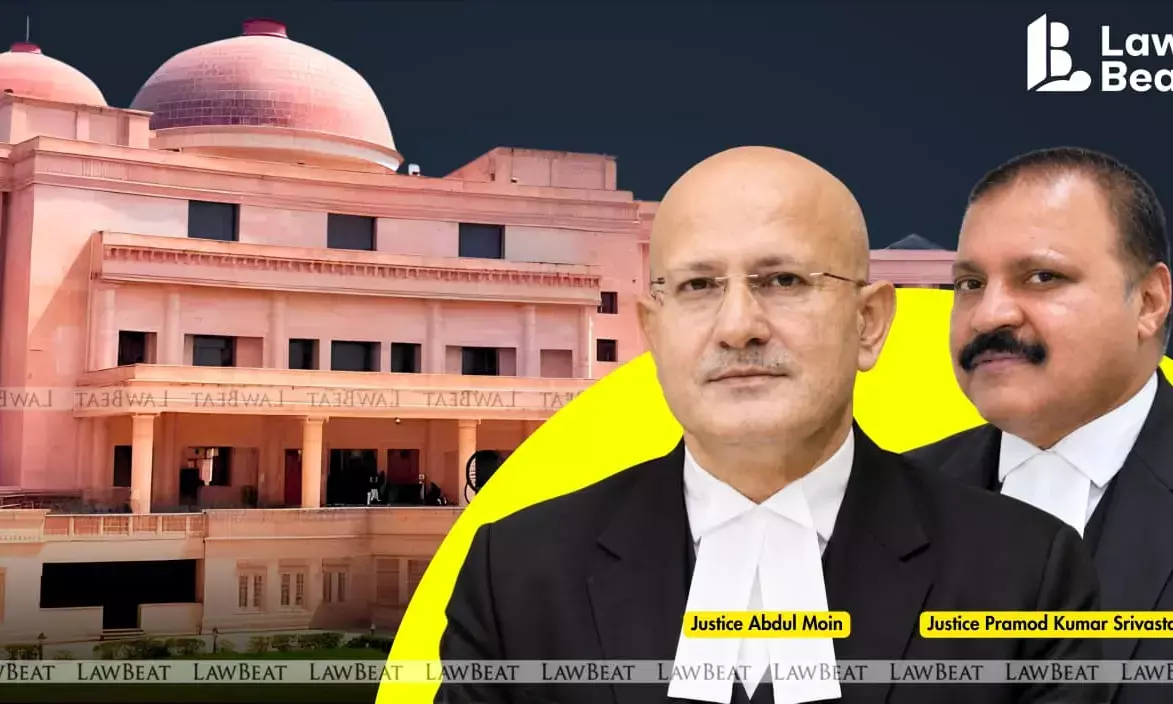
Allahabad HC stays FIR over alleged email identity theft.
The Allahabad High Court (Lucknow Bench) recently stayed an FIR against two persons accused of creating an email ID in another person's name and using it to send allegedly fake complaints, observing prima facie that creation of an email ID does not amount to identity theft under Section 66C of the Information Technology Act.
Section 66C of the Information Technology Act, 2000 punishes the fraudulent or dishonest use of another person’s electronic signature, password or other unique identification feature, with imprisonment of up to three years and a fine of up to ₹1 lakh.
A bench of Justices Abdul Moin and Pramod Kumar Srivastava passed the order in a plea by Krishna Kant Pandey and Mukul Pandey. Court stayed the FIR “until further orders” and directed that no action be taken against the petitioners pursuant to it.
The petitioners were represented by advocates Anuj Dayal and Ankit Kumar Trivedi, while the respondents were represented by the Government Advocate (G.A.), advocates Ashish Gautam and Sumit Kumar Ojha.
What was the FIR about?
The FIR, registered on July 23, 2026 at Aaspur Devsara police station in Pratapgarh, invoked Section 356(2) of the BNS (earlier Section 500 of the Indian Penal Code), 2023 and Section 66C of the Information Technology (Amendment) Act, 2008.
The petitioners' counsel told the court that the FIR alleged that they had created an email ID in the name of a third person and used it to send fake complaints.
The petitioners challenged the invocation of both provisions.
What did the petitioners argue about defamation?
On Section 356(2) of the BNS, which pertains to defamation, the petitioners relied on the Supreme Court's 2016 judgment in Subramanian Swamy v. Union of India.
Their argument was that criminal defamation proceedings cannot be initiated by registering an FIR. Referring to the Supreme Court judgment, they submitted that in a criminal defamation case, neither an FIR can be registered nor can a direction be issued under Section 156(3) of the CrPC [now Section 175(3) of the Bharatiya Nagarik Suraksha Sanhita (BNSS)]; proceedings have to be initiated through a complaint by the aggrieved person.
Court on identity-theft charge
The more specific issue before the court concerned Section 66C of the IT Act, which provides punishment for identity theft.
The provision applies where a person fraudulently or dishonestly makes use of another person's electronic signature, password or other unique identification feature. The petitioners argued that merely creating an email ID in another person's name did not fall within any of these categories.
The respondent, however, argued that the petitioners had knowingly created an email ID in another person's name and used it to send fake messages and complaints to various people, including the Lokayukta. This, it was argued, amounted to use of the third person's unique identification feature and therefore attracted Section 66C.
Court was not persuaded.
The bench described the respondent's argument as “fallacious and misconceived”, pointing out that Parliament had specifically used the words “electronic signature”, “password” or “unique identification feature” in Section 66C but had not included the words “e-mail ID”.
“Consequently, prima facie it cannot be said that any offence under Section 66C” had been committed by the petitioners, court held..
Accordingly, court opined that a prima facie case for interference was made out, and stayed the July 23 FIR and barred authorities from taking action against the petitioners under it until further orders.
Court gave the State and private respondent Shashikant Pandey four weeks to file their counter-affidavits, after which the petitioners will have two weeks to file a rejoinder. The matter will then be listed before the appropriate bench.
Case Title: Krishna Kant Pandey and Another v. State of U.P. through Principal Secretary, Home, Lucknow and Others
Order date: September 1, 2026
Bench: Justice Abdul Moin and Justice Pramod Kumar Srivastava