
Tahir Hussain Sentenced To Two Years For Abetting Rioting In Delhi Riots Case: “Hand That Guides Is As Guilty,” Says Court
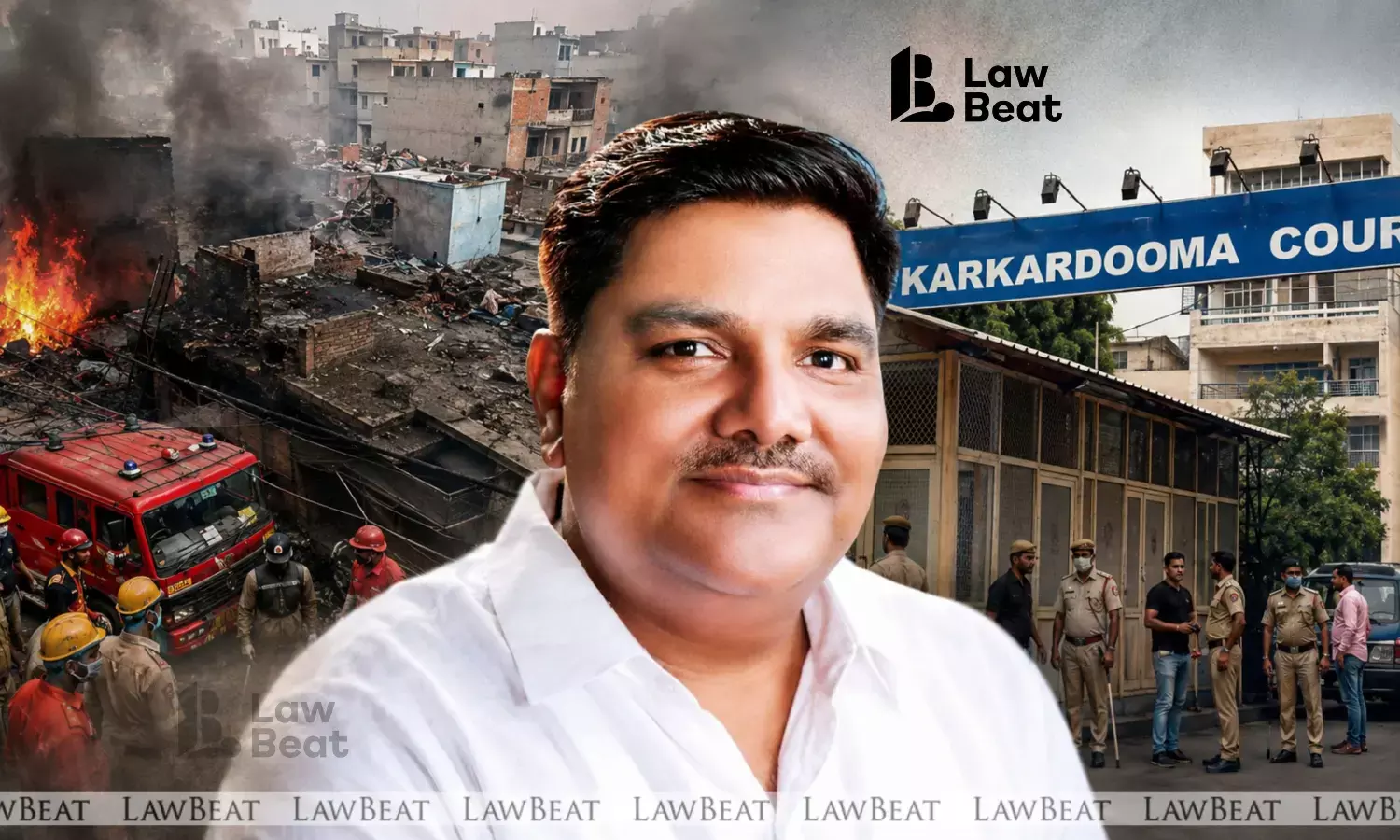
Former AAP councillor Tahir Hussain was sentenced to two years' imprisonment for abetting rioting in a 2020 Delhi riots case; the Court held that "the hand that guides is as guilty, if not more, as the hand that acts"
A Delhi court on Friday sentenced former Aam Aadmi Party (AAP) councillor Tahir Hussain to two years' imprisonment for abetment to rioting in a case arising out of the 2020 northeast Delhi riots, holding that a person who makes his premises available to rioters cannot escape the gravity of the offence merely because he was not shown to have taken part in the violence himself.
Additional Sessions Judge (ASJ) Praveen Singh of the Karkardooma Court also imposed a cost of ₹10,000 on Hussain. Hussain is already serving life imprisonment in the Ankit Sharma murder case.
The ASJ identified the conduct for which Hussain stood convicted. It said, "The act attributed to the convict, and for which he stands convicted, is that of providing his house to the rioters for their use."
The Court rejected the notion that the prosecution's failure to establish Hussain's direct involvement in the riot lessened the seriousness of what he had done. It observed, "The mere fact that the prosecution did not prove the active participation of the convict in the riot, does not dilute the gravity of his conduct, for the hand that guides is as guilty, if not more, as the hand that acts."
The sentence in the present case is in addition to the life imprisonment Hussain is already undergoing in the case concerning the killing of Intelligence Bureau (IB) officer Ankit Sharma during the riots.
The riots that broke out in northeast Delhi in February 2020 left 53 people dead, injured several others, and caused extensive property damage.
Besides Hussain, the accused were Mohammad Shadab, Shah Alam, Riyasat Ali, Gulfam, Rashid, Mohammad Rihan, Mohammad Abid, Arshad Qayyum, Irshad Ahmed, Deepak Singh Saini, Navneet and Mehak Singh. All thirteen had been charged with rioting, causing damage to property, mischief by fire and criminal conspiracy, among other offences. The court acquitted each of the twelve co-accused of all charges.
Second Riots Conviction for Hussain After July Verdict in Ankit Sharma Killing Case
This is not the first conviction Hussain has faced in connection with the riots. In July, a Delhi court convicted him and four others in the case concerning the killing of Intelligence Bureau officer Ankit Sharma during the violence. That case arose from an FIR registered at Dayalpur police station on a complaint by Sharma’s father, Ravinder Kumar. Hussain was suspended by the AAP after his name surfaced in that case.
The riots that broke out in northeast Delhi in February 2020 left 53 people dead, injured several others, and caused extensive property damage.
The court held that the prosecution had proved its case beyond reasonable doubt against Hussain for offences punishable under Sections 188, 153A read with 149, 147 read with 149, 148 read with 149, 365 read with 149, and 302 read with 149 of the Indian Penal Code (IPC).
Hussain was, however, acquitted of charges under Sections 120B, 505, 109 and 114 IPC.
The remaining convicts, Nazim, Kasim and Anas, were also convicted for offences including murder, kidnapping, rioting, promoting enmity and unlawful assembly. They too were acquitted of the criminal conspiracy charge under Section 120B IPC, while Nazim was additionally acquitted of offences under the Arms Act.
According to the judgment, forensic investigators who inspected Hussain's building in Khajuri Khas on February 28, 2020, recovered stones, bricks, a catapult, petrol bombs, glass bottles stuffed with cloth, bullets and burnt articles from the terrace and surrounding area. The court observed that the building was allegedly used by rioters for stone-pelting and hurling petrol and acid bombs during the communal violence.
The judgment further recorded that eyewitnesses identified Hussain and several co-accused as participants in the violence. Witness Vikalp Kochar specifically identified Tahir Hussain and co-accused Anas as being involved in the murder of Ankit Sharma, while other witnesses identified several accused persons allegedly involved in rioting and arson at Hussain's instigation.
Background of the Ankit Sharma murder case
The case pertains to a FIR registered at Dayalpur Police Station on the basis of the complaint made by Ankit Sharma’s father, Ravinder Kumar. He alleged that on February 25, 2020, his son, who was posted in the Intelligence Bureau (IB), had come back from the office and gone out, and did not return after a long time.
The complainant father came to know from local boys that his son Ankit Sharma had been “thrown” into Khajuri Khas “nala” (drain) from the masjid in Chand Bagh pulia after “he was killed.” His body was recovered from the nala. The deceased’s father, in his complaint, had raised strong suspicion that his son Ankit Sharma had been killed by Tahir Hussain and others, who had gathered in his office, and that after killing his son, his body was thrown into the nala from the masjid.
On March 24, 2023, the trial court framed charges against Hussain and ten co-accused, namely Haseen alias Mullaji alias Salman, Nazim, Kasim, Sameer Khan, Anas, Firoz, Javed, Gulfam, Shoaib Alam alias Bobby, and Muntajim alias Musa.
ASJ Pulastya Pramachala framed charges against Hussain and ten others, namely, Haseen @ Mullaji @ Salman, Nazim, Kasim, Sameer Khan, Anas, Firoz, Javed, Gulfam, Shoaib Alam @ Bobby, and Muntajim @ Musa. All the accused persons have been charged under Sections 147 (rioting), 148 (rioting, armed with a deadly weapon), 153A (promoting enmity between different groups on grounds of religion, race, place of birth, residence), and 302 (murder) read with 120B (criminal conspiracy) of the Indian Penal Code (IPC).
Hussain has also been charged under Sections 109 (abetment), 114 (abettor present when offence is committed), and 505 (statements conducing to public mischief) of the IPC. In its order, Additional Sessions Judge Pulastya Pramachala observed, “He (Hussain) instigated the mob when Ankit came forward towards this mob. The conspiracy need not be specific to kill Ankit. When the accused persons were acting in pursuance to a conspiracy and common object to kill Hindus, it covered killing of Ankit as well for the reasons that Ankit was killed because he was a Hindu.”
Violence broke out in Northeast Delhi in 2020 during protests against the Citizenship Amendment Act, which followed widespread clashes between the supporters and opponents of the Act. Several incidents of stone-pelting, arson, and violent protests were reported, which had left nearly 53 dead and injured thousands.
Bench: Additional Sessions Judge (ASJ) Praveen Singh