
'Trial Continued So Lawyer Could Get His Fees': Allahabad HC Slams Trial Judge Over "Blatant" Compromise Order Violation
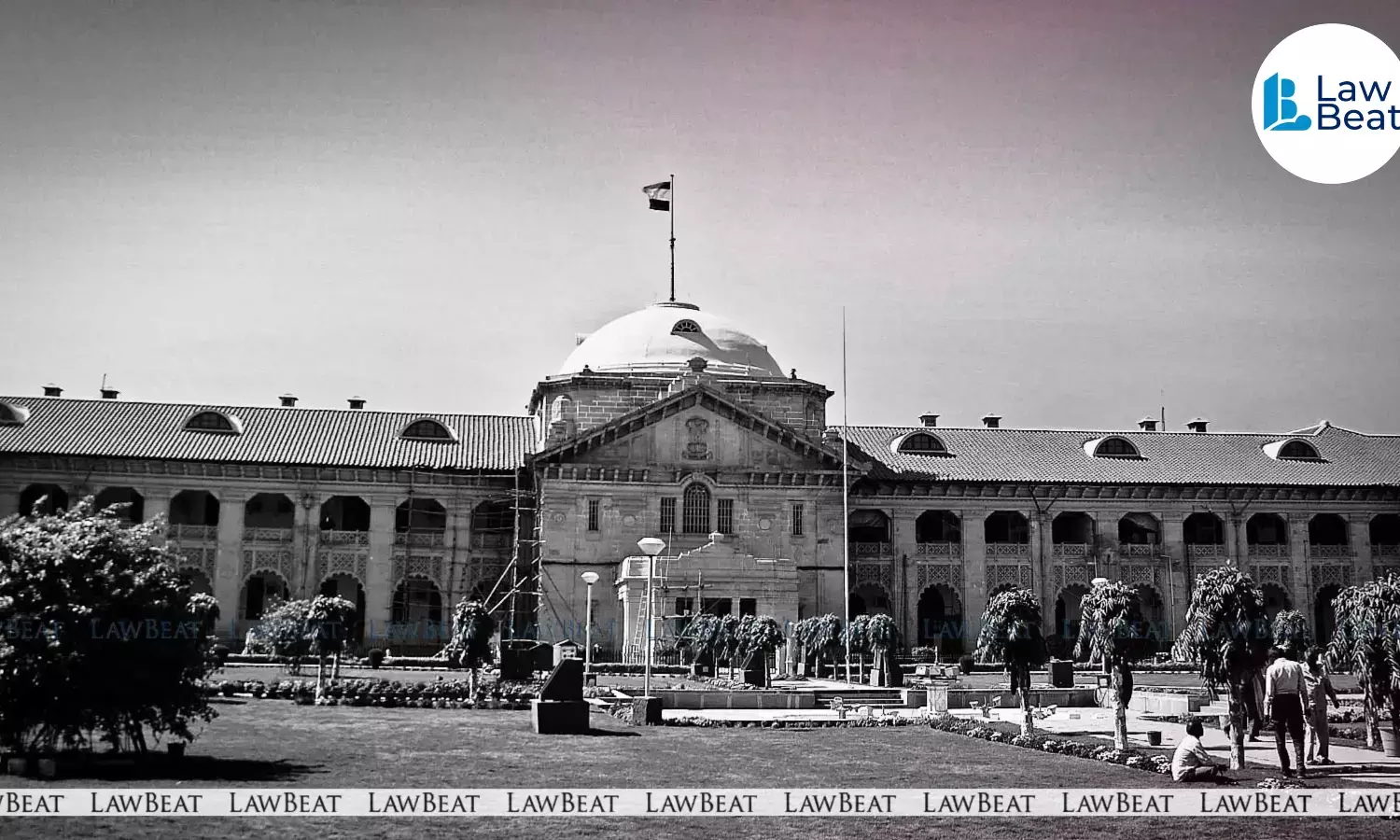
Allahabad High Court pulls up trial court judge over judicial indiscipline.
The Allahabad High Court recently pulled up a Bareilly trial court judge for ignoring its order on a compromise between the parties and proceeding with the criminal trial anyway. The high court said the judge “blatantly” and “flagrantly” violated its order by making the accused obtain bail, framing charges and putting them on trial even after the compromise had been verified.
Court also took exception to the judge’s explanation that the accused’s lawyer had wanted the trial to continue so that he could get his fees, saying this showed that the judge had proceeded with the trial “in order to facilitate the fees of counsel for accused” and had “no regard to the order of the high court".
The bench of Justice Raj Beer Singh, however, declined to recommend further action against the then ACJM/Additional Civil Judge (SD), Court No. 7, Bareilly, saying she had tendered an apology. Court warned her to be careful in future.
High court's order on the compromise
The case arose from an application filed by Arshad and Dularey under Section 528 of the Bharatiya Nagarik Suraksha Sanhita (BNSS) [earlier Section 482 of the old Code of Criminal Procedure (CrPC)], seeking quashing of criminal proceedings arising from a 2024 case at Premnagar police station in Bareilly. The accused were facing proceedings under Sections 323 and 506 of the IPC [corresponding to Section 115(2) and Section 351 of the Bharatiya Nyaya Sanhita (BNS)].
The accused and the opposite party told the high court that the dispute related to a “minor incident” and had been amicably settled. On August 8, 2025, the high court noted that both offences were compoundable and therefore the matter could be finally decided by the trial court itself.
Court directed the parties to file their compromise before the trial court within two weeks and ordered that it be considered and decided expeditiously in accordance with law. It also directed that no coercive action be taken against the accused, subject to the compromise application being filed within the stipulated period.
How did the Bareilly trial court proceed despite the compromise?
The parties filed the compromise before the trial court and, significantly, the compromise was verified by the court on August 14, 2025. But the trial court did not pass an order on the compromise and instead proceeded with the criminal case.
According to the high court order, the accused were granted bail on August 28 and the matter was fixed for framing of charges. Charges were framed the next day. On September 1, statements of two prosecution witnesses were recorded.
On September 8, statements of the accused under Section 313 CrPC (now Section 351 of the BNSS) were recorded and arguments were heard. The trial court ultimately delivered its judgment on September 20, acquitting Arshad and Dularey.
The high court observed that once the compromise had been verified, “the case must have been decided on the basis of compromise”. Instead, it said, the judicial officer “forced the accused persons to obtain bail, framed charges and put them on trial".
Why did the high court call the judge's conduct “unbecoming”?
The high court sought an explanation from the judicial officer. In her April 15, 2026 explanation, she stated that the parties had not pressed the compromise.
Justice Singh rejected this explanation, pointing out that the August 14 order sheet clearly recorded that the compromise had been filed and verified by the presiding officer herself.
Court further rejected the explanation that the accused's counsel had wanted the trial to continue so that he could get his fees after witnesses turned hostile.
“This statement of the presiding officer again shows that she has no regard to the order of this court,” the high court said, adding that she had proceeded with the trial “in order to facilitate the fees of counsel for accused” despite the verified compromise.
Court concluded that the August 8, 2025 order had been disregarded and violated in a “blatant and flagrant manner” and that the judicial officer had acted in an “illegal and arbitrary manner”. Her conduct, it said, was “unbecoming of a judicial officer".
Court's verdict
Counsel appearing on behalf of the judicial officer submitted that she tendered an apology and had a long career. The high court accepted the apology and decided that no further action would be taken or recommended against her, while warning her to exercise greater care in future.
The high court also refused the accused's request to recall its August 8, 2025 order because the trial court had already concluded the case.
The recall application was accordingly disposed of.
Case title: Arshad and Another v. State of U.P. and Another
Order date: August 31, 2026
Bench: Justice Raj Beer Singh