
‘Acquittal Wholly Inadequate To Undo Damage’: Supreme Court Quashes POCSO Case Against Bengal Teacher
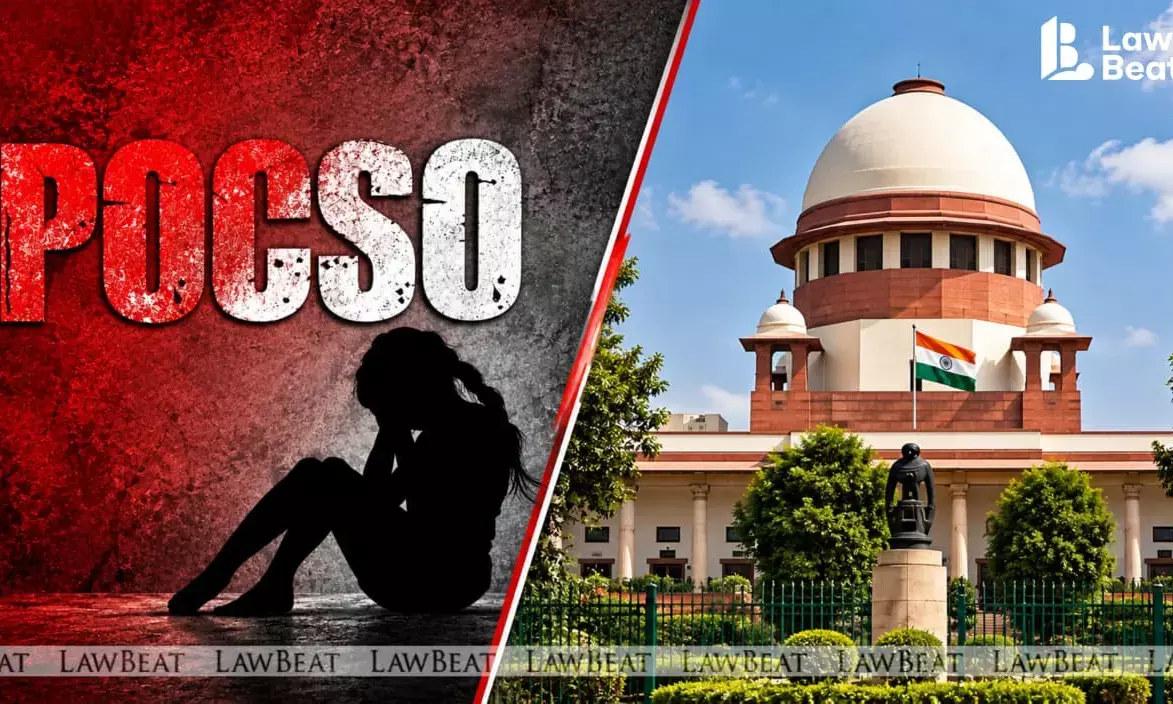
Supreme Court says POCSO trial even resulting in acquittal can damage a teacher’s career.
The Supreme Court has cautioned that a POCSO prosecution can cause irreversible damage to a teacher’s career and life, observing that even an eventual acquittal may not be enough to undo the harm caused by a criminal trial.
A Bench of Justices Ujjwal Bhuyan and Atul S. Chandurkar made the observation while quashing the entire proceedings against Bhaskar Paul, a Geography teacher at Loknathpur High School in Alipurduar, West Bengal, who was facing prosecution under Section 10 of the Protection of Children from Sexual Offences (POCSO) Act.
Section 10 of the POCSO Act prescribes the punishment for aggravated sexual assault, which carries rigorous imprisonment of 5 to 7 years along with a fine
Court said that while the teacher’s conduct in dealing with the girl students was inappropriate and he needed to be more sensitive, the allegations recorded in the statements of the two students did not make out an offence of aggravated sexual assault under the POCSO Act.
POCSO trial can have consequences beyond acquittal
Court noted that for a teacher working in a girls’ school or a co-educational institution, an allegation of sexual assault can have consequences extending well beyond the criminal proceedings.
“Such an allegation or trial virtually amounts to condemning him, not only for his entire service career but for his life as well,” Court observed.
It further said that even if the accused ultimately secures an acquittal, that may not be sufficient to undo the damage caused by the POCSO proceedings.
Court observed that an acquittal would be “wholly inadequate” to reverse the pervasive damage suffered by the accused because of the severity of a criminal trial under the POCSO Act.
At the same time, the Bench made it clear that Paul’s conduct could not be treated as appropriate.
Court said that the teacher needed to sensitise himself while dealing with students of tender age, particularly girl students. However, it held that his resort to corporal punishment and inadequacy in handling the students could not, on the facts before it, justify prosecution under the stringent provisions of the POCSO Act.
What were the allegations against the teacher?
The case arose after a group of women teachers informed the school’s Headmaster on June 24, 2025, that some Class X girl students had complained about Paul physically touching them.
A meeting was subsequently held at the school, following which the District Child Protection Unit, Alipurduar, was informed. Its representatives visited the school on June 30, 2025.
According to the Counselling-cum-Enquiry Report, two girls said that Paul would beat them when they were inattentive in class. They alleged that he touched their backs, pinched their waists and, on one occasion, touched the neck of one of the students with his nails.
Three other children reportedly said that the teacher did not touch them but looked at them in a manner they found inappropriate and uncomfortable.
On July 23, 2025, the Sub-Inspector-cum-Officer-in-Charge of Samuktala police station registered an FIR on the basis of the enquiry report. The FIR additionally described the allegations as a case of “bad touch” and stated that three students had complained about being looked at in an inappropriate manner.
The FIR was registered under Section 10 of the POCSO Act.
What did the two girls tell the Magistrate?
The Supreme Court also examined the statements of the two students recorded by the Magistrate under Section 183 of the Bharatiya Nagarik Suraksha Sanhita (BNSS) [(Section 164 of the old Code of Criminal Procedure, 1973 (CrPC)].
The first student stated that Paul taught them Geography and used to beat them with his hand when they could not answer their lessons. She said that he hit them on their backs and punched them on their waists.
The second student similarly stated that Paul used to beat them with his hand when they could not do their lessons and that he had held her hand on one occasion, though she specifically stated that he did not do anything that time.
Statutory ingredients of aggravated sexual assault
The Supreme Court examined Sections 7, 9(f) and 10 of the POCSO Act.
Section 10 prescribes punishment for aggravated sexual assault. Court noted that the expression “aggravated sexual assault” is defined under Section 9, with Section 9(f) covering a person on the management or staff of an educational institution who commits sexual assault on a child in that institution.
Court thereafter referred to Section 7, which defines sexual assault as an act involving physical contact carried out with sexual intent.
After examining these provisions alongside the statements of the two students, the Bench concluded that the material before it did not establish the commission of the sexual offence contemplated under Section 10.
Court said that Paul could have dealt with the students in a “much more sensitive manner”, but held that his conduct, including resorting to corporal punishment, would not attract Section 10 of the POCSO Act.
Delay in FIR, hearsay statements
The Bench found other aspects of the prosecution case that warranted scrutiny, including the delay in lodging the FIR and the manner in which the Headmaster and women teachers had initiated the criminal proceedings.
Court specifically noted that the statements of the Headmaster and the women teachers were hearsay evidence.
It ultimately held that allowing the criminal prosecution to continue would amount to an abuse of the process of law and cause “extreme prejudice” to the appellant.
The Supreme Court accordingly set aside the April 27, 2026 order of the Calcutta High Court’s Circuit Bench at Jalpaiguri, which had dismissed Paul’s plea seeking quashing of the proceedings.
It quashed the entire proceedings arising from the Samuktala Police Station case pending before the Special Court at Alipurduar.
The criminal appeal was allowed, and Paul was set at liberty.
Case Title: Bhaskar Paul Vs The State of West Bengal
Bench: Justices Ujjal Bhuyan and Atul S Chandurkar
Date of Judgment: September 08, 2026