
Bank Officers Can't Face SC/ST Act Prosecution For Initiating Loan Recovery: Supreme Court
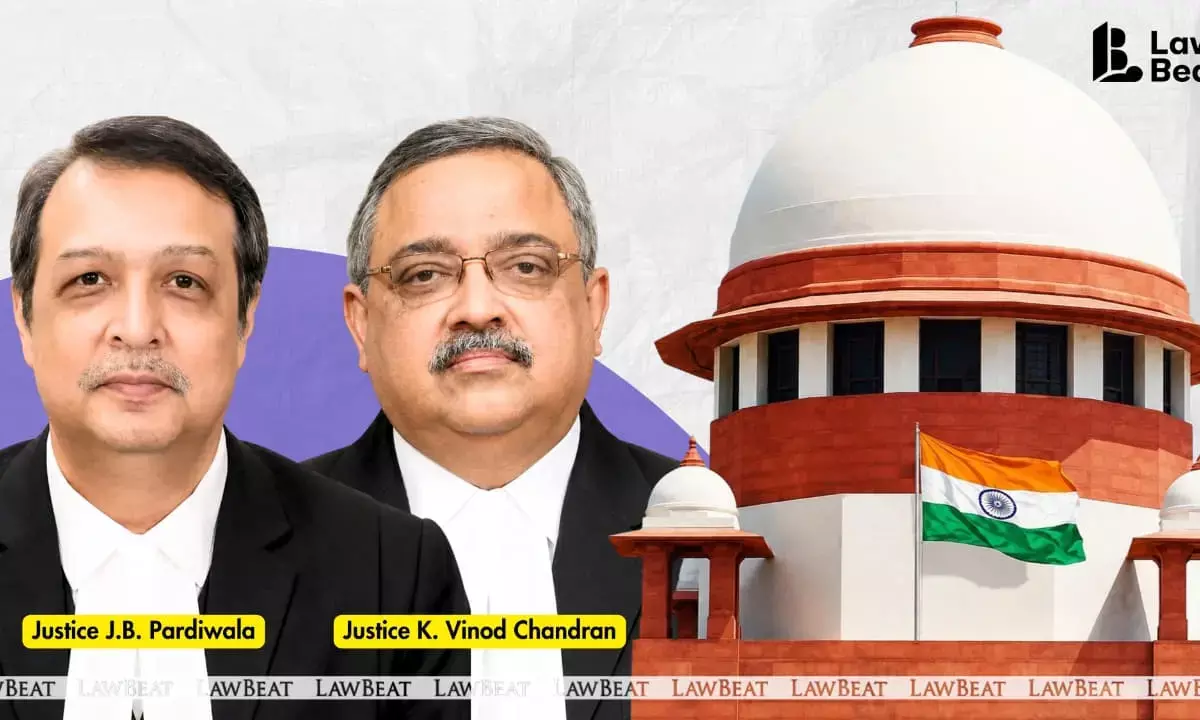
Supreme Court quashes SC & ST Act proceedings against bank officials.
The Supreme Court has held that criminal proceedings under the SC & ST (Prevention of Atrocities) Act cannot be sustained merely on allegations of economic boycott. Court said that bank officials cannot be prosecuted under the Act merely because the bank allegedly denied rehabilitation benefits to a borrowing company managed by members of the Scheduled Castes and Scheduled Tribes.
A Bench of Justices J B Pardiwala and K Vinod Chandran said criminal liability under the Act requires specific allegations of caste-based insult or discrimination against the accused.
Court made the observations while quashing criminal proceedings initiated against Chavan Dharmendar and others pursuant to an FIR registered in 2019 at the CID Police Station, Hyderabad.
Why did Supreme Court quash the SC & ST Act proceedings?
Court found that the allegations essentially arose from a dispute over business loans, non-performing assets (NPAs) and the alleged failure of the bank to extend rehabilitation benefits to the borrowing company.
"We are of the definite opinion that this does not justify the invocation of criminal proceedings against the officers of the bank," the Bench said.
The case concerned credit facilities extended by the State Bank of India to Hritasha Infra Projects Private Limited, a small-scale industry. The company's Director, Y Rajasekhar, claimed that the company had been availing credit facilities from the bank since 2010 and had also furnished collateral security.
The company's accounts became NPA in 2016 after it suffered financial losses. Despite this, the promoters claimed to have repaid a term loan of Rs 2.90 crore and subsequently paid Rs 45 lakh to the bank in an effort to regularise the account.
The promoters alleged that despite servicing the debt, they were subjected to caste-based discrimination by certain bank officials.
They further alleged that documents were forged and false or frivolous information was submitted to higher authorities, causing superior officers to exercise their powers in a manner that caused injury or annoyance to the company's promoters. This was alleged to attract Section 3(1)(q) of the SC & ST Act.
The complainants also alleged an economic boycott of small-scale enterprises managed by members of the Scheduled Castes and Scheduled Tribes. According to them, industries owned by influential entrepreneurs from higher castes had been granted rehabilitation packages with substantial discounts, while similar relief was denied to their enterprise.
The complaint also alleged violation of RBI circulars and guidelines and failure to extend a rehabilitation package to the company.
What did Court say about caste-based discrimination?
Court noted that there was no specific allegation that any of the bank officials had denigrated the company's directors merely because of their caste.
It also noted that the complainant's own case, as recorded by the high court, was that the company was a small-scale industry predominantly managed by women belonging to the Scheduled Castes and Scheduled Tribes. However, the Managing Director, who was arrayed as the second respondent, was not a woman, Court pointed out.
Court said non-compliance with RBI guidelines or circulars could not, by itself, result in criminal prosecution merely because the company's directors belonged to the Scheduled Castes or Scheduled Tribes.
"We are not convinced that the criminal prosecution should be continued on the allegations raised," the Bench said.
Court clarified that the complainants were free to raise their grievances before the appropriate forum, including the Debts Recovery Tribunal.
It said allegations concerning violation of RBI circulars and guidelines, refusal to grant rehabilitation benefits in accordance with those guidelines, or false information and misrepresentations allegedly made to initiate coercive action against a borrower could be examined in recovery proceedings.
The adjudicating authority would have to determine whether such allegations were legally valid and whether they could affect the bank's recovery proceedings, Court said.
The accused had also argued that the documents alleged to have been forged or fabricated were documents furnished by the company's directors, who had stood as guarantors for the loan account.
The high court, however, had refused to interfere with the proceedings after relying on various decisions and holding that the bank officials were required to follow the Central Government and RBI framework concerning revival and rehabilitation of MSMEs.
The Supreme Court disagreed with this approach, holding that the circumstances did not justify invoking criminal proceedings against the bank officials.
Allowing the appeal, Court quashed the proceedings arising from the FIR registered on February 4, 2019, at the CID Police Station, Hyderabad, Telangana.
Case Title: Chavan Dharmendar & Ors Vs State of Telangana & Ors
Bench: Justices J B Pardiwala and K Vinod Chandran
Date of Judgment: October 12, 2026