
Notional Service Breaks Must Be Ignored For Pension Benefits: Supreme Court
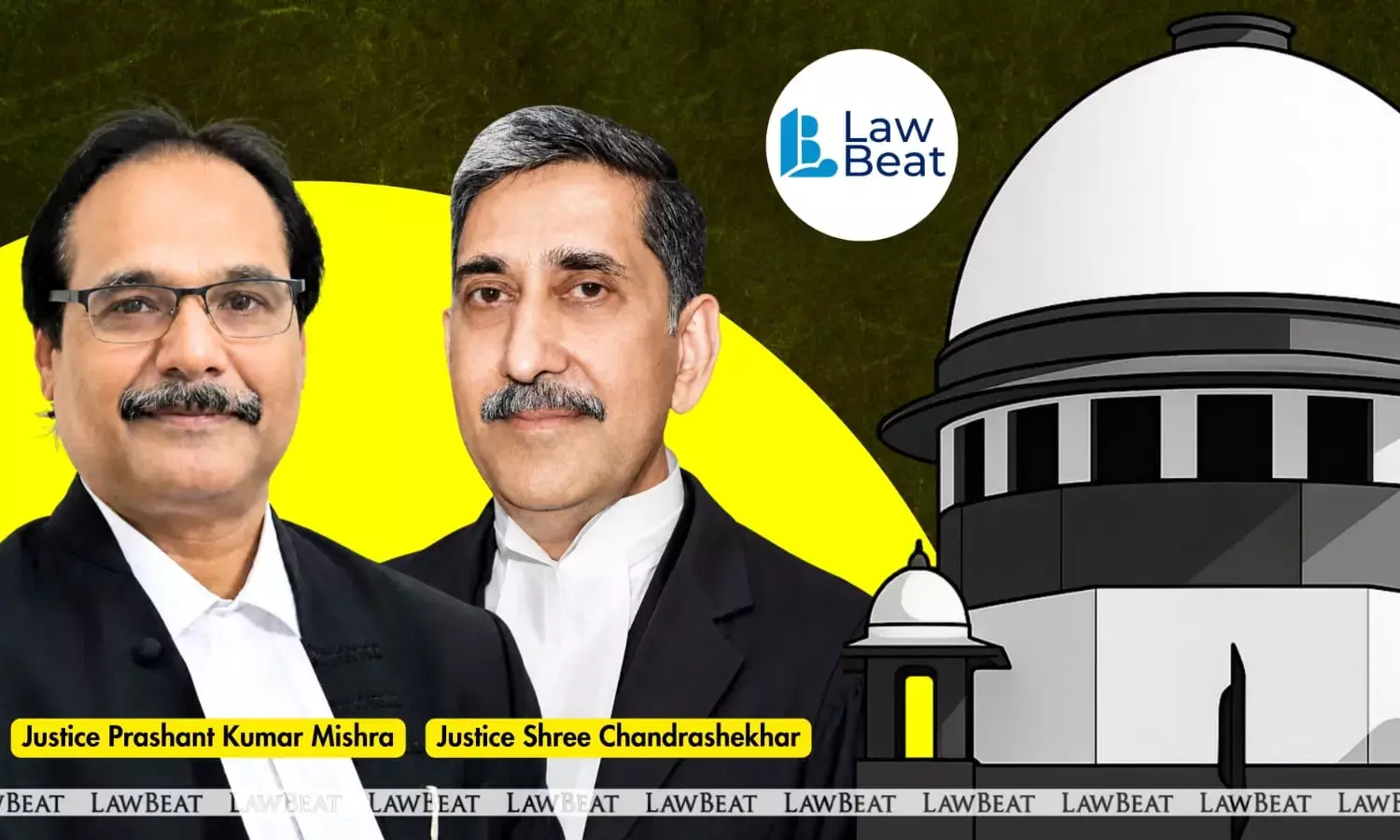
Supreme Court clarifies pensionary benefits and service breaks.
The Supreme Court has held that where breaks in service are merely ‘notional’, artificial or administrative, or have occurred due to court orders, they must be ignored while computing pensionary benefits. The service of such employees must be treated as continuous, Court emphasised.
A Bench of Justices Prashant Kumar Mishra and Shree Chandrashekhar further held that pre-regularisation service rendered as contract, ad hoc or daily wage employees must be counted as qualifying service for pension purposes.
“Pension is not a bounty or ex-gratia payment but a deferred wage for past service rendered,” the Bench said, adding that courts should not deny pensionary benefits on technical grounds where an employee has rendered long and continuous service and has subsequently been regularized.
Why did the Supreme Court uphold the employees’ pension claims?
Court upheld a 2020 order of the Punjab and Haryana High Court which had affirmed the entitlement of employees of the Punjab School Education Board to have their pre-regularisation service counted as qualifying service for pension.
As a result, the employees were held entitled to be governed by the old pension scheme rather than the new defined contributory pension scheme introduced from January 1, 2004.
The Supreme Court was hearing an appeal filed by the Punjab School Education Board against the high court order.
Can previous litigation over regularisation bar a later pension claim?
No, the Supreme Court held, as the two proceedings concern different causes of action and reliefs.
The Bench said where an earlier proceeding concerns a claim for regulasisation and a subsequent proceeding concerns the pensionary consequences of the regularisation that was eventually granted, the principle of res judicata does not apply.
Court therefore held that previous litigation regarding regularisation did not bar the employees from seeking pensionary benefits arising from that regularisation.
What did the Supreme Court say about qualifying service?
The Bench emphasised that qualifying service for pension generally includes all periods spent on duty without interruption. Pensionary benefits must therefore be determined on the basis of the total service rendered and the emoluments last drawn.
“When an employee has rendered long and continuous service, and stands ultimately regularized, denial of pensionary benefits based on technicalities or artificialities is generally unjustified,” Court said.
What did the Board argue about the employees’ regularisation?
Court noted that the Board had voluntarily adopted the 2001 government policy mutatis mutandis (with appropriate modifications). This also negated several of its contentions, including that the employees were required to qualify a typewriting test, complete a one-year probation period and produce a medical certificate.
Court said these requirements merely indicated suitable amendments to the regularisation policy to meet the Board’s requirements and did not amount to fresh appointments.
Court also took note of the fact that similarly situated employees in other departments had been granted identical relief by the high court.
To deny the respondents the same benefit, the Bench observed, would be prima facie discriminatory.
What did the Supreme Court hold?
“On a cumulative assessment of the material on record, therefore, we are satisfied that the decisions of the courts below are legally sound and based on correct application of law to facts, and there is no illegality or infirmity that would warrant our interference in appeal,” the Bench held.
Dismissing the Board’s appeal, the Supreme Court held that the respondent-employees had indeed been regularized and were entitled to be treated as having entered government service before January 1, 2004.
They were therefore held entitled to the benefits applicable under the old GPF pension scheme. The Bench also clarified that they would have the discretion to choose the new scheme if they opted for it.
Case Title: Punjab School Education Board And Another Vs Satnam Singh And Others
Bench: Justices Prashant Kumar Mishra and Shree Chandrashekhar
Date of Judgment: September 08, 2026