
Rights Earned By Contractual Employees Before Rules Amendment Cannot Be Taken Away: Supreme Court
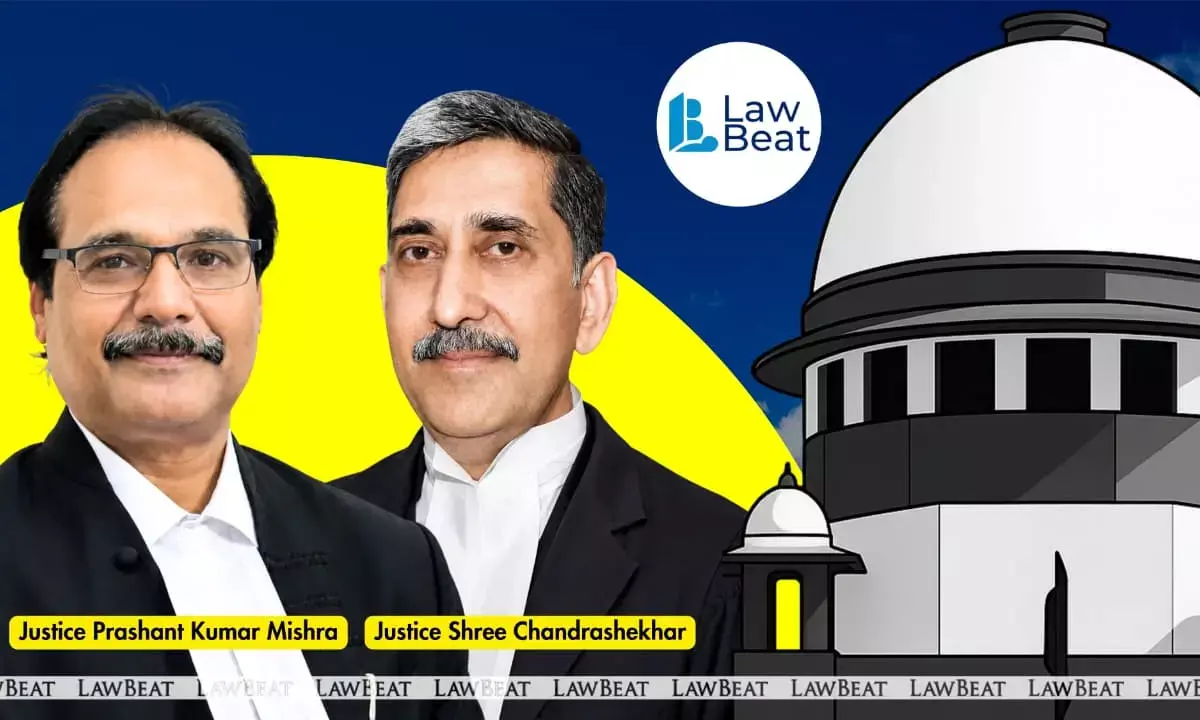
SC protects regularisation rights accrued before service rule amendment.
The Supreme Court has held that rights accrued in favour of contractual employees before an amendment to the applicable service rules cannot be extinguished by applying the amended rules retrospectively.
A Bench of Justices Prashant Kumar Mishra and Sree Chandrashekhar clarified that the 2020 amendment to the Odisha Pharmacist Service (Methods of Recruitment and Conditions of Service) Rules, 2019, applies prospectively and does not deprive pharmacists who had already acquired the right to regularisation of their entitlement.
Court also reiterated that statutory rules, including amendments to such rules, operate prospectively unless the rule-making authority specifically provides for retrospective effect.
Why Did Court Hold Amendment Applies Prospectively?
Court noted that the contractual pharmacists in the present case had completed six years of contractual service before the 2020 amendment came into force. Therefore, any right that had already accrued in their favour could not be taken away by treating the amendment as retrospective.
"Reading it differently would unsettle the law laid down by this court in Amit Kumar Mishra. It is settled that unless the legislature or the rule-making authority makes a particular rule retrospective by making specific provision in that regard, the rules should be operative prospectively only," the Bench said.
Court pointed out that the amendment was notified in the Odisha Gazette on November 27, 2020, while the respondents had admittedly completed six years of contractual service as pharmacists in the Mobile Health Unit/Team before that date.
"Thus, any right which had already accrued in favour of the respondents/writ petitioners prior to coming into force of the amendment to the 2019 Rules, cannot be taken away by reading the same to be retrospective in effect, when the Rules do not say so," the Bench said.
What Was The Dispute Over Regularisation Of Contractual Pharmacists?
The State of Odisha had challenged orders passed by a division bench and a single judge of the High Court of Orissa at Cuttack, which had allowed the writ petitions filed by the respondents, who were contractual pharmacists working in Mobile Health Units/Teams under the National Rural Health Mission (NRHM).
The high court had directed the State authorities to consider their cases in view of the directions issued by the Supreme Court in State of Odisha & Ors v Amit Kumar Mishra & Ors (2020).
In that case, the Supreme Court had interpreted the Odisha Pharmacist Service (Methods of Recruitment and Conditions of Service) Rules, 2015, particularly Rules 4 and 6, and held that contractual pharmacists were to be absorbed after completing six years of satisfactory contractual service.
It had further held that contractual pharmacists who had not yet completed six years of service were to be treated as contractual government employees and would be regularised upon completing six years of satisfactory service, as provided under the proviso.
"There is little doubt that, as per the statutory rules, the State of Odisha itself has provided for a deeming provision for such contractual employees, namely, pharmacists. Rule 5 of the said rules speaks about modalities for induction of the pharmacists in the cadre, while Rule 6 mentions the method of recruitment," the Supreme Court had then observed.
What Was The State's Argument On The 2020 Amendment?
The State argued that sub-rule (1) of Rule 4 of the Odisha Pharmacist Service (Methods of Recruitment & Conditions of Service) Rules, 2019, was subsequently amended by the Odisha Pharmacist Service (Method of Recruitment and Conditions of Service) Amendment Rules, 2020, notified on November 27, 2020.
According to the State, after the amendment, only contractual pharmacists working in fixed healthcare facilities were entitled to be considered for regularisation after completing six years of contractual service.
It argued that since the respondents had worked in Mobile Health Units/Teams, they would not fall within the scope of sub-rule (1) of Rule 4 of the 2019 Rules, as amended. Therefore, the State contended that the high court had not correctly interpreted the rules after the 2020 amendment.
The State also argued that since the writ petitioners had not challenged the validity of the Rules, they could not seek relief contrary to them. It submitted that the Rules framed under Article 309 of the Constitution have statutory force and that the high court could not issue directions contrary to the Rules.
The respondents, however, submitted that the high court had correctly applied the law laid down by the Supreme Court in Amit Kumar Mishra. They argued that before November 27, 2020, the Rules did not distinguish between contractual pharmacists working in fixed healthcare facilities and those working in Mobile Health Units/Teams.
What Did The Supreme Court Say About Rights Already Accrued?
The Supreme Court agreed with the respondents and held that the amendment to sub-rule (1) of Rule 4 of the 2019 Rules would operate prospectively.
It clarified that the amendment would not take away rights already accrued to contractual pharmacists, whether they were working in fixed healthcare facilities or Mobile Health Units/Teams.
Court also stressed that rules framed under Article 309 of the Constitution have statutory force and that courts must interpret such rules based on their text and the legislative intent regarding their temporal application.
The Bench further rejected the argument that contractual employees could not seek relief merely because they had not challenged the validity of the Rules, observing that courts can interpret the scope and application of existing statutory provisions.
The Supreme Court therefore declined to interfere with the orders passed by the high court.
However, it clarified that contractual pharmacists working in Mobile Health Units/Teams who had not completed six years of contractual service as on November 27, 2020, would be governed by the 2020 amendment.
Case Title: State of Odisha & Ors Vs Chhabindra Kumar Samal
Bench: Justices Prashant Kumar Mishra and Shree Chandrashekhar
Date of Judgment: September 08, 2020