
Section 91 CrPC: Supreme Court Says Accused Entitled To Seek Prosecution Records To Shape Up Defence
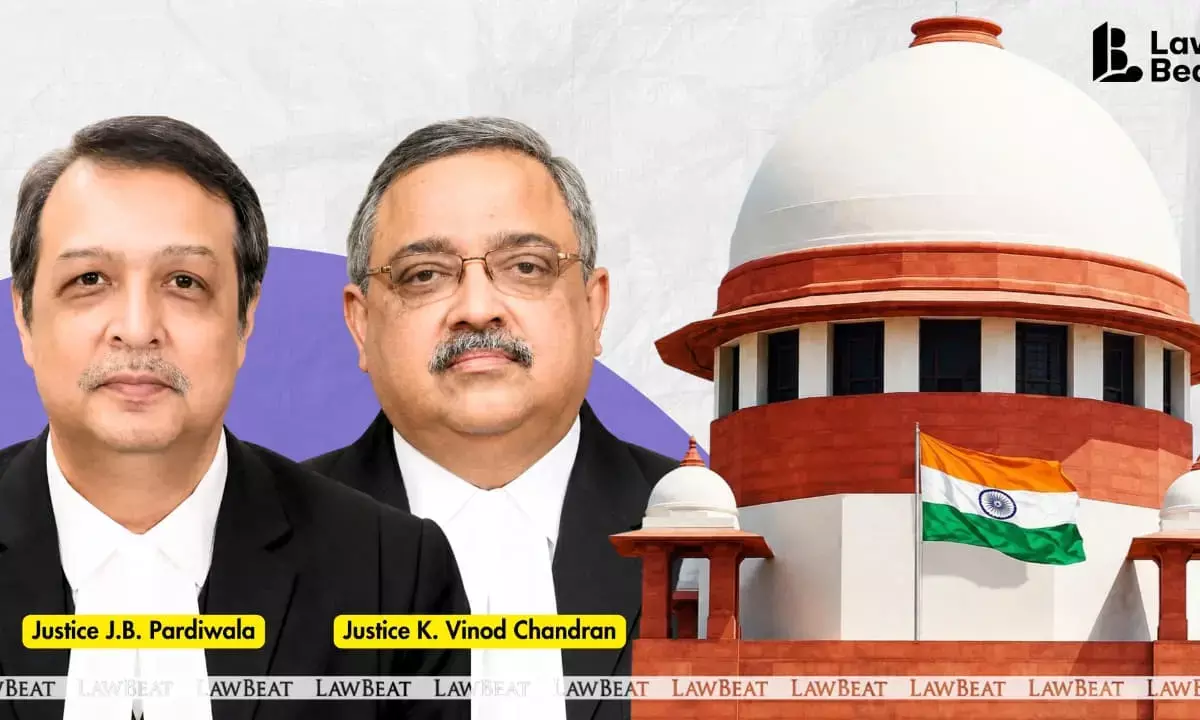
Supreme Court balances defence rights with trial efficiency.
The Supreme Court has held that while an accused is entitled to seek documents in the possession of the prosecution to shape their defence, the stage at which such documents can be sought must be balanced against the nature and volume of the records.
A Bench of Justices J B Pardiwala and K Vinod Chandran said that an accused may seek production of documents from the investigating agency under Section 91 of the Code of Criminal Procedure (CrPC) [now Section 94 of the Bharatiya Nagarik Suraksha Sanhita (BNSS), 2023]. However, where the documents sought are voluminous, the prosecution may permit the accused to inspect them first.
The accused can thereafter seek production of specific documents required for their defence at the appropriate stage of the trial, including during the examination of witnesses, instead of seeking all such documents indiscriminately at the stage of framing of charges, the Bench said.
Section 91 of CrPC empowers a court or an officer-in-charge of a police station to summon or order the production of any document or thing necessary or desirable for an investigation, inquiry, trial, or other proceeding.
Court was hearing a plea filed by the Central Bureau of Investigation (CBI) against orders directing it to produce certain documents, specifically "unrelied" documents, at the stage of framing of charges.
The accused, Anil Dixit, had filed an application under Section 91 CrPC seeking certain documents. The application was allowed by the Special Judge, CBI, Ranchi, on September 21, 2019.
The CBI subsequently filed a compliance report, producing some of the documents while resisting the production of others and stating that certain documents were not in its possession.
A further application filed by Dixit resulted in an order dated July 18, 2022, which was affirmed by the impugned order and subsequently challenged by the CBI before the Supreme Court.
Before the Court, Dixit filed an affidavit stating that he was not seeking the source of information received by the CBI or the case diaries.
Court proceeded on the premise that an accused is entitled to documents available with the prosecuting agency for the purpose of shaping their defence. However, it said the question of at what stage such documents can be sought had to be examined with reference to the specific documents being requested.
The Bench noted that the documents sought included registers maintained by the CBI and source information, which could not be divulged. Dixit had also withdrawn his request for those documents.
As regards the request for photocopies of all documents seized by the investigating officer but not relied upon in the chargesheet, Court noted that the CBI had permitted inspection of the documents considering their voluminous nature.
"The accused could examine such documents and seek for production of the specific document required at the appropriate time, when the appropriate witness is being examined either by the prosecution or the defence, for which purpose the CBI shall keep the files ready at the time of trial," the Bench said.
Alternatively, Court said, the CBI could permit the accused or their authorised representative to identify the particular documents required during inspection.
Such documents could then be specified in writing and signed by both sides. The same would also be produced before the trial court without delay, and only the documents so identified would need to be kept available before the court at the time of trial, the Supreme Court ordered.
In view of these directions, Court directed the trial court to proceed with the case and set aside the impugned orders, with a view to facilitating an expeditious trial.
In the present case, the FIR was registered on October 31, 2014, against several accused persons. It alleged that between 2010 and 2014, the accused, acting in criminal conspiracy with each other, awarded consultancy work for preparation of the master plan and comprehensive architectural, building, designing and engineering designs for the permanent campus of the Central University of Jharkhand, Ranchi.
The prosecution alleged that the work was awarded on the basis of fake documents and that fraudulent payments were made to the concerned firms, causing a wrongful loss of Rs 1,92,08,774.
Case Title: Central Bureau of Investigation Vs Anil Dixit
Bench: Justices J B Pardiwala and K Vinod Chandran
Date of Judgment: September 25, 2026