
Supreme Court Orders Fresh Probe Into 2012 Soujanya Rape-Murder Case
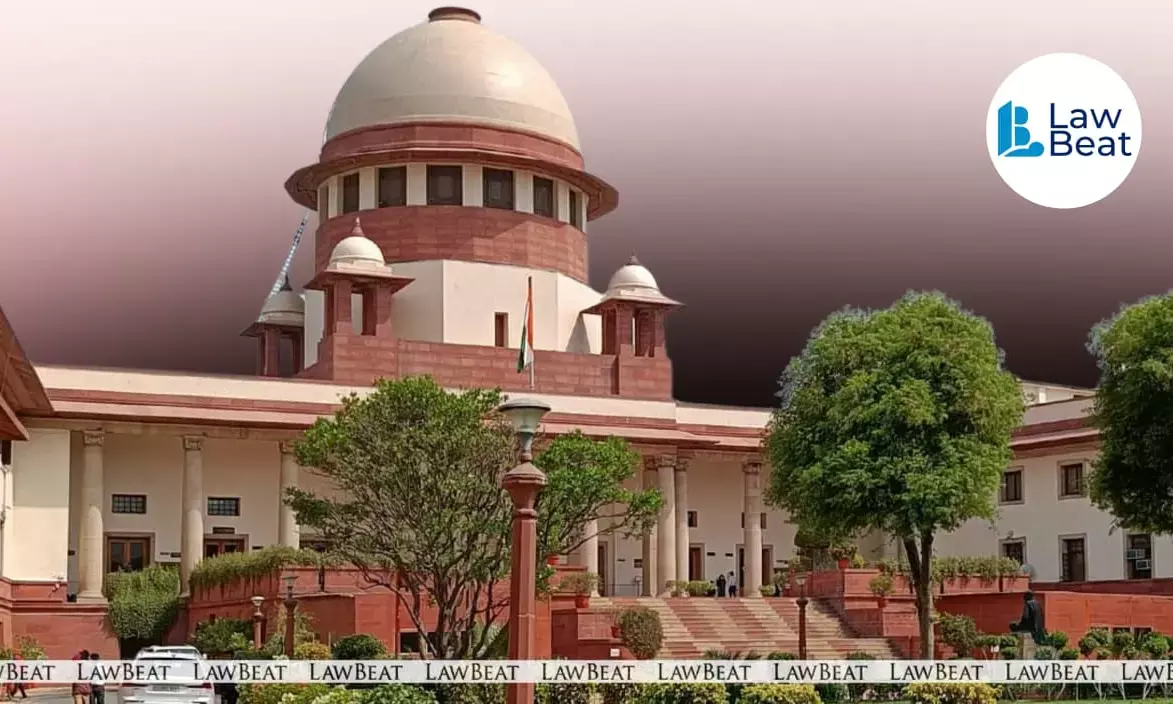
Supreme Court orders fresh probe into 2012 Soujanya rape-murder case.
The Supreme Court has directed a de novo investigation into the 2012 rape and murder of 17-year-old Soujanya at Dharmasthala, observing that the manner in which various agencies, including the CBI, conducted the investigation and gathered and evaluated evidence “shocked the very conscience” of the Court.
The 2012 case triggered widespread protests in Dakshina Kannada amid allegations that the investigation was not properly examining other possible suspects and that the sole accused, Santhosh Rao, had been falsely implicated. The protests, joined by public groups and the victim’s family, led to demands for a CBI probe. The investigation was handed over to the CBI on December 12, 2012.
A Bench of Justices Sanjay Kumar and Sanjeev Sachdeva directed the Karnataka government to constitute a Special Investigation Team (SIT) comprising efficient investigators well-versed in the use of modern investigative technology. The SIT has been directed to complete the fresh investigation within 90 days.
Why did Supreme Court order a fresh investigation?
Court found that the investigation had been conducted in a manner that caused injustice to the victim and said the possibility of the real culprit or culprits manipulating the investigation could not be ruled out.
“Clearly the investigation has been conducted in a manner that causes injustice to the victim. The possibility of the real culprit(s) manipulating the investigation cannot be ruled out. Such lax and improper investigation gives premium to the Investigating Officers who failed to do their job correctly and diligently,” the Bench said.
Court also observed that in a case involving the brutal rape and murder of a 17-year-old girl, the person prosecuted was ultimately held incapable of committing the offence.
Court allowed a petition filed by Kusumavati Gowda, the victim’s mother, challenging the Karnataka High Court’s August 30, 2024 judgment. The high court had dismissed a writ petition filed by the victim’s father after the sole accused, Santhosh Rao, was acquitted.
The Supreme Court ordered that the fresh investigation in the FIR, originally registered with the Belthangady police in Dakshina Kannada district, be conducted by a senior officer-led SIT. No police officer who had previously been associated with the investigation at the concerned police station, Crime Branch or CBI will be part of the fresh probe.
What did victim’s family allege about the investigation?
The victim’s family claimed that the CBI investigation was not properly conducted and that Rao was falsely implicated while the real culprits were shielded by the investigating agency.
The petitioner claimed Rao was falsely implicated at the instance of Malik Jain and Ashith Jain. Malik Jain was one of the persons suspected to have committed the offence. However, instead of examining his role, he was cited as a prosecution witness.
The Supreme Court, after noticing other suspicious circumstances, clarified that Rao, who has already been tried and acquitted by the Sessions Court in the FIR, would not be subjected to any investigation.
Court also made it clear that nothing in its judgment should be construed as expressing even a prima facie opinion on the role of any individual, including Mallik Jain, Deeraj Jain and Uday Jain.
“The Special Investigating Team shall conduct the investigation without being influenced by anything stated on merits in this order,” the Bench said.
What evidence did the Supreme Court find could still be examined?
Court noted that eight potential witnesses identified by the petitioner were located by the Karnataka government within three weeks after the Supreme Court, on April 29, 2026, directed the state to provide them adequate protection.
“The State’s ability to successfully locate the witnesses within three weeks, raises questions on the inability of three investigative agencies, (Karnataka police, Crime Branch and CBI, which previously handled the case) to examine these leads when it was timely,” the Bench said.
Court also noted that DNA samples in the case had been preserved and could still be matched.
It further held that material witnesses were available and that hair belonging to other persons, which had been recovered and produced as Material Object No. 15, was also available. If suspected persons were identified, their blood samples could be collected and compared through DNA examination.
The Supreme Court therefore rejected the high court’s finding that evidence which could not be collected during the “golden hour” was unlikely to remain available and that no useful purpose would be served by allowing a reinvestigation.
“Thus the observation of the high court that it is doubtful that evidence that could not be collected at the golden hour is still available and that no useful purpose would be served even if reinvestigation was permitted is clearly erroneous and cannot be sustained,” the Bench said, setting aside the high court’s order.
What happened to Soujanya in 2012?
Soujanya was a second-year Pre-University Course student at Sri Dharmasthala Manjunatheshwara College, Dharmasthala.
On October 9, 2012, after returning from school by bus, she was seen by her uncle and aunt at around 4.15 pm. She did not return home, following which her parents began searching for her and lodged a missing complaint.
The next day, October 10, 2012, some locals found the body of a girl in a thick bush near Mannasanka. The body was found in a half-naked condition, with her left hand tied to a tree stem using a shawl or veil from her college uniform.
Following public outcry and considering the sensitivity of the case, the Karnataka government handed over the investigation to the CBI on December 12, 2012.
Court noted that several pieces of the victim’s clothing were missing. The Sessions Court had also noticed that the school bag found near the deceased and the books inside it remained intact despite heavy rain.
It was alleged that the victim had been abducted to another place, where she was raped and murdered, before her body was brought back and dumped at the spot. It was also alleged that CCTV footage was not secured and that the belongings of the victim found at the spot had been planted.
What did the Supreme Court say about its power to order reinvestigation?
The Bench held that the power of constitutional courts to direct further investigation or reinvestigation is part of their jurisdiction of judicial review and a basic feature of the Constitution.
“The power of the constitutional courts to direct further investigation or reinvestigation is a dynamic component of its jurisdiction to exercise judicial review, a basic feature of the Constitution and though has to be exercised with due care and caution and informed with self-imposed restraint, the plenitude and content thereof can neither be enervated nor moderated by any legislation,” the Bench said.
Court relied, among other judgments, on Neetu Kumar Nagaich v State of Rajasthan (2020), which held that where a constitutional court is satisfied that an investigation has not been conducted in a proper and objective manner, a fresh investigation with the assistance of an independent agency can be ordered to secure the ends of justice and reveal the truth.
The Bench said injustice to a person falsely charged could be compensated, but injustice to a victim who was brutally raped and murdered could not be compensated.
“Society would be failing in its duty if it does not provide justice to the victim of such a heinous crime by conducting a proper investigation and bringing the real culprits to the book,” it said.
Case Title: Kusumavati Gowda Vs The Government of Karnataka & Ors
Bench: Justices Sanjay Kumar and Sanjeev Sachdeva
Date of Judgment: September 21, 2026