
‘Not Possible To Identify Assailants By Sounds’: SC Acquits 4 In Murder Case
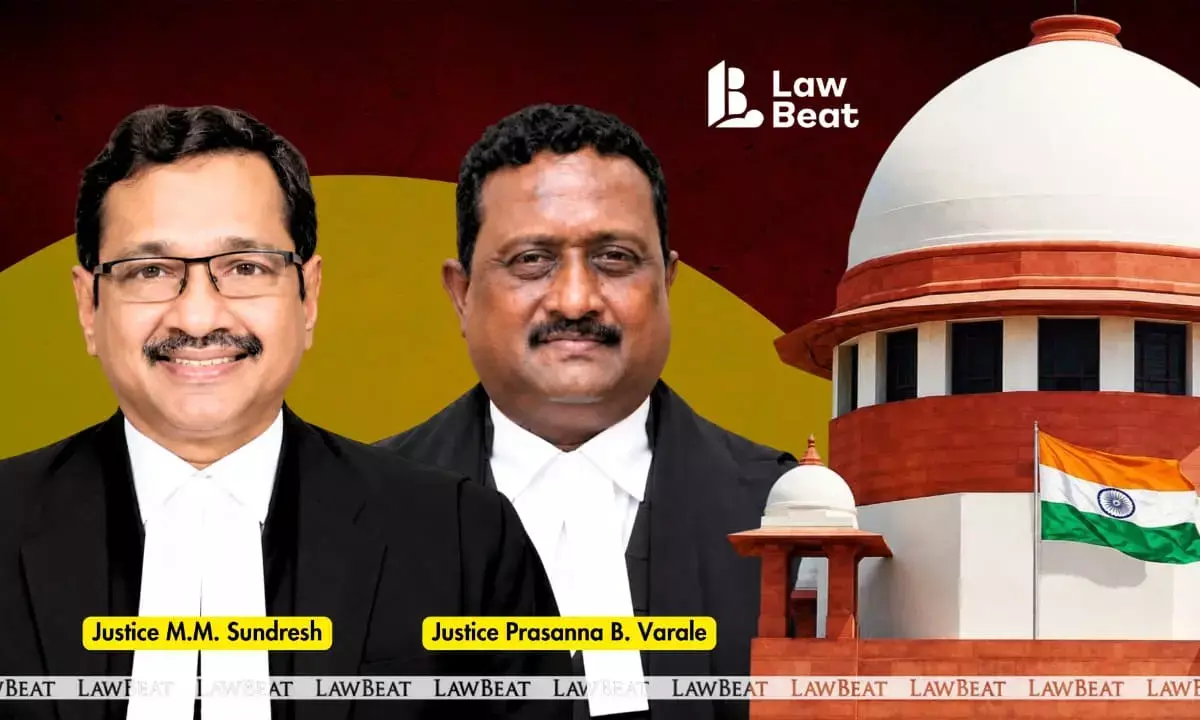
SC acquits four after rejecting pitch-dark night testimony.
The Supreme Court on September 18, 2026, said testimony of witnesses claiming to have identified assailants during a pitch-dark night from a distance cannot be relied upon as the sole basis for conviction, while acquitting four persons in a murder case.
A Bench of Justices M M Sundresh and Prasanna B Varale rejected the testimony of the alleged eyewitnesses, holding that it was not possible for the prosecution witnesses to have witnessed the incident on a pitch-dark night or to identify the assailants merely on the basis of the sound of the assault.
Why did Supreme Court reject the eye-witness testimony?
Court said the incident took place on a pitch-dark night and the alleged eye-witnesses were at a distance of about 60 cubits. In such circumstances, it was not possible for them to have witnessed the incident or identified the assailants merely by hearing the sounds of the assault.
“It was not possible for the prosecution witnesses to have witnessed the incident on a pitch dark night or to identify the assailants merely on the basis of the sound of the assault, the testimony of the alleged eye-witnesses cannot be relied upon,” the Bench held.
Court also pointed out that the high court itself had discarded the testimony of the eye-witnesses. However, the high court proceeded to examine whether the prosecution had established the guilt of the accused on the basis of the circumstantial evidence on record and, on that basis, upheld their conviction.
The Supreme Court found this approach to be misconceived.
“We have also discarded the testimony of the prosecution witnesses on this aspect, as it is not possible to safely conclude that they had either witnessed the occurrence on a pitch dark night or identified the assailants merely on the basis of the sounds of the assault. Once such evidence is found to be unreliable, the circumstance of identification cannot be said to have been proved,” the Bench said.
What was the murder case against the four accused?
The appeal was filed by Kritika and others against the May 6, 2009 judgment of the division bench of the High Court of Orissa at Cuttack, which had dismissed their pleas against their conviction and sentence of life imprisonment by the Jajpur court in the 2001 murder of Dhruba Pradhan.
It was alleged that the accused assaulted the deceased by throwing a laterite stone on his head and using a thenga, iron rod, bhujali and other weapons. The deceased later succumbed to his injuries. The accused persons also allegedly threw the deceased’s motorcycle into a pond.
Of the 18 accused, four absconded and their trial was split up. Of the remaining 14 who faced trial, eight were acquitted and six were convicted. The high court upheld the trial court’s judgment.
Of the six convicted persons, two died during the pendency of the appeal before the Supreme Court.
Upon hearing the counsel for the parties, the Bench said, “We are unable to persuade ourselves to concur with the view taken by the high court.”
Though the medical evidence clearly established that the deceased died a homicidal death, the question before the Supreme Court was whether the prosecution had successfully established that the appellants were responsible for the crime.
“We find that the prosecution failed to establish its case,” the Bench said.
What circumstances did high court rely on?
The high court had relied on several circumstances to uphold the conviction. These included the allegation that appellant Narendra alias Nahari Behera had visited the deceased’s house at 4 pm and threatened to kill him; that the appellants, armed with weapons, came to the deceased’s house at 7 pm; and statements of two witnesses that about 200 to 250 persons were searching for the deceased.
The high court also relied on the prosecution's claim that the appellants waited for the deceased, identified him with the help of a torch and assaulted him; that the appellants were identified through their voices; that eye-witnesses heard the sound of the assault; that the appellants waited for two hours to assault the deceased’s family members; and that a weapon was recovered from the spot along with the motorcycle driven by the deceased.
The Supreme Court, however, found that the testimonies of the witnesses suffered from material inconsistencies about who was and who was not present to witness the incident.
The Bench also noted that the conduct of the witnesses was beyond natural conduct. Though PW-3 claimed to be an eye-witness, he was unable to state which weapon was carried by which accused.
He also stated that after the assault, he went to his house and returned to the spot after two hours. Court noted that this meant he made no attempt to inform other family members or anyone else in the village about such a serious incident.
What did Supreme Court say about 53-kg laterite stone?
Court also found no merit in the prosecution's theory that the deceased died after being hit with a 53-kg laterite stone.
It noted that there was absolutely no material to show how such a heavy stone was brought to the spot or who brought it. The prosecution also failed to recover the alleged 53-kg laterite stone said to have been used in the commission of the offence.
What is the law on conviction based on circumstantial evidence?
Referring to Abdul Nassar v State of Kerala (2025), the bench said it is a settled position of law that to convict an accused on the basis of circumstantial evidence, each circumstance must be established beyond doubt and the circumstances, taken collectively, must point towards the guilt of the accused.
“Viewed cumulatively, the prosecution has failed to establish a complete and consistent chain of circumstances excluding every hypothesis other than the guilt of the appellants. The evidence on record leaves substantial gaps which create a reasonable doubt as to their involvement. In criminal jurisprudence, where two views are reasonably possible, the one favourable to the accused must prevail,” the Bench said.
Court finally held that the high court was not justified in affirming the conviction of the appellants and that they were entitled to the benefit of doubt.
The Supreme Court allowed the appeal and set aside and quashed the judgments of the high court and the sessions court.
Case Title: Kritika @ Kirtan @ Kirtan Charan Jena & Anr Etc Vs The State of Odisha
Bench: Justices M M Sundresh and Prasanna B Varale
Date of Judgment: September 18, 2026