
Advocate Seeks AG Consent For Contempt Proceedings Against CEC Gyanesh Kumar
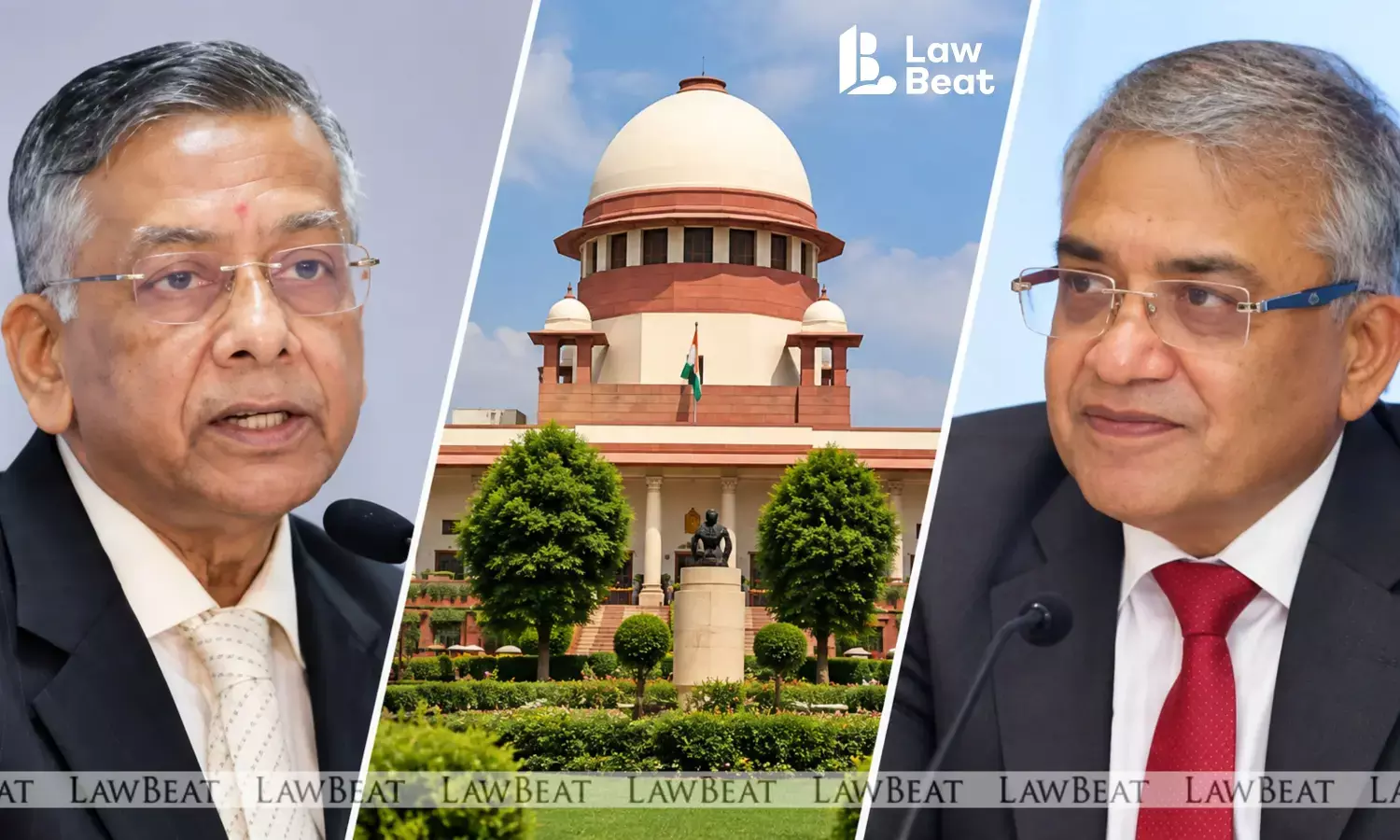
Chief Election Commissioner Gyanesh Kumar, against whom an advocate has sought the Attorney General's consent to initiate criminal contempt proceedings before the Supreme Court
Advocate Brajesh Singh has written to Attorney General R. Venkataramani seeking statutory consent to initiate criminal contempt proceedings against Chief Election Commissioner Gyanesh Kumar, arguing that the CEC's conduct amounts to a "one-man autocracy" that defies binding Supreme Court rulings on how the multi-member Election Commission of India (ECI) is meant to function.
The request, sent by email on September 24, invokes Section 15(1)(b) read with Section 2(c) of the Contempt of Courts Act, 1971, along with Rule 3 of the Rules to Regulate Proceedings for Contempt of the Supreme Court, 1975; the provisions under which a private citizen must first obtain the Attorney General's or a Solicitor General's consent before moving a criminal contempt petition before the Court. No contempt petition has been filed yet; Singh's letter states that a formal petition will follow only once consent is granted.
What the request relies on
The letter is built almost entirely around an investigative report published in The Indian Express on September 23, 2026, authored by Ritika Chopra, which examined an internal rift within the three-member Election Commission. According to that report, Election Commissioners Sukhbir Singh Sandhu and Vivek Joshi formally recorded written objections on at least 14 occasions over the preceding ten months, flagging that major decisions on the Special Intensive Revision (SIR) of electoral rolls, changes to voter registration Form 6, and other administrative steps were being issued in the name of the "full Commission" without their knowledge or concurrence.
Among the specific episodes the report documented: a change to Form 6 requiring new applicants to declare whether their family appeared on the electoral roll of the last SIR, which Joshi had warned in May could not be made without an amendment to the rules; a warning from Joshi about the "gradual centralisation" of the electoral roll database that could restrict Electoral Registration Officers' access; and questions raised by Sandhu over who had authorised the Commission to file appeals in West Bengal against orders restoring voters to the rolls. The two Commissioners reportedly went so far as to write to the Cabinet Secretary about changes in work allocation made without their knowledge.
Sandhu is reported to have recorded on file that certain changes were "unauthorised and illegal", Election Commissioner Sukhbir Singh Sandhu, as reported by The Indian Express, September 23, 2026
The grounds cited for contempt
Singh's letter argues that these disclosures make out a case of criminal contempt on three broad grounds: that reducing a constitutionally mandated multi-member body to what the letter calls a "one-man autocracy" undermines the majesty and dignity of a constitutional institution; that it amounts to wilful defiance of Supreme Court precedent; specifically T.N. Seshan v. Union of India (1995) and Anoop Baranwal v. Union of India (2023), which held that the CEC functions only as primus inter pares, first among equals, and cannot override the other Election Commissioners; and that compromising the integrity of the centralised electoral database interferes with the administration of justice and ongoing judicial scrutiny of electoral processes.
In a statement accompanying the request, Singh said the disclosures pointed to a documented subversion of constitutional machinery, and that when two of three Election Commissioners place on record that decisions taken in the ECI's name are unauthorised, the matter stops being a purely internal one. He added: "No individual, regardless of the high constitutional office they occupy, is above the law."
The Bench comprising Justice Dipankar Datta and Justice Satish Chandra Sharma differed on the preliminary question of reference, with Justice Datta rejecting the plea while Justice Sharma held that the matter warranted consideration by a Constitution Bench.
The petitions challenge the 2023 law governing the appointment of the Chief Election Commissioner (CEC) and Election Commissioners (ECs), including the composition of the selection committee. The law replaced the framework laid down by the Supreme Court's Constitution Bench in Anoop Baranwal v. Union of India.
Justice Datta, while pronouncing his opinion, noted that the Bench had heard the petitions for over five days and said that speaking in one voice would have served institutional cohesion. However, owing to the difference of opinion, he had to write a more elaborate order. He emphasised the constitutional principle that India is a government of laws and that those exercising power remain bound by law.