
'Against Judicial propriety' : Former CJI BR Gavai, Retired Judges Criticize Justice Ujjal Bhuyan's Remarks On SIR
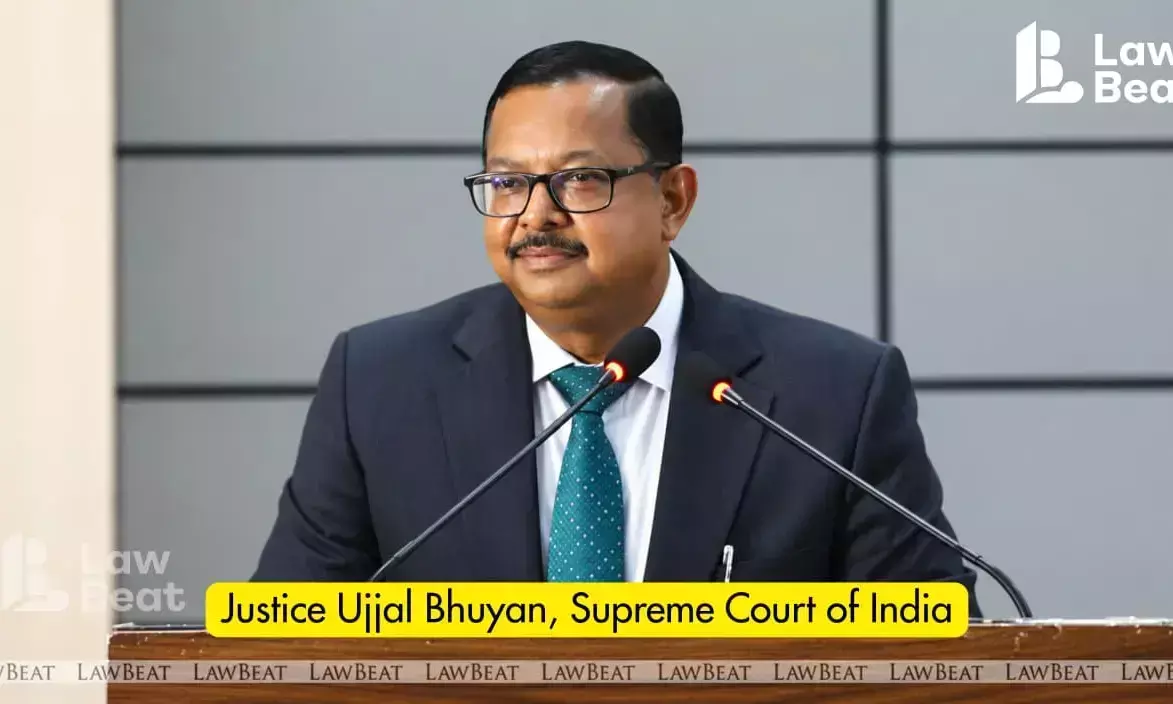
Former CJI BR Gavai and retired Delhi High Court judges Justice SN Dhingra and Justice RS Sodhi have questioned Justice Ujjal Bhuyan's remarks on the Special Intensive Revision of electoral rolls. Justice Bhuyan made the remarks at NALSAR University of Law.
Former Chief Justice of India BR Gavai and two retired Delhi High Court judges have criticised Supreme Court Justice Ujjal Bhuyan's recent public remarks on the Special Intensive Revision (SIR) of electoral rolls, stressing that the issue is currently pending adjudication before the Supreme Court.
Justice Bhuyan had made the observations while delivering the valedictory address at the 19th Justice Bodh Raj Sawhney Memorial Moot Court Competition at NALSAR University of Law on Sunday.
Speaking about the ongoing electoral roll revision exercise, Justice Bhuyan said that any process resulting in the disenfranchisement of millions of citizens would be "intrinsically arbitrary" and amount to a "negation" of the constitutional order.
He further said that the Constitution does not contemplate a distinction between citizens who possess voting rights and those who do not, and asserted that no amount of "whataboutery" could justify such a process.
Reacting to the remarks, former CJI BR Gavai said that judicial propriety required a judge to maintain restraint when the issue was before the court.
"Judicial propriety would not permit him to make any comment on the matter which is sub judice before the court" former CJI Gavai said.
Gavai said that a sitting Supreme Court judge ought not to publicly express views on an issue that is awaiting adjudication before the same court.
Retired Delhi High Court judge Justice S N Dhingra also questioned Justice Bhuyan's decision to comment on the SIR issue at a public event.
Describing the remarks as inappropriate for a sitting judge of the Supreme Court, Dhingra said: "He should have thought a thousand times before making such a statement."
Dhingra said Justice Bhuyan did not have the complete facts of the matter before him when making the observations.
He also rejected the need for judges to comment on reports of differences within the Election Commission concerning decisions related to the SIR exercise. "They are all top bureaucrats of the country sitting at very important positions. They can speak for themselves. There is no need for anyone to speak on their behalf" he said.
Dhingra termed Justice Bhuyan's statement "way beyond the limits of a sitting top court judge" and said that such observations should not have been made when the matter was pending before the Supreme Court.
Retired Delhi High Court judge Justice R S Sodhi took issue with Justice Bhuyan's characterisation of the electoral roll revision as disenfranchisement.
According to Sodhi, the right to vote is governed by the statutory framework, and eligibility has to be determined in accordance with the law.
"Whether you have a vote or you don't have a vote depends upon the statute. If you fall within the parameters of the statute, you have a vote. If you don't fall within the parameters of the statute, you don't have a vote" Justice Sodhi said.
He said that electoral rolls can contain names that do not satisfy the statutory requirements, while persons who are otherwise eligible may also find their names excluded. In either situation, the statutory mechanism provides a route for correction, including deletion or inclusion of names as the case may be.
Sodhi also questioned the suggestion that the exercise effectively creates "second class" citizens.
"I mean, these hardline thinking and these hardline statements, to my mind, are not a very mature way of looking at a thing, especially when you are supposed to be in a field which is supposed to be excellent in its rationalising" he said.
He said the more appropriate inquiry was whether a person was legally entitled to be included in the electoral roll and whether the Election Commission had followed the procedure prescribed by law.
The Supreme Court is seized of multiple petitions concerning the Special Intensive Revision of electoral rolls. The challenge forms part of a wider set of proceedings concerning the functioning and composition of the Election Commission.
The issue has generated considerable debate over the scope of the Election Commission's powers in revising electoral rolls, the safeguards available to voters and the consequences for persons whose names may be excluded from the rolls.
Justice Bhuyan's comments came against this backdrop, which has prompted the former CJI and retired High Court judges to raise questions about the propriety of a sitting Supreme Court judge making public observations on an issue pending before the court.
Justice Bhuyan made the remarks at NALSAR, where he had earlier served as Chancellor.
Addressing the students during the event, he also praised the institution and its students, saying: "You have shown to the country and the world what a university student, that too, a student of law, should be like. You are brilliant. You are bold and you are brave" he said.