
Art and Culture Shape Society In Ways Law Can Never Replicate: Justice V Mohana
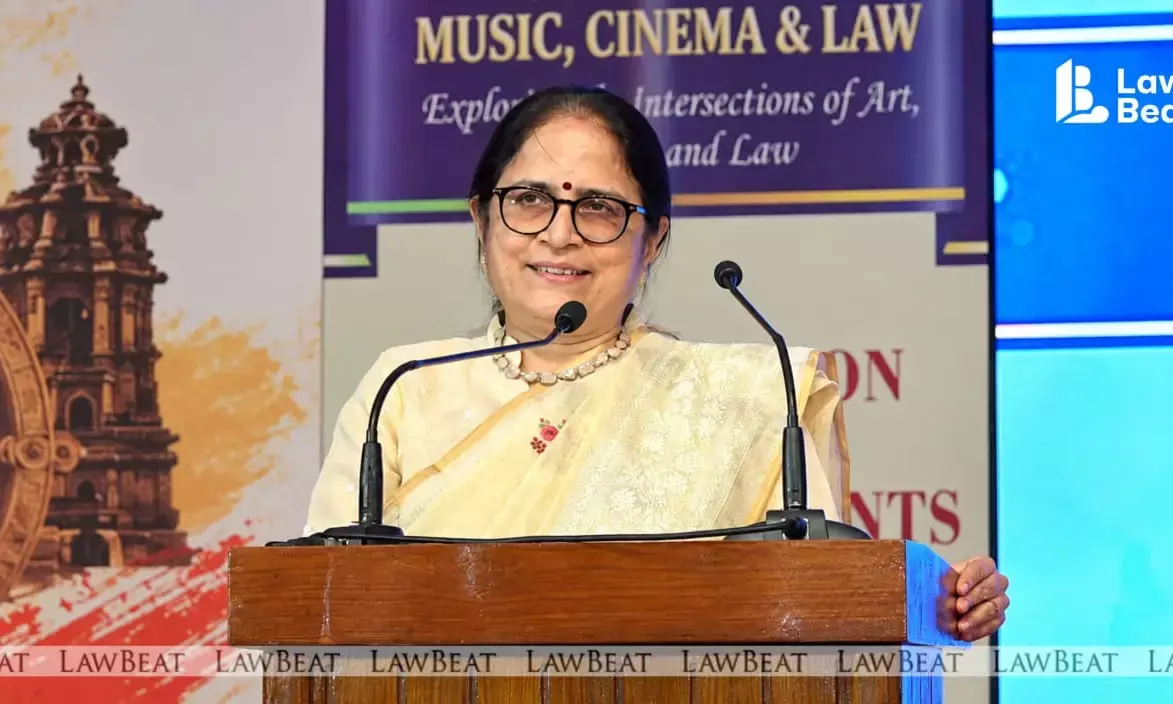
Supreme Court's Justice V Mohana spoke at the inaugural ceremony of 'Three-day Seminar on Music, Cinema and Law' at Kochi.
Supreme Court Justice V Mohana has highlighted that art and culture shape the society in ways that the law can never quite replicate.
While speaking at the inaugural ceremony of the 'Three-day Seminar on Music, Cinema and Law: Exploring the Intersections of Art, Culture and Law,' jointly organised by the Kerala Judicial Academy and the National University of Advanced Studies (NUALS) Kochi, the supreme court judge said, art matters to law as judges spend a great deal of time in law dealing with categories, principles, and precedence, but behind every case is a person and behind every legal dispute is a human experience.
"Art has a way of reminding us of that. In fact, art and culture shape the society in ways that the law can never quite replicate. Our ideas of empathy, beauty, courage, power, and even morality are formed through the stories we grow up with, the music we hear, and the films we watch today," Justice Mohana added.
The judge also spoke about how the relationship between art and law is becoming more complicated.
"Your voice can be copied. Your face can be recreated. Like the chief minister said, music can be generated by a machine. An actor can appear on screen without having performed a scene. Law is being asked questions that were almost unimaginable a few years ago. Where does inspiration end and imitation begin? When does technology assist an artist and when does it replace one? Who owns a creation made with the help of a machine? And how do we protect creativity without becoming a pride of innovation? These are legal questions but they cannot be answered by lawyers alone. They require artists, musicians, filmmakers, technologists, historians, academics and most importantly they require all of us to talk to one another," Justice Mohana remarked.
Speaking on the intersection between law, music and cinema, the judge said these three worlds are no strangers to each other. "There is actually something very familiar about a courtroom and cinema. Both are places where we listen to stories. The difference of course is that when we sit in a cinema, we know there is an ending in three hours and there is a message. In a courtroom, the judge often does not know where the story will take us. We hear it in fragments. One person tells us what happened. and other remembers it differently. There are documents, contradictions, memories, facts and silences in between. And somewhere in the middle of all this, the court has to make sense of the story and arrive at a conclusion that the law can recognize," she said.
On how music offers an interesting way of thinking about law, the judge drew parallels between the rules of music and law. She said music has rules it has rhythm structure and harmony and if only one follows the rules they don't necessarily create music. "The beauty often lies in what a musician does within those rules. The interpretation, the pause, the improvisation, the unexpected note. Law is not entirely different. The constitution, legislation, and proceedings give us our framework. They tell us where the boundaries are. And so judges are constantly trying to do something quite delicate to interpret the law faithfully while recognizing that the world in which the law operates is constantly changing, " she added.
The seminar was inaugurated by Kerala Chief Minister VD Satheesan in the presence of, Kerala High Court Chief Justice Soumen Sen, Justice Anil K Narendran, Minister of Higher Education Roji M John, other judges, lawyers, academics and members of the creative community.