
BCI Protest Assault: Supreme Court Directs Delhi Police Commissioner To Constitute SIT, Report To Magistrate
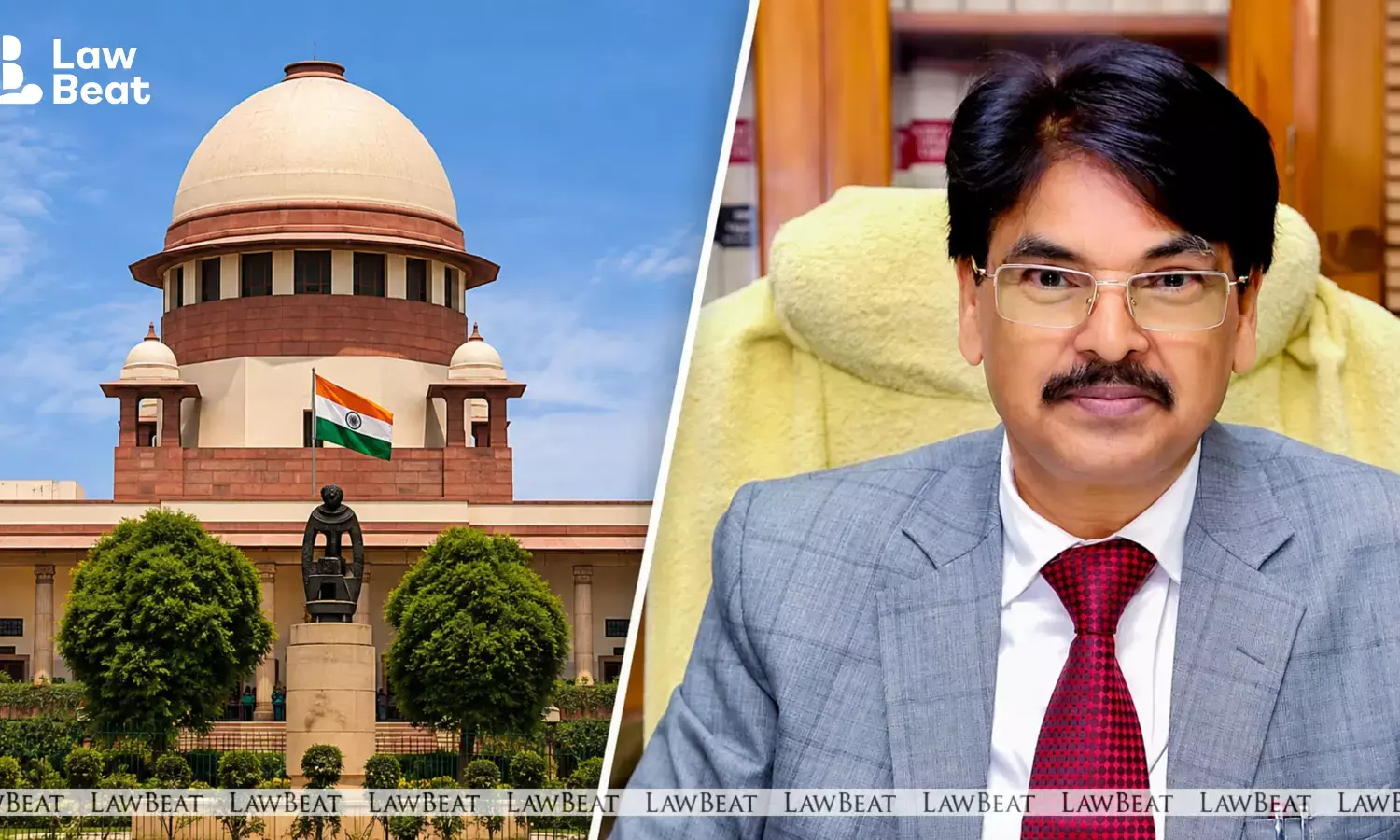
Supreme Court has directed the Delhi Police Commissioner to ensure that a complaint by advocates, who allege they were assaulted during a protest at the Bar Council of India on the night of August 20-21, is investigated by a special investigation team
Advocates who allege that they were assaulted inside and outside the premises of the Bar Council of India (BCI) on the intervening night of August 20-21 will have their police complaint examined by a special investigation team (SIT), after the Supreme Court on Monday directed the Delhi Police Commissioner to ensure that the complaint is investigated. The complaint had been lodged with the Station House Officer of the IP Estate Police Station on August 22, and, according to the petitioners, no FIR had been registered on it until the date of hearing.
The bench of Chief Justice of India Surya Kant, Justice Joymalya Bagchi and Justice V. Mohana directed that an SIT headed by a senior police officer be constituted for the purpose, and that the police, on completing the investigation, submit a report before the jurisdictional magistrate.
The Court was hearing a challenge to a September 21 judgment of the Delhi High Court, which had dismissed as not maintainable a plea by a group of lawyers seeking an investigation by the Central Bureau of Investigation (CBI) or any other independent agency into the alleged assault.
Appearing for the petitioners, Advocate Prashant Bhushan submitted that the High Court had held that no cognisable offence was made out. He informed the Bench that the petitioners had approached the SHO of the IP Estate Police Station on August 22, but no FIR had been registered to date.
Justice Bagchi asked counsel, "Isn't it better to go for a private complaint before a magistrate?"
Bhushan responded that beating someone is certainly a cognisable offence. He also submitted that the BCI ought to have taken action for professional misconduct against the lawyers who allegedly assaulted the petitioners and other advocates.
The Bench recorded that it was conscious that no notice had been issued to the respondents. It nonetheless proceeded to dispose of the petition with directions, observing, "However, in order to ensure that the incident is appropriately investigated and such investigation be taken to its logical end, we dispose of this petition with the following directions…"
The Court directed the Delhi Police Commissioner to ensure that the complaint made to the police on August 22 is investigated and, for that purpose, that an SIT be constituted to probe the matter, uninfluenced by the observations of the High Court.
Clarifying the scope of the order to Bhushan, the Bench said, "We have said that conduct an investigation and submit a report to the jurisdictional magistrate."
What did the High Court say?
In its September 21 verdict, the High Court had held that the petitioners had an alternate efficacious remedy, namely a complaint case before the magistrate concerned under Section 223 of the Bharatiya Nagarik Suraksha Sanhita, 2023 (BNSS), and that it was not a fit case to issue a mandamus to any authority to register a case and investigate.
The High Court had also recorded its "respectful disapproval" of the petitioners' submission that, because Mishra is a Member of Parliament from the ruling dispensation, the Delhi Police would not act fairly whereas the CBI would. It observed, "No basis has been submitted to buttress this apprehension. In the absence of any specific basis, it is not fair to tarnish the entire Delhi Police force in this manner, especially when the petitioners' own case fails to make out a cognisable offence."
The High Court had added, "Besides, the apprehension argument must also fail because even the CBI, against whom mandamus to register a case and investigate has been sought, is a government body. One should resist the temptation to discredit any government organisation by such general, sweeping and baseless allegations… For, it generates counterproductive cynicism and distrust in the mind of common man against the entire ecosystem."
The Supreme Court's direction that the SIT proceed uninfluenced by these observations means the investigating team is not bound by the High Court's finding that no cognisable offence was disclosed.
Background
On August 20, a group of advocates staged a protest outside the BCI office in Delhi, alleging irregularities in the Council's functioning and demanding the resignation of its Chairman, Manan Kumar Mishra. The demands raised included the enactment of an Advocates Protection Act, insurance coverage for all advocates, and regular and transparent inspections of law colleges. The protest was called by the All India Young Advocates Association and supported by the Cockroach Janta Party (CJP).
The protest followed criticism of Mishra over a since-withdrawn order directing State Bar Councils not to enrol any member of the current graduating batch of NALSAR University of Law as advocates. The controversy arose after a section of NALSAR students wrote to the Vice Chancellor, the Registrar and faculty members opposing any proposal to invite Chief Justice of India Surya Kant as chief guest at the university's convocation.
In the first circular, Mishra stated that the BCI was examining allegations of a campaign against the CJI's participation in the convocation and sought a report identifying those responsible. The decision was reversed within hours after criticism from members of the legal fraternity. A modified order stated that the "vast majority" of the students were innocent and should not be made to suffer for the alleged misconduct of a few. Mishra later apologised to law students.