
CJI Surya Kant Calls Four-Year Law Degree Proposal "A New, Welcome Idea"
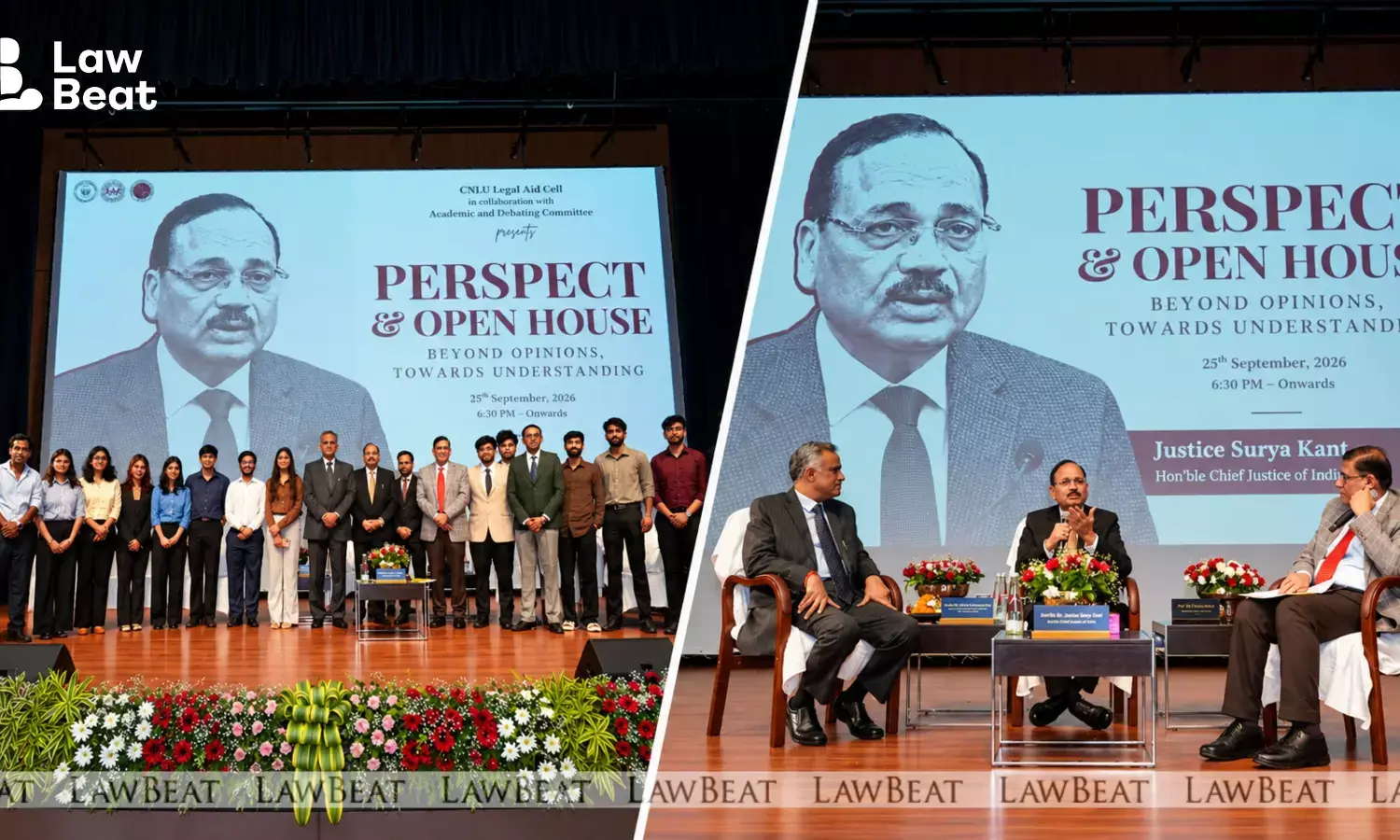
Chief Justice of India Surya Kant responds to CNLU Vice-Chancellor Faizan Mustafa's proposal to restructure the law degree, at the CNLU Patna open house
Chief Justice of India Surya Kant has given a public endorsement to a proposal that would restructure India's law degree, calling it "a new, welcome idea" when it was put to him directly by a law school Vice-Chancellor during an open house with students at Chanakya National Law University, Patna.
The proposal: fold the final year into a court apprenticeship
The idea came from CNLU Vice-Chancellor Prof. Faizan Mustafa, who used the open house platform to float a structural change to legal education; compressing the five-year law degree into four years of academic study, with the final year converted into a mandatory court apprenticeship. Under the proposal, this would also eliminate the separate one-year practice requirement that law graduates currently need to complete before they are eligible to sit judicial service examinations.
-Five-year law degree shortened to four years of classroom study;
-The fifth year replaced with a mandatory apprenticeship in courts;
-The existing standalone one-year practice requirement for judicial service exam eligibility done away with, since it would already be covered by the apprenticeship year.
Mustafa's framing was specific: the proposal is not designed to shorten the overall legal education a student receives, but to integrate real litigation exposure directly into the curriculum in place of the current arrangement, where court practice is pursued separately and afterward.
The CJI's response
Chief Justice Surya Kant's reaction, delivered on the spot at the open house, was direct and unambiguous: "A new, welcome idea."
Justice V. Kameswar Rao, Chief Justice of the Patna High Court and CNLU's Chancellor, who was present alongside the CJI, added a related institutional point of his own; that judicial clerkships at High Courts need to be made significantly more competitive, financially attractive and rewarding if a clerkship at the Patna High Court is to compete for top legal talent against corporate law career options.
The setting: an unscripted open house
The exchange took place at CNLU's Ashoka Auditorium, during what is being described as an unprecedented open house; a live, unscripted question-and-answer session between a sitting Chief Justice of India and law students, organised at the students' own initiative through CNLU's Academic and Debating Committee and its Legal Aid Cell.
The event came days after sections of students at NALSAR, Hyderabad, and NLSIU, Bangalore, had objected to the CJI's presence at their convocation ceremonies, lending the CNLU interaction added significance as a direct, student-driven conversation.
Beyond the degree-structure proposal, the CJI used the session to reaffirm the judiciary's commitment to protecting students' right to peaceful protest, call for a dedicated financial assistance corpus for young lawyers starting out at the bar, and make an on-record commitment to address student concerns over rising tuition fees and inadequate scholarships.
He also explained, when asked, why dissenting Collegium opinions are recorded internally but not made public, saying that disclosure, however well-intentioned, could leave a judge under consideration in an untenable position.