
CJI Surya Kant On Compassion In Judging: ‘Let Algorithms Schedule Hearings But Let Compassion Govern Proceedings’
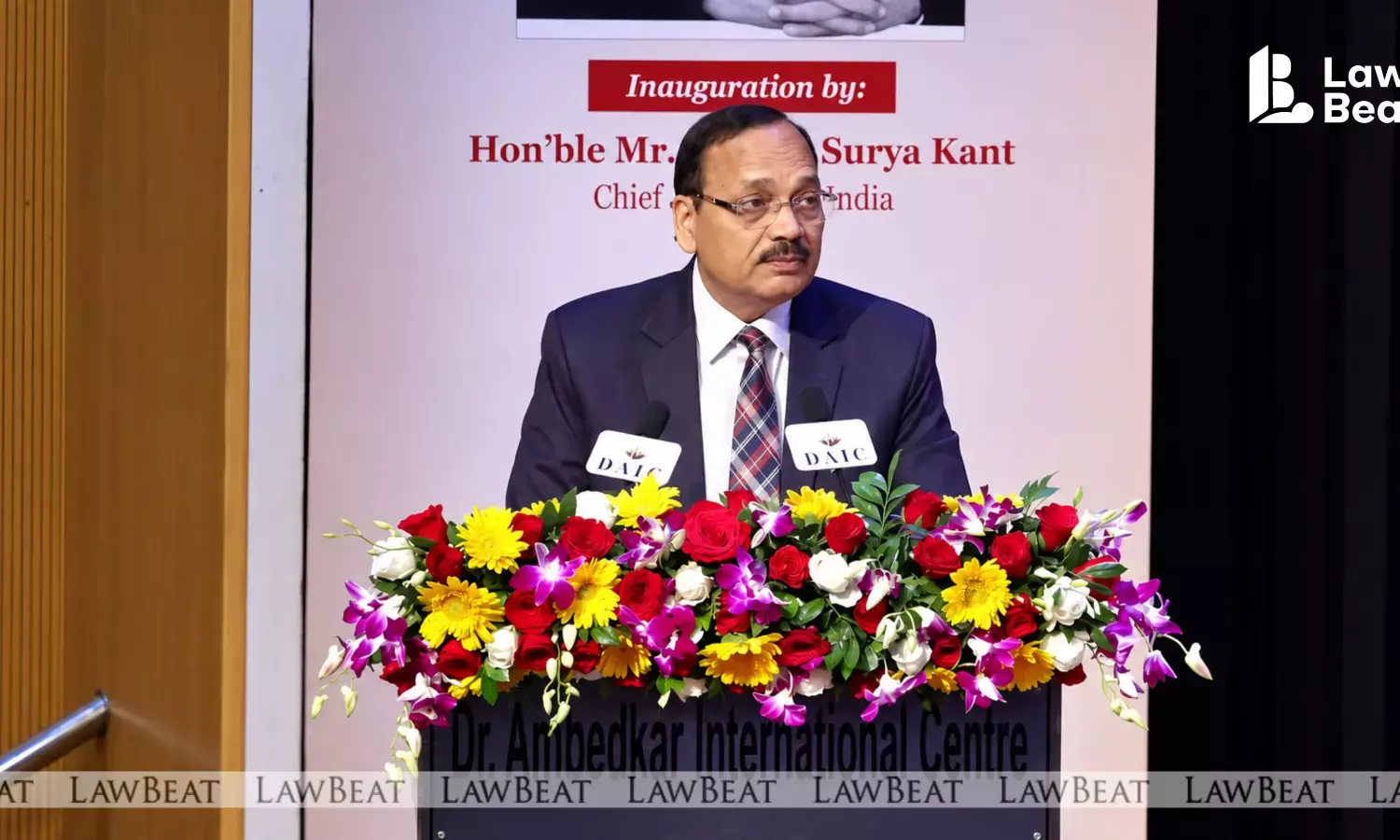
CJI Surya Kant speaks on compassion in judging at the second Professor Dr. Madhava Menon Memorial Lecture
Chief Justice of India Surya Kant has stressed the need to place compassion at the centre of the justice system, saying that judicial decision-making must account not only for the legal issues before the court but also for the human realities surrounding them.
Speaking at the second Professor Dr. Madhava Menon Memorial Lecture, the CJI recalled a thought he had shared at the lecture the previous year: “let algorithms schedule hearings but let compassion govern proceedings.”
“I’m glad that the second half of that sentence has returned this year as the theme of an entire evening,” he said.
Reflecting on the life and work of Professor Dr. Madhava Menon, the founder of the National Law School of India University, Bengaluru, CJI Surya Kant said compassion had been a consistent thread running through his work as a teacher, law reformer and institution builder.
“When he came to write his own life, his autobiography, the founder of this country's first national law school chose to call it simply the story of a law teacher,” the CJI said.
“That choice tells us a great deal about the man. For the finest teachers are before anything else people who care,” he added.
The CJI recalled Menon's work with legal clinics for the poor at Aligarh Muslim University and his association with Justice V R Krishna Iyer on the Expert Committee on Legal Aid in 1973.
He noted that the committee's report was titled “Processual Justice to the People” and recalled Menon's role in building a new kind of law school in Bengaluru in 1986. “What he built there was not merely a curriculum but a community,” CJI Surya Kant said.
He also referred to Menon's contribution to the Committee on Reforms of Criminal Justice System, particularly his emphasis on recognising crime victims as persons entitled to be heard and compensated.
“One conviction runs through the whole of his life, namely that the law is properly learned only in the company of the people it is meant to serve,” the CJI said.
“Compassion for him was never an ornament added once the work was done. It was the thread that sewed all of it together,” he added.
'Courtroom sees the case, academia sees the pattern'
CJI Surya Kant also highlighted the importance of academic research in understanding whether the justice system is actually delivering outcomes promised by judicial orders. “A single order may award compensation to one victim of crime. 10,000 such orders studied together reveal whether our promise to victims is actually being kept,” he said.
“No single case is designed to show that larger picture. That's where scholarship becomes indispensable.”
He said researchers could follow the lives of victims beyond the courtroom to examine whether compensation had actually been paid and whether victims and their families had received the support contemplated by law. “It is the scholar who follows the victim beyond the courtroom asking whether the compensation awarded is actually paid, whether a bereaved family receives the support it needs and whether victims are truly heard,” he said.
The CJI emphasised the need for closer engagement between the judiciary and academia. “The courtroom sees the case while academia sees the pattern and justice if it is to be wise as well as correct must see both,” he said.
He also referred to the Supreme Court's recently commenced monthly lecture series aimed at bringing the Bench, Bar and academia together.
CJI lays out five questions on compassionate judging
Turning to the theme of the lecture, CJI Surya Kant identified five questions that, according to him, should guide a discussion on compassion in judging.
The first, he said, was what compassion means in judicial decision-making. “It is not sympathy nor charity and certainly not a thumb on the scales. But the discipline of seeing the whole human situation behind a case,” he said.
He warned that compassion without reason could become “caprice”, while reason without compassion could harden into “mere procedure”.
The second question, he said, concerned the people who remain unheard by the justice system. “I have often spoken of the invisible victims of our justice system,” he said, adding that human understanding required courts to hear “not only the parties before us but also those whose voices never reach the record.”
The third question concerned the process through which justice is delivered. “For the survivor made to relive her trauma in the witness box or the litigant who cannot follow the language of the proceedings, the process is what justice actually feels like,” the CJI said.
He said the justice system must therefore ask whether its processes had themselves become a source of trauma for those approaching courts.
The fourth question concerned the role of lawyers. CJI Surya Kant said a compassionate lawyer often encounters people during “the worst season of his life” and must not exploit their vulnerability.
The fifth question was whether compassion could be incorporated into the justice system itself. “I believe it can in legal aid that reaches a person at the police station, in spaces where a child or a survivor can testify without facing the accused and in judgments written in a language litigants can read and understand,” he said.
'Every judgment is a translation made twice over'
Concluding his address, CJI Surya Kant described every judgment as a process of translating human experiences into legal language and then translating the law back into human life.
“Every judgment ladies and gentlemen in the end is a translation made twice over: a human story rendered into the language of law and the law rendered back into a human life,” he said.
“Compassion is simply the discipline of ensuring that nothing essential is lost on either journey,” the CJI added.
He concluded that the central lesson of Professor Madu Menon's life was that the law must remain connected to the people it serves. “If there is one lesson Professor Menon's life leaves us, it is that the law's first duty is to be understood by the people it serves and its second is to understand them in return,” CJI Surya Kant said.
He thereafter formally inaugurated the second Professor Dr. Madu Menon Memorial Lecture.