
Delhi HC Takes Off 'Disproportionate' Burden Of Supreme Court; AI, Deepfakes Posing New Legal Challenges: CJI Surya Kant
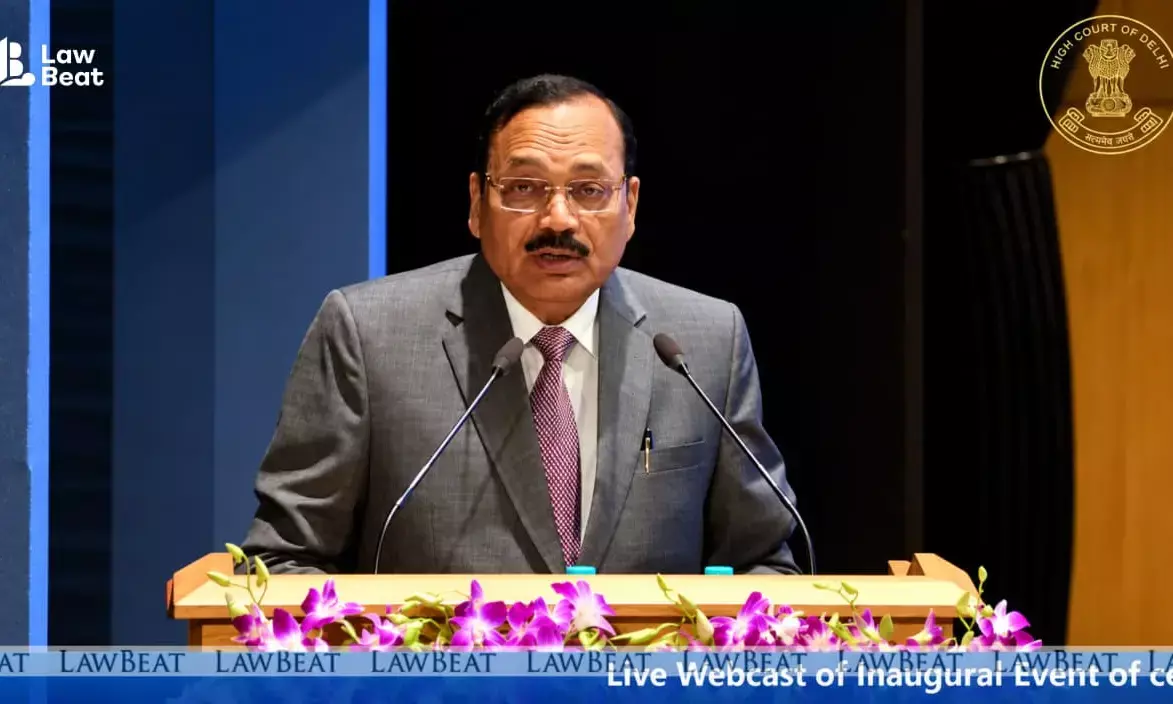
Chief Justice of India Surya Kant on Friday said the Delhi High Court takes off a "disproportionate burden" of the Supreme Court compared to other High Courts, observing that the apex court often reminds lawyers appearing before it that the Delhi High Court is "just around the corner" and may provide relief even before their matters reach the Supreme Court.
Speaking at the inaugural event celebrating 60 years of the Delhi High Court, the CJI said the Supreme Court has always maintained a special relationship with the High Court, not merely because the two institutions are neighbours, but because of the significant responsibility the Delhi High Court shoulders.
"Many a times when a matter is mentioned before us we find ourselves reminding the counsel that the Delhi High Court is just around the corner and that relief may well await them there before their matter even reaches our board" he said.
The CJI said the occasion marked not merely the passage of six decades but the journey of an institution that had grown alongside the aspirations, anxieties and ambitions of the people of the national capital.
He observed that when the Delhi High Court was established in 1966, it was not merely another High Court serving a growing city. Being situated at the seat of the country's political and administrative life, questions of governmental authority, individual liberty and public accountability were bound to reach its courtrooms, often with consequences extending beyond the capital.
"These responsibilities have only multiplied many a times with the passage of time" he said.
From Four Judges To An Institution Handling Complex Litigation
Reflecting on the growth of the institution, the CJI said Delhi had expanded in every direction over the past few decades, with flourishing commerce and millions of people making it their home. Litigation had naturally grown alongside the city, as had the number of advocates and litigants appearing before the High Court.
"What began as a Court of just four judges is today an institution that resolves disputes of remarkable variety and complexity" he said, appreciating the High Court for rising to the demands placed upon it.
He said the Delhi High Court had significantly enriched India's civil and commercial jurisprudence.
Highlighting its institutional initiatives, the CJI noted that the High Court established India's first High Court-annexed arbitration centre in 2009. Its steady movement towards electronic filing and digital processes also reflected its willingness to embrace change.
He further identified the High Court's ordinary original civil jurisdiction as a distinctive feature, enabling it to hear significant civil and commercial disputes directly without litigants first having to approach district courts.
This, he said, had placed the High Court at the forefront of complex commercial adjudication.
Delhi HC's IP Division Has Earned Reputation At Home And Abroad
The CJI particularly praised the specialised Intellectual Property Division of the Delhi High Court, saying it had earned a formidable reputation both in India and abroad for the quality of its jurisprudence.
He said the experience of navigating complex and competing interests would prove even more valuable in the years ahead.
"I am sure that this Court is in a position and capacity to share that burden successfully" he said.
AI-Generated Works, Deepfakes Pose New Legal Questions
Turning to emerging legal challenges, the CJI said the judiciary was now confronting questions that would have been scarcely imaginable a decade ago.
These include whether a work generated by artificial intelligence can claim copyright protection, how the law should respond to deepfakes, and how innovation can be encouraged without allowing technology to undermine individual rights.
He observed that such questions would rarely find ready answers in the statute book. "Where the law is silent, it is the Constitution that must guide us" he said.
The CJI emphasised that the constitutional promise of dignity, liberty and equality does not change with technology, and every new legal question must be answered in that light.
"Holding firmly to that promise, the Delhi High Court can meet the unknown with an open mind, with a changing world without ever losing sight of the person it exists to protect" he said.
Concluding his address, the CJI congratulated the judges, staff, members of the Bar and the wider legal fraternity associated with the Delhi High Court.
He expressed hope that the institution's next 60 years would be remembered not merely for its accomplishments but also for the number of lives it touched and changed.
"May the next 60 years be remembered not merely for how much this Court accomplished but also for how many more lives this temple of justice touched and changed" he said.