
ECI Appointment Case: Curative Plea In Supreme Court Raises Bias Concern Against Justice SC Sharma
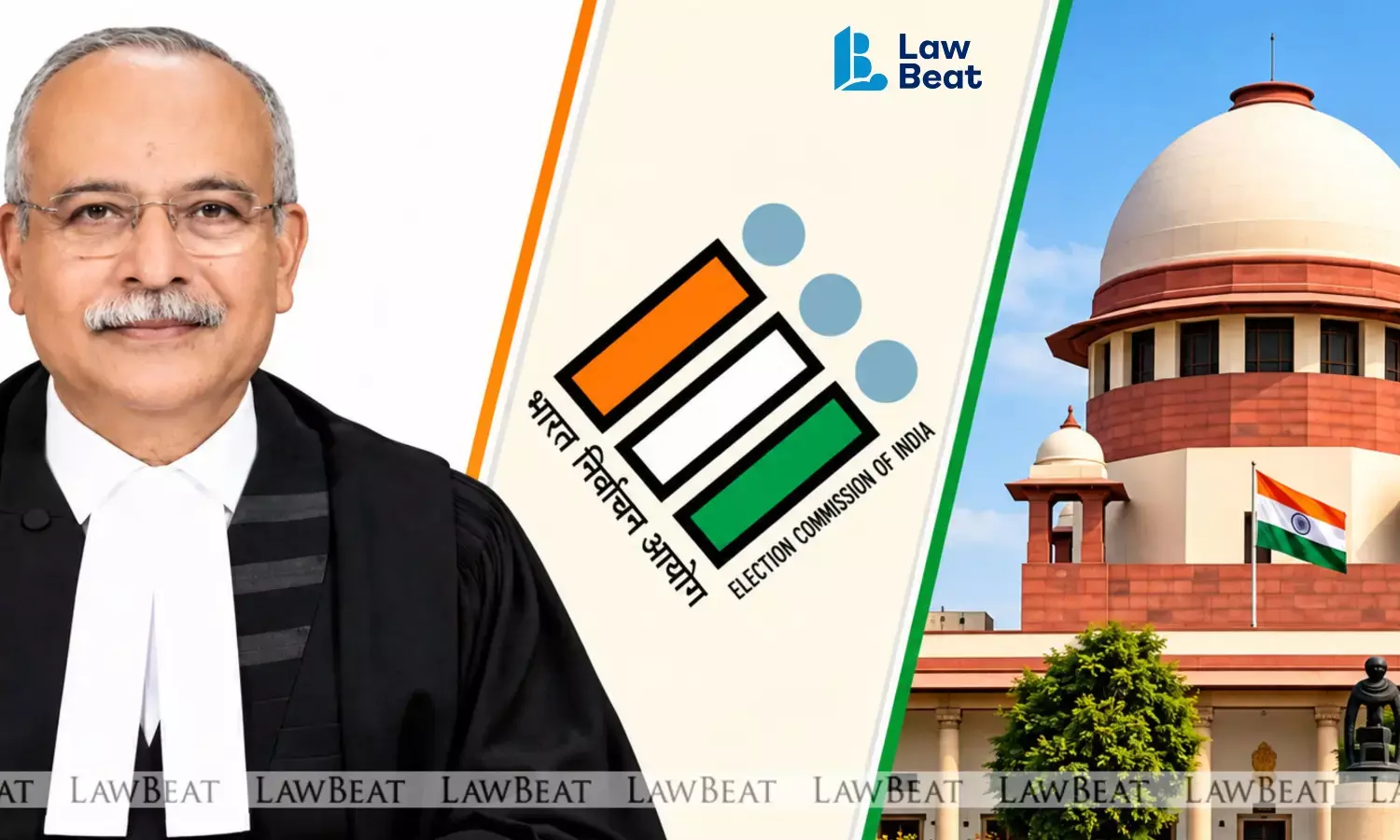
Supreme Court curative petition raises apprehension of bias over Justice Satish Chandra Sharma’s participation in ECI appointment case
A curative petition has been filed before the Supreme Court seeking relief against its September 23, 2026 order in the challenge to the constitutional validity of Sections 7 and 8 of the Chief Election Commissioner and Other Election Commissioners (Appointment, Conditions of Service and Term of Office) Act, 2023.
The petition has been filed under Article 32 read with Article 142 of the Constitution and Order XLVIII Rule 1 of the Supreme Court Rules, 2013, invoking the principles laid down in Rupa Ashok Hurra v. Ashok Hurra.
The petition has been filed by AoR Varun Thakur.
The curative plea arises from the judgment delivered on September 23 by a Bench of Justices Dipankar Datta and Satish Chandra Sharma in the batch of petitions challenging the 2023 Act.
The petitioner's principal contention is that Justice Sharma ought not to have participated in the proceedings because his son, Siddharth Sharma, is the Standing Counsel for the Election Commission of India before the Madhya Pradesh High Court.
According to the petition, the petitioner became aware of this connection only after news reports were published on September 25. The petitioner subsequently verified from the Madhya Pradesh High Court website that Siddharth Sharma had been appearing as Standing Counsel for the Election Commission of India since July 10, 2024.
"The said new report also noted concerns by the members of the legal fraternity that justice must not only be done but also seen to be done. After the publication of the aforesaid news item, the petitioner has verified from the website of the High Court that Mr. Siddharth Sharma, son of Hon’ble Mr. Justice Satish Chandra Sharma is the Standing Counsel of the Election Commission of India in the Madhya Pradesh High Court from 10th July, 2024. The petitioner became aware of the fact that Mr. Siddharth Sharma, son of Hon’ble Mr. Justice Satish Chandra Sharma was representing the Election Commission of India only after the story was published on LiveLaw and other news portals on and after 25.09.2026," the plea states.
The petition has therefore alleged a “reasonable apprehension of bias and propriety” in Justice Sharma's participation in the case, particularly since the proceedings directly challenged the statutory framework governing the appointment of the Chief Election Commissioner and Election Commissioners.
The petition also points out that the connected proceedings filed by Lok Prahari had sought a writ of quo warranto challenging the appointments of Gyanesh Kumar and Sukhbir Singh Sandhu as Election Commissioners.
The petitioner has relied on several tests evolved by the Supreme Court for determining apprehension of bias, including whether a judge's undisclosed connection with a party or the subject matter creates a reasonable suspicion of bias, whether there is a real likelihood of bias, and whether the circumstances would cause a reasonably informed litigant or fair-minded member of the public to doubt the judge's impartiality.
The petition further relies on the proposition that, in cases concerning apparent bias, actual proof of prejudice is not necessary if the apprehension of bias is reasonable.
The petitioner has accordingly contended that the September 23 judgment and order stood vitiated by Justice Sharma's presence on the Bench.
The underlying challenge was filed against Sections 7 and 8 of the 2023 Act. Section 7 provides for appointment of the Chief Election Commissioner and other Election Commissioners by the President on the recommendation of a Selection Committee comprising the Prime Minister, the Leader of Opposition in the Lok Sabha and a Union Cabinet Minister nominated by the Prime Minister.
The writ petitions were heard on merits on May 6, May 7, May 14, May 27 and July 30, 2026 by Justices Datta and Sharma. During the proceedings, the Attorney General and subsequently the Solicitor General raised objections concerning the maintainability of the petitions being heard by a two-judge Bench, relying on Article 145(3) of the Constitution and the Supreme Court Rules.
On September 23, both judges delivered separate opinions. Justice Datta held that there was no constitutional bar or precedent preventing the present Bench from hearing the petitions and rejected the plea for reference to a larger Bench. Justice Sharma, however, held that the petitions could be placed before the Chief Justice of India for consideration of constitution of a Constitution Bench under Article 145(3) and the Supreme Court Rules.
Both judges ultimately passed a common order directing that the papers be placed before the Chief Justice for consideration of the desirability of constituting a Constitution Bench to decide the validity of the 2023 Act.
The curative petition states that reports published on September 25 had raised questions concerning the propriety of Justice Sharma's participation after identifying his son as counsel for the Election Commission. The petitioner subsequently made inquiries and states that the connection was confirmed from the Madhya Pradesh High Court website.
The curative petition was filed on September 29, 2026.
Case Title: Dr. Jaya Thakur v. Union of India and Ors