
‘Final Collaboration’: Justice Datta Dedicates Supreme Court Judgment To Late Law Clerk Ritwik Deswal
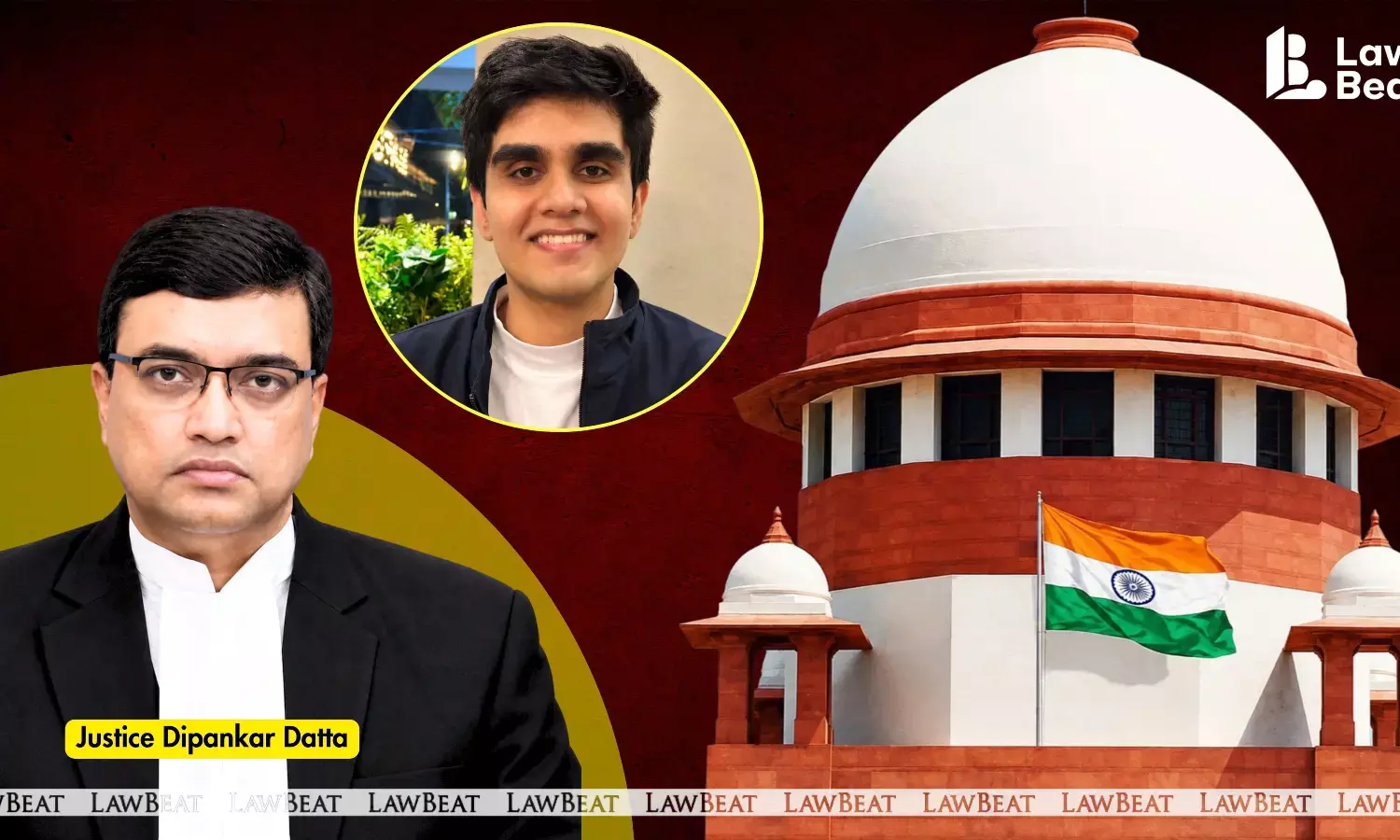
Justice Dipankar Datta dedicates Supreme Court judgment in Mulla Afroz case to late law clerk Ritwik Deswal
Justice Dipankar Datta on Tuesday dedicated a Supreme Court judgment concerning the preventive detention of Mulla Afroz in the Sambhal violence case to his late law clerk-cum-research associate Ritwik Deswal, describing the judgment as their “final collaboration”.
The Bench of Justices Dipankar Datta and Sheel Nagu allowed Afroz’s appeal and quashed his preventive detention order, the order confirming his detention and the judgment of the High Court. The Court also imposed costs of ₹10 lakh on the Uttar Pradesh government.
At the outset of the judgment, Justice Datta recorded a personal tribute to Deswal under the heading “In Memoriam”.
Justice Datta noted that Deswal passed away just four days before his 27th birthday, which is today.
“Human life is fragile, yet in the ordinary course of living, we seldom pause to recognise just how fleeting it is,” the Judge observed while beginning the tribute.
Justice Datta recorded that the judgment bore the “quiet and indelible imprint” of Deswal’s final work and acknowledged his invaluable research assistance in its preparation.
The Judge said Deswal’s untimely demise had left an “excruciatingly deep void”, and recalled that even during his final hours, his thoughts remained anchored in the pursuit of truth and service of justice.
Justice Datta dedicated the judgment to Deswal’s memory, remembering his integrity, commitment to law, love for academia and other qualities of “head and heart”.
“The final collaboration,” Justice Datta described the judgment while dedicating it to his late law clerk.
The judgment then proceeded to examine the legality of Afroz’s preventive detention under the National Security Act.
The Court considered whether an extra-judicial confession could form the basis of a preventive detention order and whether the constitutional and statutory safeguards governing preventive detention had been complied with.
The Bench held that an extra-judicial confession could not, by itself, constitute the sole basis for preventive detention. The detaining authority was required to consider the surrounding circumstances and other relevant material before exercising the power of preventive detention.
The Court found that the detaining authority had failed to consider appropriate material while exercising its power and had therefore illegally exercised the power of preventive detention.
The Supreme Court consequently quashed Afroz’s detention order and the order confirming his detention, set aside the High Court judgment and imposed ₹10 lakh costs on the Uttar Pradesh government.
Case Title: Mulla Afroz v. Union of India
Bench: Justice Dipankar Datta and Sheel Nagu
Judgment Date: September 29, 2026