
Is A Listed Company ‘Alter Ego’ Of Promoters? Fortis Approaches Supreme Court Challenging Forensic Probe Order
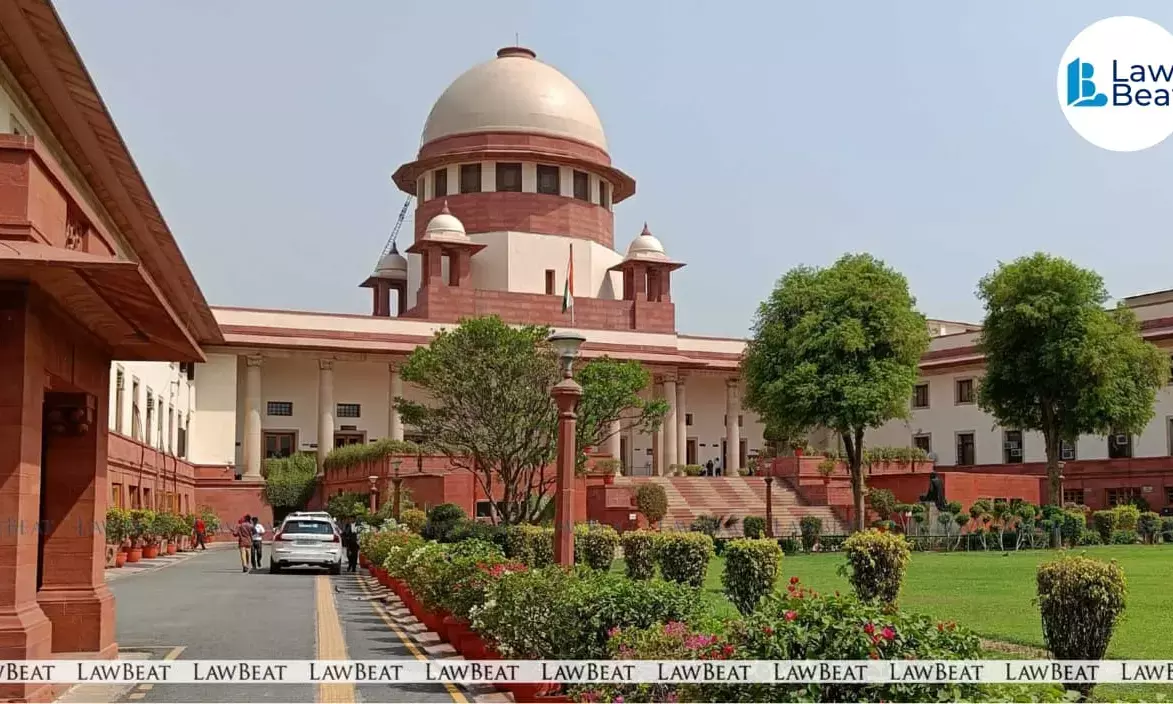
Fortis has approached Supreme Court against the Delhi High Court directing a forensic audit into the movement of its shares and related transactions in the long-running enforcement proceedings arising from Daiichi Sankyo’s arbitral award against former Fortis promoters.
Fortis Healthcare Limited has approached the Supreme Court challenging an August 31, 2026 order of the Delhi High Court directing a forensic audit into the movement of its shares and related transactions in the long-running enforcement proceedings arising from Daiichi Sankyo’s arbitral award against former Fortis promoters Malvinder Mohan Singh and Shivinder Mohan Singh.
Fortis, in its Special Leave Petition, has argued that the listed company was neither a party to the underlying arbitration nor a judgment debtor and cannot be subjected to an open-ended forensic inquiry on the basis of the alleged conduct of its erstwhile promoters. It has contended that the High Court effectively treated Fortis as an “alter ego” of the Singh brothers before establishing any legal or factual basis for lifting the corporate veil.
The dispute originates from a April 29, 2016 Singapore arbitral award directing the Singh brothers and other judgment debtors to pay Daiichi Sankyo approximately ₹2,562 crore, with pre-award and post-award interest. The award was subsequently upheld in Indian proceedings. Daiichi has said that the outstanding amount has now risen to approximately ₹5,300 crore.
The enforcement proceedings acquired a separate dimension after concerns were raised over the diminution of the Singh brothers’ shareholding in Fortis. At the time of the award, entities controlled by the brothers held a substantial stake in Fortis through Fortis Healthcare Holdings Pvt Ltd (FHHPL). The Delhi High Court had, in 2016-17, recorded assurances that the value of certain unencumbered Fortis shares would be preserved for satisfaction of the award. The Supreme Court subsequently directed maintenance of status quo concerning FHHPL’s shareholding in Fortis.
What the Delhi High Court ordered
Justice Subramonium Prasad, in the August 31 judgment, allowed three applications seeking investigation into the alleged dissipation of assets and appointed S Ramanand Aiyar & Co., Chartered Accountants, as the forensic auditor. The audit has been directed to reconstruct the complete chain of transactions concerning Fortis shares from May 24, 2016, when the first assurance regarding preservation of assets was given.
The auditor has been asked to examine the evolution of FHHPL’s shareholding, including the creation and invocation of pledges, top-ups, release of securities, sale of pledged shares and other transactions affecting the shareholding.
The audit will also examine transactions involving banks and financial institutions, including whether loans obtained by downstream entities were genuine business transactions or whether they contributed to dissipation of assets that could otherwise have been available for execution of the award.
A further area of scrutiny is the 2018 investment by IHH Healthcare Berhad/Northern TK Venture, involving approximately ₹4,000 crore through a fresh issue of Fortis shares, as well as Fortis' subsequent transaction involving RHT Health Trust, Singapore, for approximately ₹4,666 crore. The High Court directed that the structure, approvals, regulatory filings, movement of shares and utilisation of funds in these transactions be examined.
The High Court relied substantially on earlier Supreme Court proceedings. In Daiichi Sankyo Co. Ltd. v. Oscar Investments Ltd., the Supreme Court in 2022 directed the executing court to consider forensic audits of transactions involving banks and financial institutions and also permitted examination of transactions between Fortis and RHT. The Supreme Court had noted that a factual analysis was necessary before determining possible legal consequences.
The Delhi High Court held that the same reasoning could justify an audit concerning Fortis, notwithstanding the fact that Fortis itself was not a party to the arbitration. It said the audit was, at this stage, intended as a factual inquiry, with questions of liability and legal consequences to be determined later. The court also invoked the principle of lifting or piercing the corporate veil, observing that a corporate structure cannot be used to defeat legitimate rights if the underlying facts ultimately establish such conduct.
Fortis' challenge
Fortis has disputed this approach before the Supreme Court. It argues that a company has a separate legal personality from its shareholders and that the Singh brothers’ personal obligations cannot automatically become liabilities of Fortis.
The company has also argued that, as a listed entity, it does not control the transfer of dematerialised shares held by its shareholders. According to Fortis, relevant share transfers were governed by the Depositories Act, SEBI regulations and the contractual arrangements between shareholders and lenders. It maintains that information about several transactions became available to the company only after they had occurred.
Fortis has further relied on the fact that the Singh brothers' direct or indirect holding had fallen substantially before IHH's investment. It contends that the ₹4,000-crore IHH investment was a fresh subscription of shares, rather than a purchase of the Singh brothers' stake, and was made after regulatory approvals.
The company has also highlighted its approximately 2.5 lakh public shareholders, who collectively hold around 69% of Fortis, arguing that treating the listed company as an extension of former promoters could have consequences for shareholders who had no connection with the original dispute.