
‘Luxury Litigation’: Supreme Court Refuses To Recognize Anita Advani-Rajesh Khanna Relationship As Marriage
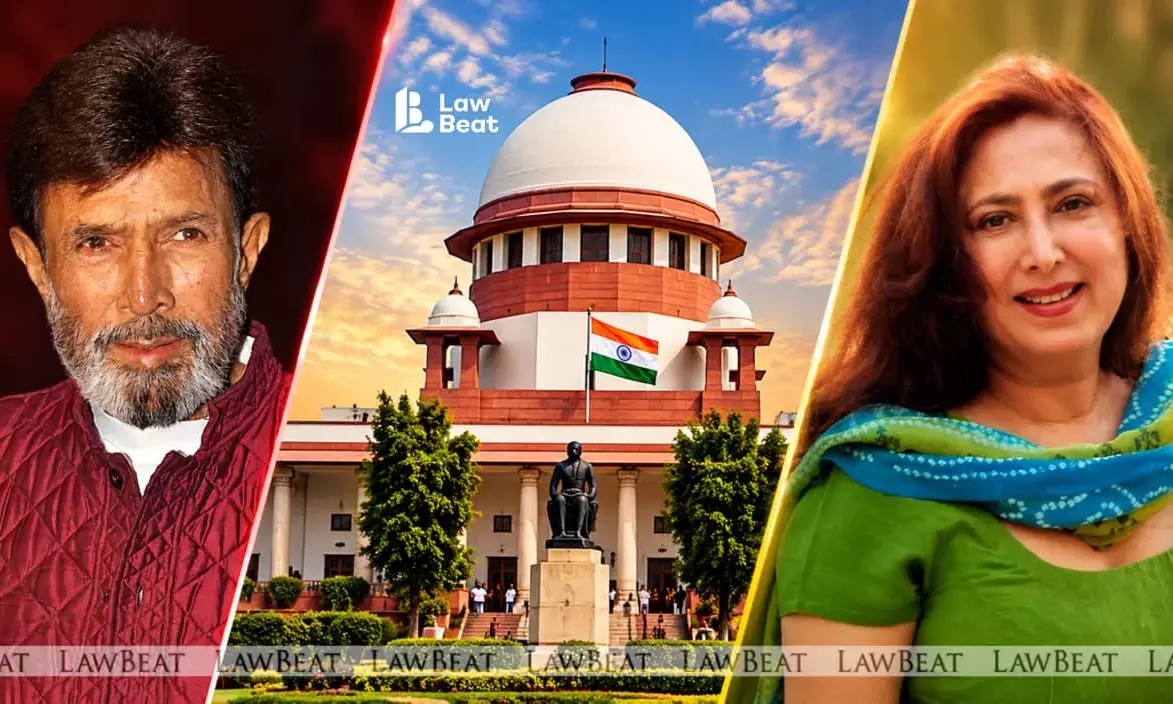
Supreme Court has rejected Anita Advani’s plea seeking legal recognition of her alleged relationship with late Bollywood superstar Rajesh Khanna as a marriage.
The Supreme Court on Thursday rejected former actor Anita Advani’s plea seeking legal recognition of her alleged relationship with late Bollywood superstar Rajesh Khanna as a marriage, describing the litigation as “luxury litigation”.
A Bench of Justices MM Sundresh and Prasanna B Varale observed that there were no grounds to entertain Advani’s plea challenging an April 1, 2026, order of the Bombay High Court, which had dismissed her appeal against a lower court’s rejection of her civil suit.
During the hearing, Advani’s counsel submitted that the plea was essentially about dignity and that the civil suit seeking a declaration regarding her relationship with Khanna was founded on that consideration.
The Bench, however, declined to entertain the challenge, observing, “This is luxury litigation.”
Bombay High Court Ruling
Advani approached the Supreme Court challenging the Bombay High Court’s April 1 order dismissing her appeal against a 2017 decision of the Dindoshi court in Mumbai.
Through her civil suit, Advani sought a declaration that her relationship with Khanna was in the nature of a marriage and that she should be recognised as his widow.
Bombay High Court, while dismissing her appeal, upheld the rejection of her suit, holding that Khanna’s marriage to actor Dimple Kapadia remained legally subsisting when he died.
Although Khanna and Kapadia had reportedly been living separately for decades, they had never formally divorced. The High Court held that Advani could not claim the status of a legally recognised spouse when Khanna was still married to Kapadia.
The High Court also concluded that the parties were required to be legally capable of entering into a marriage for their relationship to qualify as one in the nature of marriage.
Advani had argued that she and Khanna had lived together for several years and presented themselves socially as a couple. She also claimed to have financially contributed towards renovation work at his residence. The High Court declined to permit the suit to proceed to trial, observing that doing so would serve no fruitful purpose in view of the legal impediment arising from Khanna’s subsisting marriage.
Background
Advani claimed that she had been in a live-in relationship with Khanna for several years and lived with him at his Mumbai bungalow, Aashirwad, until 2012.
Following Khanna’s death, she alleged that she was evicted from the bungalow by Kapadia, their daughter Twinkle Khanna and son-in-law Akshay Kumar. Advani maintained that her relationship with the actor was not merely that of a companion but was in the nature of a marriage. She sought legal recognition of that relationship and the status of Khanna’s widow.
Khanna died on July 18, 2012, at the age of 69. He had married Kapadia in 1973. Although their relationship reportedly broke down in the 1980s, the marriage was never formally dissolved.
Kapadia and other members of Khanna’s family opposed Advani’s claim, arguing that her suit could not be maintained because Khanna remained legally married to Kapadia until his death. The dispute subsequently travelled through the civil courts and the Bombay High Court before reaching the Supreme Court.
In 2013, Advani had also filed a complaint before a Mumbai magistrate against Kapadia, Twinkle Khanna and Akshay Kumar. She alleged that she had been forced out of Khanna’s residence and sought maintenance and accommodation, including a three-bedroom flat in Bandra. In April 2015, the Bombay High Court quashed the domestic violence proceedings against Khanna’s family members.
The High Court held that Advani had failed to establish that her relationship with Khanna qualified as a relationship “in the nature of marriage” for the purposes of the domestic violence law. It also observed that the family members could not be proceeded against merely because they were related to Khanna, particularly when they had not shared a household with Advani.