
Menstrual Hygiene A Fundamental Right: Supreme Court Gives States/UTs "One Last Opportunity"
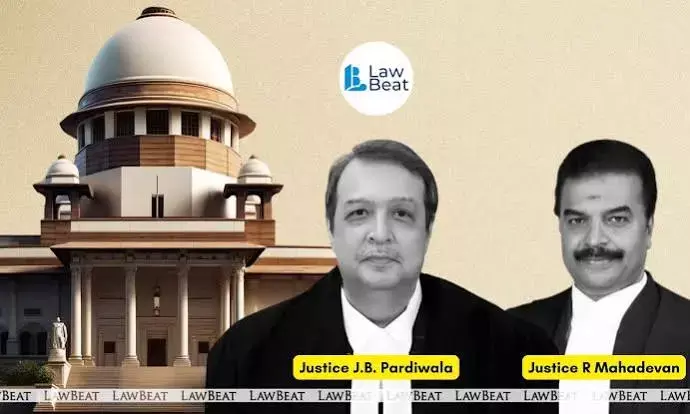
Supreme Court granted the States and Union Territories one last opportunity to respond to the Union, warning that contempt notices would issue to the Chief Secretaries of States that fail to do so
The Supreme Court has granted the States and Union Territories one last opportunity to report on the steps they have taken to implement its judgment recognising menstrual hygiene and menstrual health as part of the right to life under Article 21 of the Constitution, warning that it will issue notice of contempt to the Chief Secretaries of States that fail to respond.
The Bench of Justices JB Pardiwala and R. Mahadevan passed the order on October 13, after Additional Solicitor General (ASG) Aishwarya Bhati informed the Court that the Union had written to all States and Union Territories seeking details of compliance but had received no response.
The matter will next be heard on December 14, 2026 at 2:30 PM.
The Court began by recalling its earlier direction. "By our order dated 01.09.2026, we had directed the States/UTs to take into consideration the deficiencies as highlighted by us in the order and report in that regard by the next date of hearing," the order records.
When the matter was taken up, ASG Bhati told the Bench that the Union had pursued the issue with the State Governments and Union Territory administrations. The Court recorded her submission that "the Union has taken up this issue very seriously with all the States/UTs to respond in what manner the judgment delivered by this Court is being implemented."
The order then notes: "Unfortunately, the States/UTs have not responded to the Union so far."
The Bench expressed its displeasure in plain terms. "We fail to understand that once the Union calls for the necessary information, why the States/UTs do not respond," it observed.
Reiterating the constitutional basis of its earlier ruling, the Court said it expected the governments concerned to appreciate the significance of the judgment.
"We are sure that the Union, the States/UTs have realized the importance of the judgment that we have delivered, declaring menstrual hygiene as a part of the Fundamental Right. In other words, we have declared menstrual hygiene/ menstrual health as one of the facets of Article 21 of the Constitution," the order reads.
The Bench then posed a pointed question to the executive: "If what we have said in the judgment is only going to remain on paper, how is the Union, States/UTs going to give effect to this Fundamental Right?"
The Court made clear whose interests the litigation was meant to serve. "Whatever we have done, we have done in the interest of young girls who are giving up education, more particularly, in remote parts of the country because of the problem of menstrual hygiene, etc.," it said.
The Court issued fresh directions to the Union to secure compliance. It directed the Union "to take up this issue very seriously with each of the States/UTs and call for the necessary information in writing as what steps they have taken so far for giving effect to the judgment delivered by this Court."
The Union has also been asked to revisit the decision before seeking information. "The Union should study the judgment once again and accordingly call for the information on each and every aspect of the matter, while giving special attention to paragraphs 11, 13 to 23, respectively, of our order dated 01.09.2026," the order states.
To facilitate compliance with the directions contained in paragraph 23 of the earlier order, the Court permitted the Union to frame a structured questionnaire. "To comply with our directions in paragraph 23, the Union may prepare a format in the form of questions and seek appropriate reply from each of the States/UTs," the Bench said.
The Court put the States and Union Territories on notice of the consequences of continued silence. "On the next date of hearing, if we hear from the Union that some of the States/UTs have not responded, we shall proceed further to issue notice of contempt to the concerned Chief Secretary of the State(s)," the order reads.
"We grant one last opportunity to do the needful in the matter," the Bench added.
The matter has been posted for further hearing on December 14, 2026 at 2:30 PM. Explaining the interval, the Court observed, "We are giving sufficient time to the Union to undertake this entire exercise."
What the January order had required
The Court's January 30 judgment had directed that every school, government-run or private, urban or rural, provide sanitary napkins free of cost, with a specific material standard attached. The order, reproduced in the present order, read: "All States and Union Territories shall ensure that every school, whether Government-run or privately managed, in both urban and rural areas, provides oxo-biodegradable sanitary napkins manufactured in compliance with the ASTM D-6954 standards free of cost."
In its earlier verdict, the Supreme Court had recognised menstrual health as part of the right to life under Article 21, holding that lack of menstrual hygiene facilities undermines a girl child’s ability to access education and participate equally in society.
Notably, on December 10, 2025, the Bench had reserved its judgment on the implementation of the Union Government’s national Menstrual Hygiene Policy for School-going Girls, which aims to ensure access to menstrual hygiene facilities and products for adolescent girls studying in Classes 6 to 12 in government and government-aided schools across India. The Bench had reserved the matter after hearing submissions from the Union Government on the proposed implementation framework and monitoring mechanisms.
The case arises from a public interest litigation seeking uniform access to menstrual hygiene facilities, including free sanitary napkins and proper sanitation infrastructure in schools nationwide.
The litigation traces its origin to earlier directions issued by the Supreme Court in 2022 and 2023. In November 2022, the court had issued notice to the Union Government, States and Union Territories on a plea seeking free sanitary napkins and adequate sanitation infrastructure for school-going girls. Subsequently, in April 2023, the court directed the Union to formulate a uniform national policy addressing menstrual hygiene for school students.
The Union Government had previously informed the Court that multiple ministries, including the Ministry of Health and Family Welfare, Ministry of Jal Shakti and Ministry of Education, are collectively responsible for implementing various aspects of menstrual hygiene infrastructure and awareness programmes.
Case Title: Dr. Jaya Thakur v. Government of India & Ors.
Bench: Justices J.B. Pardiwala and R. Mahadevan
Order Date: October 13, 2026