
“Power To Empower”: PM Modi Pitches Digital Public Infrastructure, Legal Reforms And Trust At Bloomberg New Economy Forum
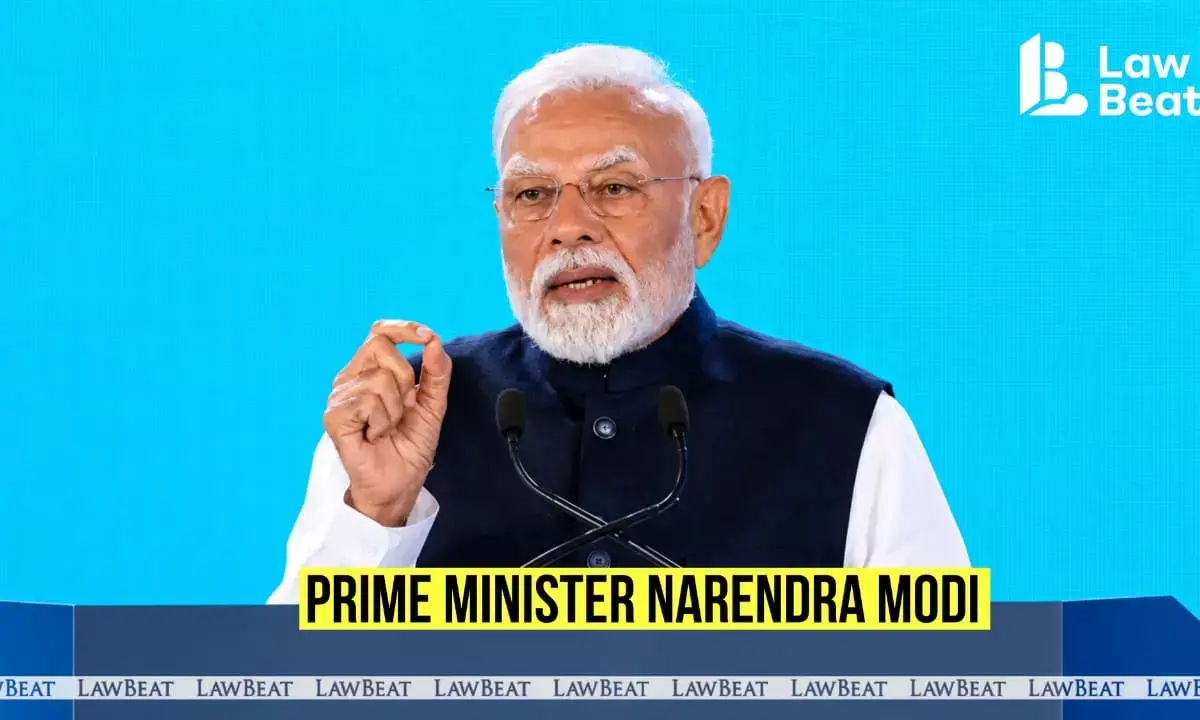
PM Modi Lists GST, Insolvency Law and Labour Codes as “Reforms of Conviction” at Bloomberg Forum
Prime Minister Narendra Modi has said that technology, data and knowledge are the new sources of global power, but the real question is how that power is used, as he outlined a “Power to Empower” vision at the Bloomberg New Economy Forum in New Delhi.
Addressing global business leaders and policymakers at the forum, which is being held in India for the first time, PM Modi asked: “Will technology advance only a few people? Or will it create new opportunities for millions?” He said power must go beyond control, towards enabling others.
The digital thread ran through much of his speech. PM Modi said affordable mobile data had allowed a student in a small town to access digital learning and a village shopkeeper to find new customers. He also pointed to India’s digital payments ecosystem, saying a street vendor and a large car showroom use the same system, which he described as “the strength of inclusive technology.”
India, he said, is also sharing its digital public infrastructure with other countries so they can build systems suited to their needs. He recalled that the CoWIN platform created during the COVID-19 pandemic was open source, adding that the country’s capability “should empower humanity.”
On governance, PM Modi said a government has authority, but its objective should not be to make citizens dependent on the system. He cited the JAM Trinity and Direct Benefit Transfer, under which aid is sent straight to beneficiaries’ bank accounts, claiming it had reduced corruption and created “a direct connection” between the government and citizens.
His speech also carried a legal and regulatory pitch to investors. Listing reforms, he said India had transformed “a complex web of taxes into a national market” through GST, created an insolvency law, consolidated 29 labour laws into four codes and decriminalised hundreds of minor business-related errors. “Reforms are not a compulsion. Reforms are our conviction,” he said.
PM Modi also warned that things which once connected the world “are today becoming weapons.” Supply chains, energy, minerals, payments and technology, he said, can become “a means of pressure and dominance.” With artificial intelligence changing the way of working in every sector, he said the major question before the world is one of trust: that supplies will continue, that promises will be kept and that partners will stand by each other in a crisis.
He referred to the AI Impact Summit held in India a few months ago, noting that it discussed not only the use of AI for humanity but also how animals could benefit from the technology. PM Modi listed the “responsible use of emerging technologies” alongside climate change, water governance and public health as areas where the world needs solutions.
On the economy, PM Modi said India’s startups have grown from a few hundred before 2014 to over 250,000, with nearly half from small cities and towns and over 45 per cent having at least one woman director or partner. He said growth stood at 7.8 per cent in the April-June quarter, the current account deficit had fallen to 0.61 per cent of GDP and foreign exchange reserves exceeded 700 billion dollars.
Concluding with a Vedic verse urging people to walk and speak together, he said dialogue builds understanding. Pointing to the International Solar Alliance, the Coalition for Disaster Resilient Infrastructure and the Global Biofuels Alliance, he said India’s platforms are meant to “benefit everyone.”