
SC Issues Notice On PIL Seeking National Welfare Board For 37 Lakh Private School Teachers
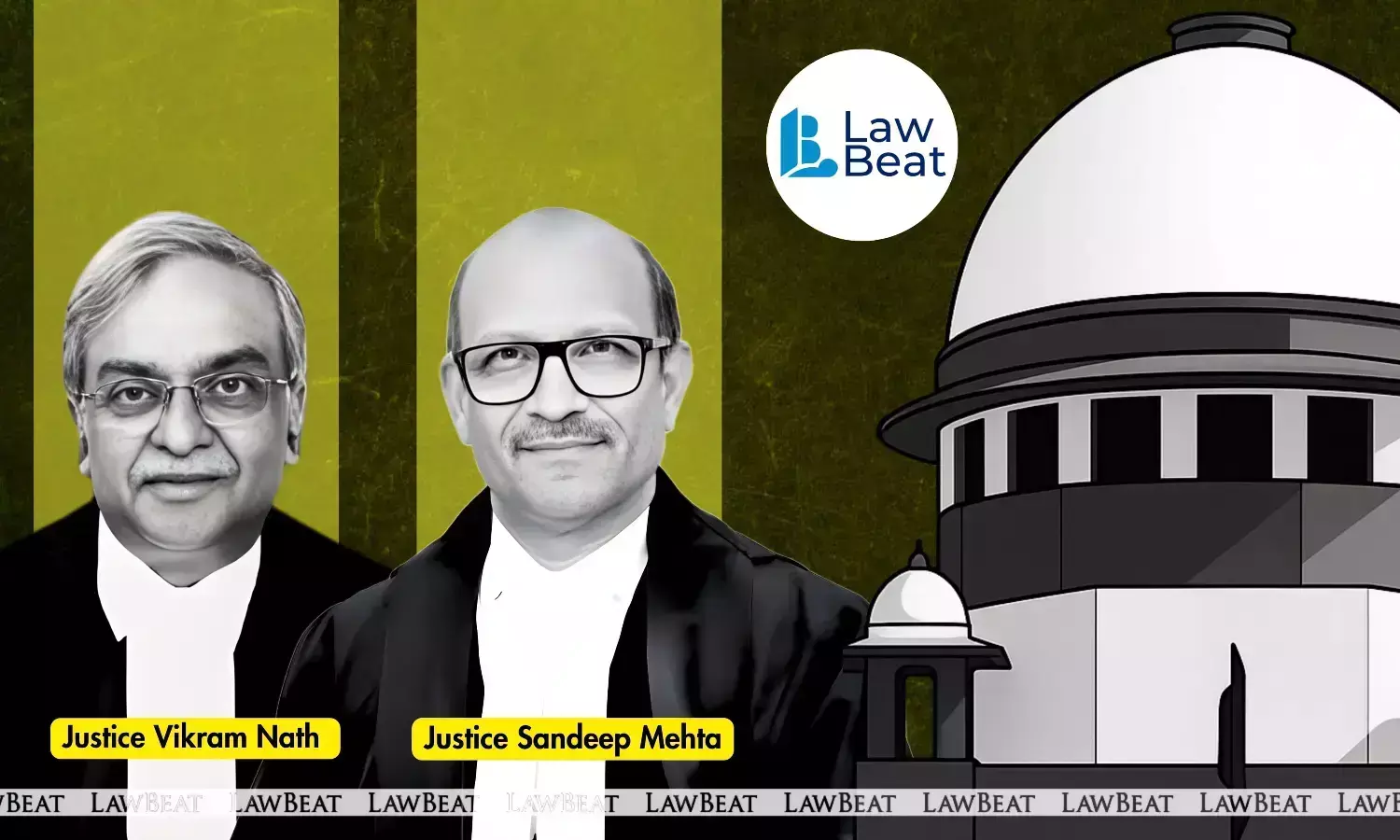
Supreme Court issues notice on a PIL seeking a national welfare board and pension framework for India's 37 lakh private school teachers
The Supreme Court on Thursday issued notice on a Public Interest Litigation seeking the constitution of a National Private School Teachers Welfare Board and a comprehensive statutory framework for the pension, gratuity, medical and post-retirement social security of private school teachers across India.
The matter, filed by Ligimol George, National Coordinator of the All India Teachers Federation, was taken up before a Bench of Justices Vikram Nath and Sandeep Mehta.
The Petition
The PIL, filed under Article 32 of the Constitution as Ligimol George v. Union of India & Ors. (Writ Petition (Civil) No. 1116 of 2026), states that it "is being instituted in the larger public interest for securing and enforcing the constitutional rights, dignity, social security and welfare of millions of private school teachers serving in recognised private educational institutions across the country, who, despite discharging the vital public function of imparting education... continue to remain deprived of a comprehensive, uniform and effective statutory welfare framework."
The petition filed through AoR Deepak Prakash draws on Ministry of Education data to underline the scale of the issue: "The UDISE+ 2023–24 Report records that India has approximately 14.72 lakh schools, over 98 lakh teachers and nearly 24.8 crore students. Significantly, 37,30,047 teachers are employed in recognised private unaided schools alone, constituting a substantial segment of the national teaching workforce."
"No comparable Institutional framework"
The petitioner contends that while several other classes of workers benefit from dedicated statutory protections, private school teachers have been left out: "Unlike several other occupational groups for whom Parliament and various State Legislatures have established dedicated Welfare Boards or specialised statutory welfare mechanisms, no corresponding National Welfare Board or comprehensive statutory welfare framework presently exists exclusively for private school teachers."
It adds that existing labour legislations; the Employees' Provident Funds and Miscellaneous Provisions Act, 1952, the Payment of Gratuity Act, 1972, the Employees' State Insurance Act, 1948, and the Code on Social Security, 2020, do not fill this gap, since "their applicability is often dependent upon statutory thresholds, institutional compliance, salary structures or other eligibility conditions, resulting in large sections of private school teachers remaining either partially covered or practically deprived of meaningful social security and post-retirement protection."
Constitutional grounds raised
The petition frames the continuing absence of such a framework as a violation of Articles 14 and 21, read with Article 21A. It submits: "Private school teachers discharge an indispensable public function by implementing the constitutional guarantee of education, yet millions continue to serve and retire without adequate pensionary benefits, medical assistance, insurance, disability protection or other meaningful social security, thereby impairing their right to live with dignity."
On the question of arbitrary disparity between teachers across states, the petition states: "Private school teachers across the country discharge substantially identical educational functions in furtherance of the constitutional mandate under Article 21A. Nevertheless, their service conditions, welfare measures and post-retirement social security vary drastically solely on account of the State in which they are employed or the policies adopted by individual managements. Such differential treatment has no rational nexus with the nature of the duties performed."
The petition also invokes India's international commitments, citing "Article 26 of the Universal Declaration of Human Rights, Article 13 of the International Covenant on Economic, Social and Cultural Rights (ICESCR), and the ILO/UNESCO Recommendation concerning the Status of Teachers, 1966," which it says "recognise that quality education is intrinsically linked to the dignity, welfare, social security and professional security of teachers."
Reliance is placed on Maneka Gandhi v. Union of India, (1978) 1 SCC 248, Francis Coralie Mullin v. Administrator, Union Territory of Delhi, (1981) 1 SCC 608, and Olga Tellis v. Bombay Municipal Corporation, (1985) 3 SCC 545, for the proposition that Article 21 encompasses the right to live with dignity and livelihood.
Not seeking adjudication of service disputes
The petitioner is careful to clarify the limited nature of the relief sought: "The present petition does not seek interference with the service administration or management of private educational institutions, nor does it seek adjudication of individual service disputes. Rather, it seeks formulation of an appropriate national policy and institutional framework to address a long-standing legislative and administrative vacuum concerning the welfare and social security of private school teachers across India."
It further states that the petitioner "does not seek judicial legislation or a mandatory direction to enact any particular law, but only appropriate constitutional directions requiring the Union of India to examine, consider and formulate, in consultation with all stakeholders, a comprehensive national policy and institutional framework."
Prayer
The petition prays for the Court to:
-Issue a writ of Mandamus directing the Union of India to formulate, within a time-bound period, a comprehensive National Policy and statutory, administrative or executive framework for the welfare, social security and post-retirement protection of private school teachers, consistent with Articles 14, 21 and 21A and the Directive Principles under Articles 38, 39, 41, 42 and 43
-Direct the Union of India to consider establishing a National Private School Teachers Welfare Board or other institutional mechanism for coordinating pensionary benefits, provident fund and gratuity compliance, medical assistance, insurance, disability assistance, family welfare measures, a national database, and an effective grievance redressal mechanism; and
Case Title: Ligimol George v. Union of India
Bench: Justices Vikram Nath and Sandeep Mehta
Hearing Date: September 10, 2026