
“Should Have Invoked IPC 153B, 295A At First Instance”: Supreme Court Tells UP To Act In Hate Crime Case
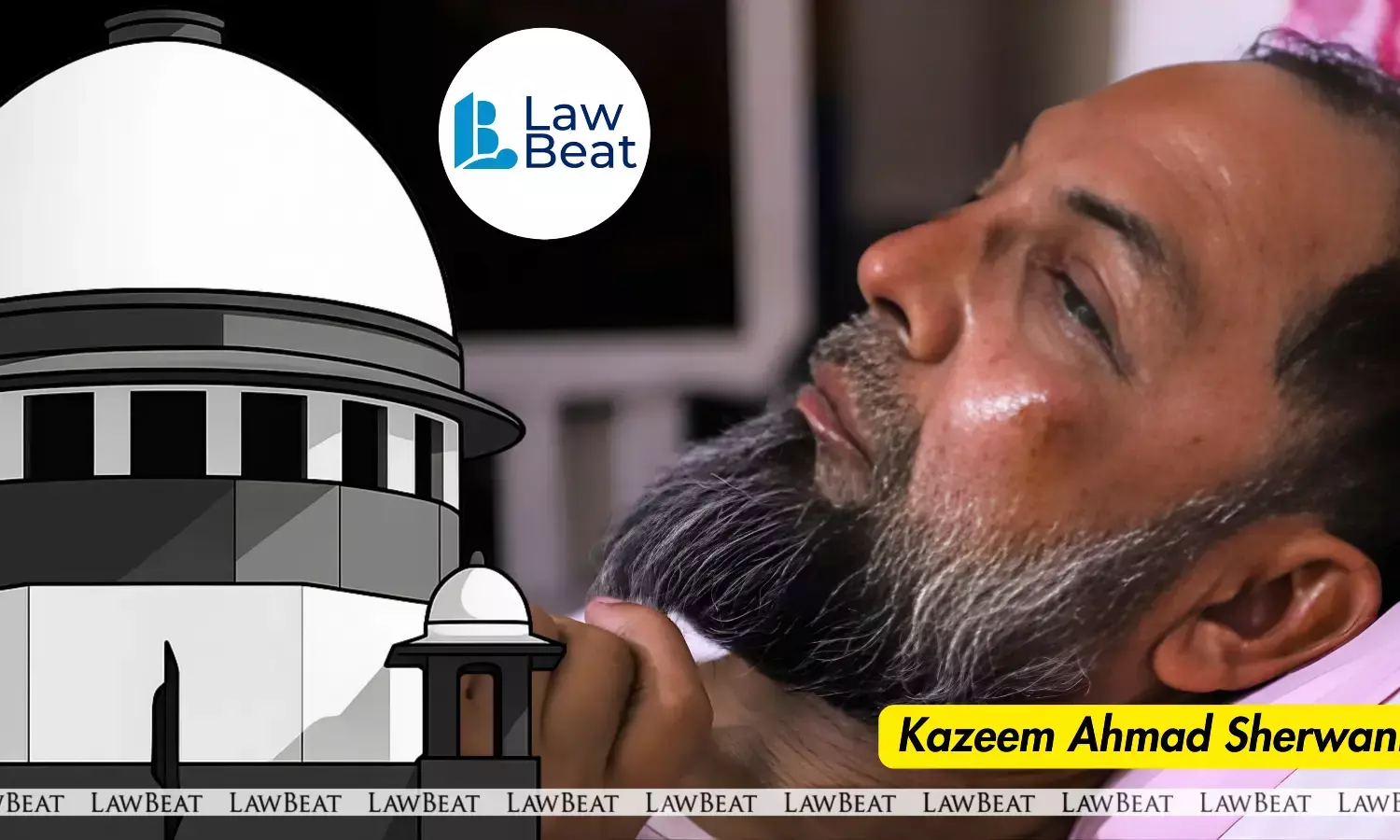
Supreme Court heard a plea by a Muslim cleric alleging police inaction and refusal to register hate crime offences in a Noida incident
The Supreme Court of India on Monday heard a plea filed by Noida-based Muslim cleric Kazeem Ahmad Sherwani, raising concerns over an alleged hate crime and the failure of the Uttar Pradesh Police to invoke appropriate penal provisions.
The bench of Justices Vikram Nath and Sandeep Mehta noted that in an earlier hearing, the Court had questioned why Sections 153B and 295A of the Indian Penal Code, dealing with imputations prejudicial to national integration and deliberate acts intended to outrage religious feelings, were not invoked in the FIR.
Appearing for the State, Additional Solicitor General (ASG) K M Nataraj informed the Court that, as per his instructions, the case ought to have been registered under Sections 153B and 295 at the very first instance. He submitted that two courses were now open: either the State could move an application seeking further investigation and send a proposal for sanction, or the Supreme Court could issue appropriate directions.
Responding to the submission, Justice Mehta observed that it would be preferable for the State to take corrective steps on its own. “Better if you do on your part,” the judge remarked, signalling judicial restraint while underscoring the State’s responsibility.
During the hearing, counsel for the petitioner urged the Court to consider awarding compensation to the cleric for the alleged hate crime. However, Justice Mehta clarified that such relief would have to be sought before the appropriate forum and could not be granted in the present proceedings.
While the Supreme Court has recently reserved orders in a batch of petitions concerning hate speech, it chose to keep the present case pending, observing that it raised distinct issues.
On the last hearing, Appearing for the Centre, ASG KM Nataraj had submitted that the matter had lost its significance as a trial was already underway. “Now the trial is going on, nothing may survive in this matter,” he argued.
Senior Advocate Huzefa Ahmadi, appearing for the petitioner, strongly disputed this position. He submitted that the principal grievance was the continued refusal of the police to register offences relating to hate crimes. Referring to the incident dated July 4, 2021, Ahmadi stated that the State’s initial response was outright denial. He pointed out that it was only after the Supreme Court called for the case diary in January 2023 that an FIR was registered, and even then, offences relating to hate crimes were excluded. “The FIR was not for hate crime. They said it was an offence against the human body,” Ahmadi told the bench, arguing that the refusal to invoke appropriate provisions reflected a deeper pattern of institutional reluctance.
When Justice Sandeep Mehta asked which provisions ought to have been invoked, Ahmadi referred to Sections 153A and 295A of the IPC. Justice Mehta, however, remarked that it was for the trial court to apply its mind to the offences made out.
Ahmadi countered by stating that the court needed to look beyond the individual case. “I am trying to show a pattern of reluctance to take cognisance of the fact that this kind of thing is happening,” he submitted, describing the issue as systemic rather than isolated.
Justice Vikram Nath had observed that the broader questions surrounding hate speech were already under consideration, with orders reserved in the related batch of cases. Justice Mehta, meanwhile, referred to Section 196 of the Code of Criminal Procedure, noting that prosecution for certain offences could not proceed without sanction.
Ahmadi had responded that there was no question of sanction at this stage and emphasised that repeated failures to register FIRs for hate crime offences undermined accountability. He also argued that Sections 153B and 295A IPC were attracted in the present case and warned that such incidents had serious implications for national integrity.
The Bench had however, cautioned against generalisation. “We are not giving it that colour. There is one incident before us, no empirical evidence,” Justice Mehta said, resisting the attempt to expand the scope of the hearing.
Case Title: Kazeem Ahmad Sherwani v. State of Uttar Pradesh
Bench: Justices Vikram Nath and Sandeep Mehta
Hearing Date: February 16, 2026