
Supreme Court Rejects Challenge to 2018 Amendment Restoring Stringent SC/ST Act Provisions
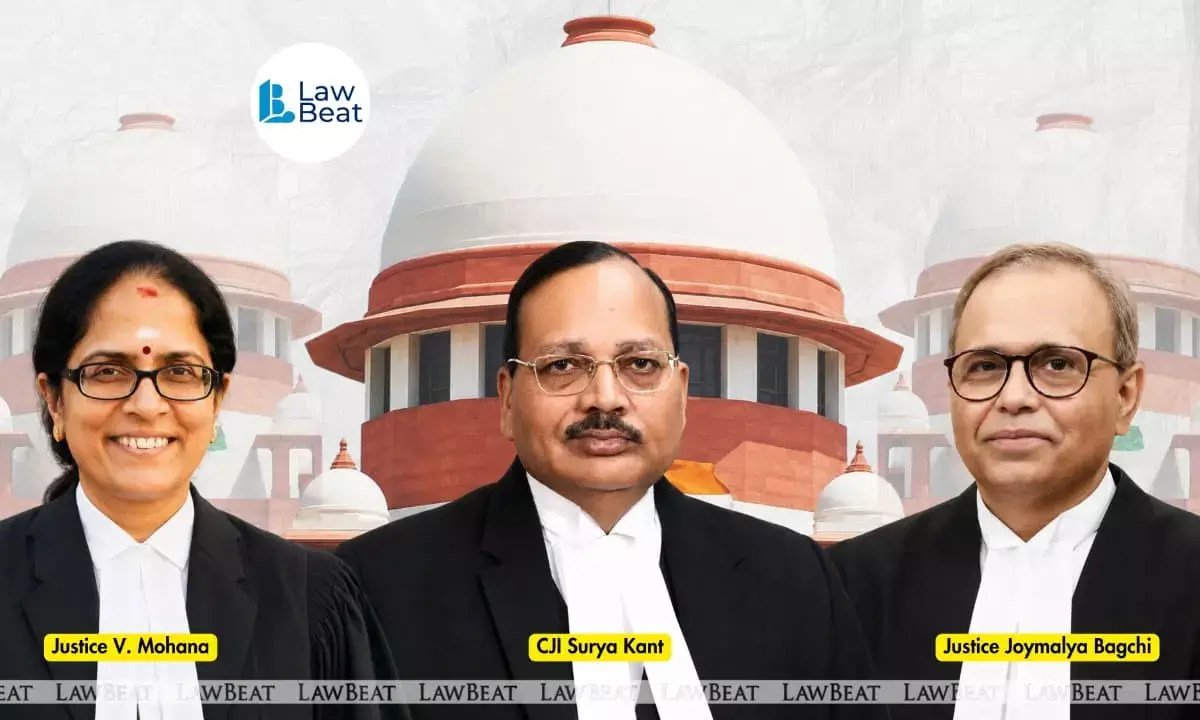
Supreme Court refuses plea challenging the constitutional validity of the 2018 amendments to the Scheduled Castes and Scheduled Tribes (Prevention of Atrocities) Act, 1989.
The Supreme Court on Tuesday dismissed a plea challenging the constitutional validity of the 2018 amendments to the Scheduled Castes and Scheduled Tribes (Prevention of Atrocities) Act, 1989, which restored stringent provisions relating to registration of FIRs, arrest and anticipatory bail.
A three-judge Bench headed by Chief Justice of India Surya Kant and comprising Justices Joymalya Bagchi and V. Mohana declined to entertain the petition filed by Brijbhushan Saini, observing that the constitutional validity of the amendments had already been considered and upheld by the Supreme Court in 2020.
The petitioner sought reconsideration of the 2020 decision in Prithvi Raj Chauhan v. Union of India and argued that the stringent provisions could result in misuse of the law and affect fundamental rights under Articles 14, 21 and 22 of the Constitution. The petitioner also questioned the statutory bar on anticipatory bail and described it as amounting to “reverse discrimination.” The Bench, however, noted that safeguards against misuse had already been laid down by the Court.
What changed in 2018?
The controversy surrounding the present challenge stems from a Supreme Court judgment delivered in March 2018 in Dr Subhash Kashinath Mahajan v. State of Maharashtra.
In that case, the Supreme Court issued a series of safeguards concerning arrests and registration of cases under the SC/ST Act. Among other directions, the Court held that there was no absolute bar on anticipatory bail where a prima facie case was not made out or where the complaint appeared prima facie mala fide.
The Court also directed that, in cases involving public servants, arrest should follow approval from the appointing authority, while in cases involving non-public servants, approval from the Senior Superintendent of Police was required. It further permitted a preliminary inquiry by a Deputy Superintendent of Police to ascertain whether the allegations disclosed an offence under the Act and were not frivolous or motivated.
The judgment triggered widespread protests, including a nationwide Bharat Bandh in April 2018. The Union Government subsequently moved to amend the law. Parliament passed the Scheduled Castes and the Scheduled Tribes (Prevention of Atrocities) Amendment Bill, 2018, in August 2018. The amendment introduced Section 18A into the Act.
Section 18A provided that a preliminary inquiry would not be required for registration of an FIR under the Act. It also stated that an investigating officer would not require prior approval for arrest of an accused and reaffirmed that Section 438 of the CrPC would not apply to cases under the Act. In effect, Parliament restored the position that existed before the Supreme Court's March 2018 judgment.
Supreme Court's 2020 ruling
The validity of the 2018 amendment was subsequently challenged before the Supreme Court in Prathvi Raj Chauhan v. Union of India.
On February 10, 2020, a three-judge Bench comprising former judges Justices Arun Mishra, Vineet Saran and S. Ravindra Bhat upheld the amendment. The Court noted that the directions concerning preliminary inquiry and prior approval for arrest issued in the 2018 Subhash Kashinath Mahajan judgment had already been recalled in review proceedings in October 2019.
The Court held that Section 18A was therefore not unconstitutional merely because it sought to restore the statutory position concerning these safeguards.
At the same time, the Court clarified an important safeguard concerning anticipatory bail. While Section 18 and Section 18A exclude the application of Section 438 CrPC in cases under the Act, the bar would not apply where the complaint itself does not make out a prima facie case attracting the provisions of the SC/ST Act. The Court also recognised the power of constitutional courts to intervene in exceptional cases to prevent abuse of process.
Case Title: Brijbhushan Saini and Ors. v. Union of India and Ors.
Bench: CJI Kant, Justice Bagchi and Justice Mohana
Hearing Date: September 22, 2026