
Supreme Court Reserves Verdict On Plea To Refer Challenge To CEC Appointment Law To Larger Bench
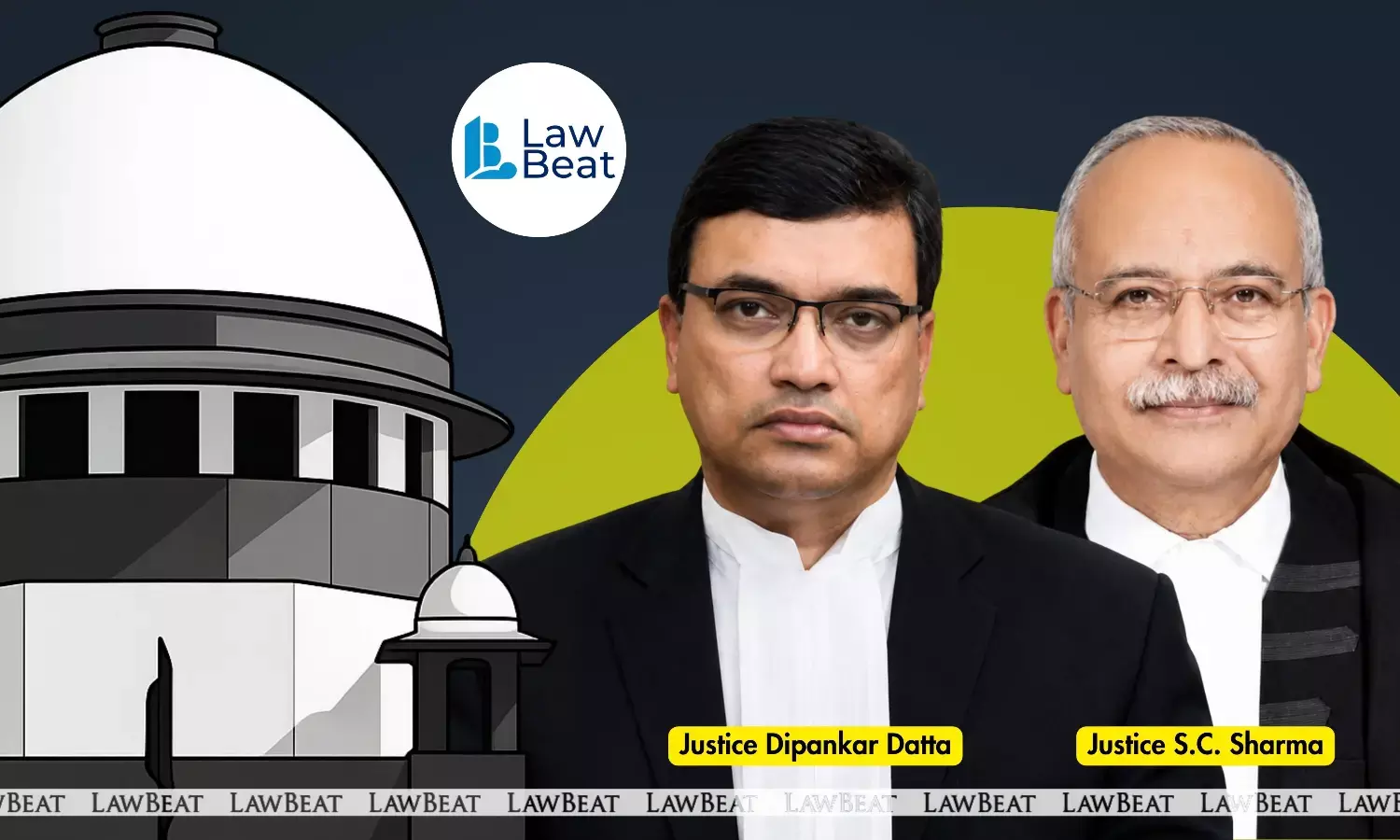
The Supreme Court reserved its verdict on whether challenges to the 2023 law governing the appointment of the Chief Election Commissioner and Election Commissioners should be referred to a larger Bench
The Supreme Court on Thursday reserved its verdict on whether the batch of petitions challenging the 2023 law governing the appointment of the Chief Election Commissioner (CEC) and Election Commissioners (ECs) should be referred to a larger Bench.
The Bench of Justices Dipankar Datta and S.C. Sharma heard extensive submissions on the Union government's plea seeking a reference, before reserving orders on the issue. The Court also permitted parties to file written submissions.
The petitions challenge the constitutionality of the Chief Election Commissioner and Other Election Commissioners (Appointment, Conditions of Service and Term of Office) Act, 2023, which replaced the Chief Justice of India with a Union Cabinet Minister in the selection committee tasked with appointing the CEC and ECs.
Appearing for the Union, Solicitor General Tushar Mehta argued that the Supreme Court's decision in Anoop Baranwal v. Union of India merely created a temporary mechanism to fill a legislative vacuum until Parliament enacted a law.
"There was a vacuum. It was filled by a judicial verdict. The Constitution requires that a law be made. The question is whether legislative wisdom would be bound by a temporary judicial verdict," Mehta submitted.
He contended that Anoop Baranwal was never intended to permanently govern the appointment process and had not been tested by a Constitution Bench. Mehta further argued that reading the judgment as binding Parliament would disturb the constitutional balance between the Legislature, Executive and Judiciary.
The Solicitor General also questioned whether the Prime Minister's role in the selection committee could be viewed with inherent distrust.
"If the Prime Minister's decision is not to be trusted, then why not require him to consult a former judge or some outsider even while selecting his Cabinet?" he submitted, adding that the office of the Prime Minister carries constitutional sanctity and that the Executive and Legislature are directly accountable to the people.
Justice Datta, however, repeatedly questioned the necessity of referring the matter without first hearing it on merits.
"We would like to hear you on the merits. Assume that we are not planning to refer it," Justice Datta remarked after Mehta initially confined his submissions to the question of reference.
Referring to delays in Constitution Bench matters, Justice Datta observed that Anoop Baranwal itself took eight years to be decided and pointed out that a reference arising from a 1997 Calcutta High Court matter affecting thousands of farmers in West Bengal remains pending after nearly 28 years.
The Bench also examined the scope of Article 145(3) of the Constitution and the Supreme Court Rules governing references to Constitution Benches.
Justice Datta questioned whether every Article 32 petition involving a substantial constitutional question necessarily required reference to a Constitution Bench.
"If every Article 32 petition has to be referred, why should it be placed before a two-judge Bench at all?" the Court asked.
Advocate Prashant Bhushan, appearing for one of the petitioners, opposed the Union's plea for reference, arguing that the constitutional issue had already been settled in Anoop Baranwal.
Bhushan submitted that although the 2023 Act was being challenged for the first time, the underlying constitutional principle had already been decided.
"The question is whether a law which allows the government to dominate the appointment of the Election Commission violates democracy and free and fair elections. That has already been settled," he argued.
He contended that by giving the government a two-to-one majority in the selection committee, the 2023 Act effectively achieves what Anoop Baranwal held to be constitutionally impermissible.
The Bench, however, observed that the challenge before it concerned the validity of a specific Parliamentary enactment.
"We are dealing with this specific statute. Whether Parliament conferring the authority on the Prime Minister to nominate the third member of the committee is violative... this question has not been answered," Justice Datta observed.
After hearing all sides on the limited issue of reference, Justice Datta concluded the proceedings by reserving judgment.
"We are reserving judgment on the reference. You may provide your written arguments," the Bench said.
Previous Proceedings
Notably, on May 6, emphasising the importance of the case, the Bench had observed, “This matter is more important than any other matter,” and directed that no other cases would be taken up during the day. The Court had asked the petitioners to commence arguments, permitting the Solicitor General to make his submissions at a later stage. It also directed that arguments on behalf of the petitioners be concluded by the following day.
Senior Advocate Vijay Hansaria, appearing for the petitioners had argued that Section 7 of the 2023 Act grants primacy to the executive in the appointment of the Chief Election Commissioner and other Election Commissioners, contrary to the principles laid down in Anoop Baranwal v. Union of India. He had contended that under the present framework, the selection process is effectively controlled by the Prime Minister and a Union Minister nominated by him, thereby undermining the independence of the Election Commission. “If the Prime Minister suggests a name, there is no real scope for any alternative,” Hansaria had submitted, warning that excessive executive control could erode public confidence in electoral processes.
Case Title: Dr. Jaya Thakur v. Union of India & connected matters
Bench: Justices Dipankar Datta and Satish Chandra Sharma
Hearing Date: July 30, 2026