
Supreme Court Seeks Delhi HC Explanation Over High Pendency Of Execution Petitions
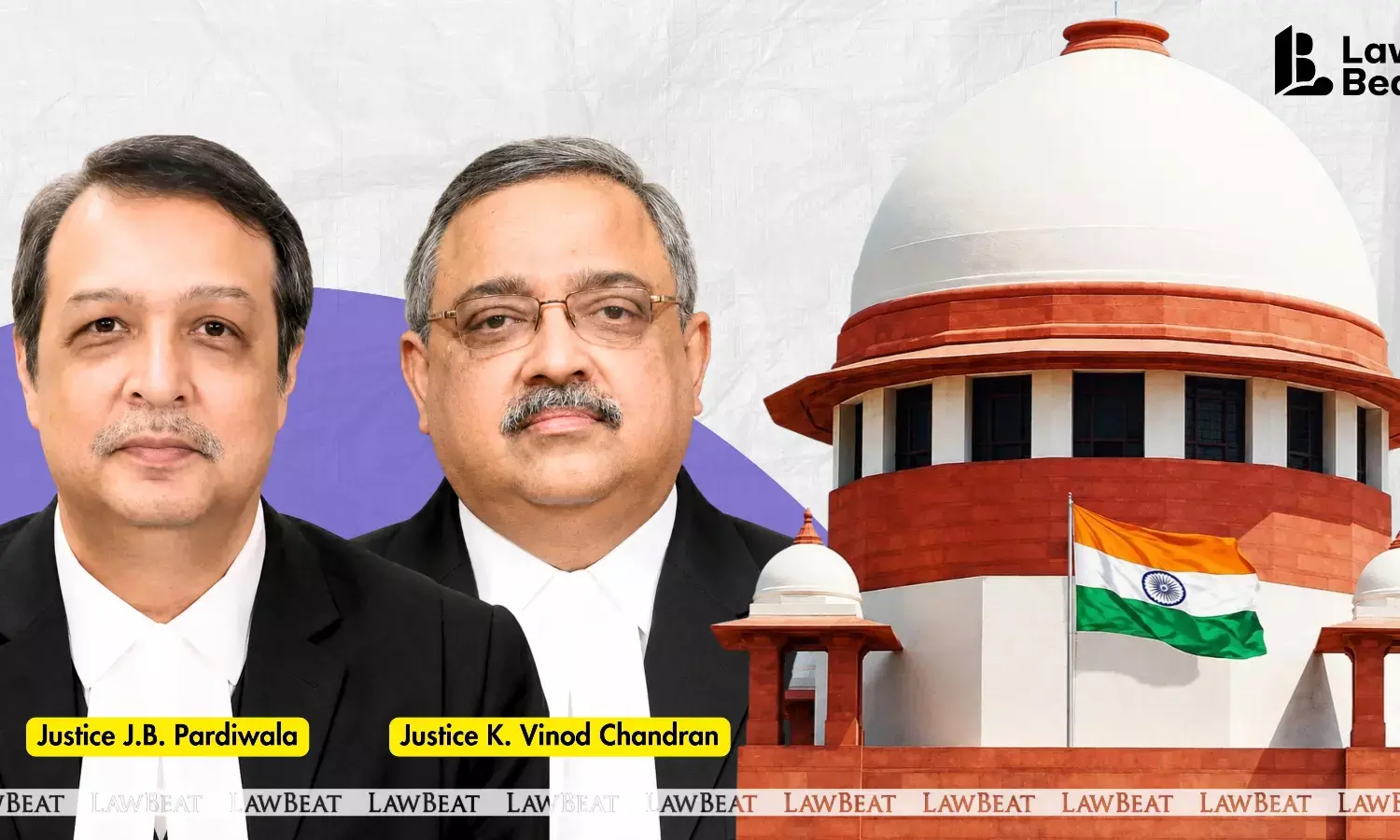
Supreme Court seeks Delhi High Court explanation over high pendency of execution petitions
The Supreme Court on Wednesday sought an explanation from the Delhi High Court on the reasons behind the high pendency of execution petitions, after noting that nearly two lakh such petitions had been disposed of across High Courts in the country over the last six months.
The bench of Justices JB Pardiwala and K Vinod Chandran was hearing a matter concerning the pendency of execution petitions across courts in the country.
Justice Pardiwala said the Court had received figures from all High Courts and noted that the disposal of nearly two lakh execution petitions in six months appeared to be a positive development. “We have received figures from all High Courts. So in last six months almost two lakh execution petitions have been decided. That seems to be good,” Justice Pardiwala said.
Senior Advocate Gopal Shankaranarayanan, assisting the Bench, placed before the Court a chart comparing the latest figures with those contained in an earlier report. He also referred to a trend analysis of the pendency.
While examining the chart, Justice Pardiwala specifically flagged Delhi's figures. “Everything is blue. Delhi is red as usual. Why so much of pendency in Delhi?” the Judge asked.
Shankaranarayanan said he did not have a concrete answer but referred to certain developments concerning the exercise of powers under Section 151 of the Code of Civil Procedure.
He told the Court that the Delhi High Court had initially done “a great job” around five or six years ago, but that the position had changed subsequently. He referred to three judgments of the Delhi High Court and said that a separate Division Bench, while sitting in a different jurisdiction, had subsequently held that those judgments could not have been passed with reference to Section 151 CPC.
“Ever since they put that in abeyance perhaps that's the reason. I don't have concrete answer for that,” he said.
He further pointed out that interim orders, applications raising objections and, at times, the non-availability of counsel were among the factors contributing to delays.
Justice Pardiwala then indicated that the Supreme Court would seek a response from the Delhi High Court. “We will do one thing. In the order which we will pass, we will call for some explanation from High Court of Delhi that what is coming in their way in so far as expeditious disposal of execution petition is concerned,” he said.
The Bench also asked whether the Division Bench judgment referred to by Shankaranarayanan had been placed on record.
Shankaranarayanan clarified that he was referring to what the Division Bench had done and said that the judgment arose from litigation between private parties.
Justice Pardiwala then questioned whether the judgment had been challenged and observed that the exercise of powers under Section 151 appeared not to have been undertaken subsequently.
The Bench also took note of the disposal figures from other High Courts. “The figures from Gujarat are the best,” Justice Pardiwala remarked.
Shankaranarayanan added that Kerala's figures were also notable.
During the hearing, the Bench also sought an update from Additional Solicitor General (ASG) Aishwarya Bhati on the proposed “cell” and the inclusion of rules as a schedule to the legislation under discussion.
Bhati informed the Court that there had been no progress since the previous hearing.
Justice Pardiwala asked her to pursue the matter with the concerned department. “Push the matter. It will be helpful. You guide the concerned department. We will observe something in this regard also that will also help you,” he said.
The Court directed that the matter be listed next Wednesday i.e. October 14, and said that an order would be passed in the meantime.
Background
Reacting to the figures, the Supreme Court had said: “The statistics which we have received are highly disappointing. The figures of pendency of execution petitions across the country are alarming. This clearly shows that our earlier directions have not been implemented in their true spirit.”
The Bench had also taken serious note of the non-compliance by the Karnataka High Court, which failed to furnish any data despite the Court’s previous order. Expressing displeasure, the Bench directed the Registrar General of the Karnataka High Court to submit a written explanation within two weeks, observing that such disregard for the Court’s directions “cannot be ignored.”
“The Registrar General of the High Court of Karnataka owes an explanation as to why he has failed to provide us with the necessary information. This kind of indifference is unacceptable when the matter involves the administration of justice,” the order had recorded.
Reiterating the importance of effective enforcement mechanisms, the Supreme Court had granted a further period of six months to all High Courts for compliance. It had directed them to closely monitor their district courts, evolve standard operating procedures for swift execution, and take corrective administrative measures to ensure that decrees are implemented within reasonable time.
The Bench had observed that delay in the execution stage often renders the earlier litigation futile, as decree-holders are forced to spend years in additional proceedings merely to enforce what has already been judicially determined in their favour. “Such prolonged delays shake public confidence in the justice delivery system,” the Court said, urging High Courts to treat the issue as a matter of institutional priority.
Case Title: Periyammal & Ors. vs. V Rajamani & Anr.
Bench: Justices JB Pardiwala and K. Vinod Chandran
Hearing Date: October 7, 2026