
Supreme Court Seeks Response Of Centre, MoHUA On Plea To Extend RPwD Act Accessibility Mandate To Apartments And Group Housing
The Supreme Court has sought the Centre's response on a public interest litigation seeking mandatory accessibility standards for residential buildings, apartment complexes and group housing developments under the Rights of Persons with Disabilities Act, 2016
The Supreme Court on Thursday sought the responses of the Central government, the Ministry of Housing and Urban Affairs (MoHUA) and the Ministry of Rural Development on a public interest litigation that seeks to make barrier-free design a legal precondition for housing in India, so that no residential building, apartment complex or group housing project receives a building permission, completion certificate or occupation certificate unless it is accessible to persons with disabilities.
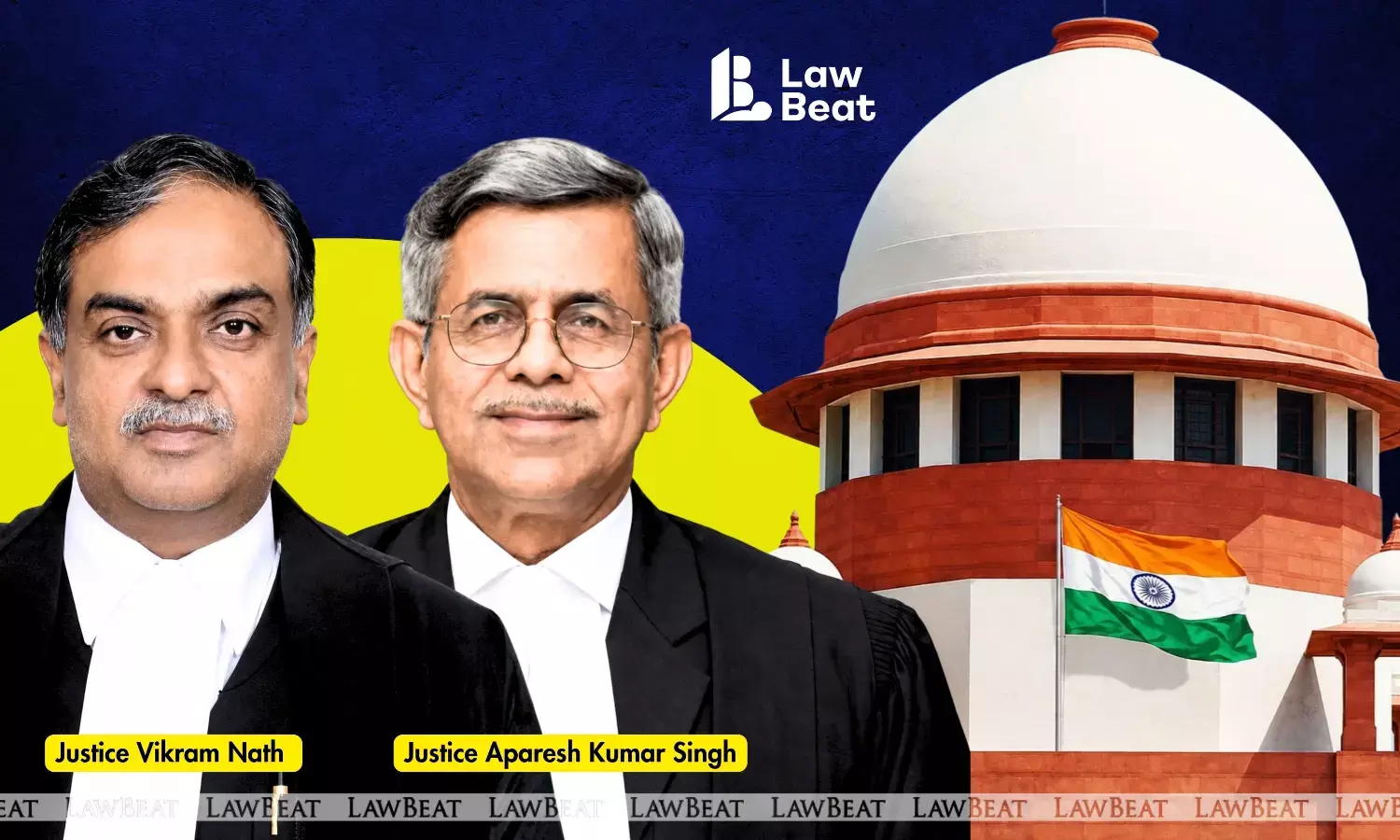
The Bench of Justice Vikram Nath and Justice Aparesh Kumar Singh took up the plea, which has been filed by accessibility activist Prakash Narayan Andhare, an 82-year-old wheelchair user.
According to the petition, it has been instituted "to address the continued failure of the Respondents to ensure barrier-free accessibility in residential buildings, apartment complexes, group housing developments and their common-use facilities, notwithstanding the statutory mandate contained in the Rights of Persons with Disabilities Act, 2016".
The petitioner's central submission is that the 2016 Act does not leave accessibility to the discretion of builders or planning authorities. The petition states at the outset that the statute "recognises accessibility as a mandatory statutory obligation and not merely an aspirational objective."
It rests this on two provisions. Section 40, it notes, "mandates the formulation of rules laying down the accessibility standards for the physical environment in public facilities", while Section 44 "expressly prohibits the grant of building permissions, completion certificates and occupation certificates to any establishment unless the building plan for any structure built by it complies with such standards."
The link between these provisions and private homes, the petitioner argues, is the definition clause. "Significantly, Section 2(x) of the Act expressly includes 'housing' within the definition of 'public facilities and services', thereby demonstrating Parliament's intent that accessibility extends to residential housing," the plea reads.
On that reading, the petition contends that accessibility has to be built in from the drawing board. "Read together, the statutory scheme contemplates that accessibility must be incorporated into residential buildings at the stage of planning, design and construction itself, and not treated as an afterthought once construction is complete," it states.
The petition says the statutory scheme has not translated into practice. "Despite the aforesaid statutory framework, residential buildings across the country continue to be planned, sanctioned, constructed and occupied without any accessibility requirements," it states, adding that the petitioner "has found that inaccessible design has become the norm rather than the exception, resulting in persons with disabilities being unable to independently access or use their own homes."
The plea stresses that the problem is not confined to lobbies, lifts and entrances. "The consequences extend beyond the accessibility of common areas and directly affect the habitability of individual dwelling units. Narrow doorways, inaccessible bathrooms and toilets, and inadequate circulation spaces often prevent wheelchair users and other persons with disabilities from independently entering, moving within and using their own homes," it reads.
A substantial part of the petition is a survey of how States have dealt with residential accessibility in their building and development control regulations. The petitioner describes the position as "fragmented and inconsistent across different States."
According to the plea, Kerala "has expressly extended accessibility requirements to apartment buildings and residential flats", and Gujarat "has adopted a comparatively broader accessibility framework for residential buildings". Uttar Pradesh, Delhi and Rajasthan, it says, "extend accessibility requirements primarily to multi-unit residential developments or group housing projects", while Uttarakhand, Punjab, Tamil Nadu, Odisha, Arunachal Pradesh and Tripura "restrict such requirements to group housing constructed on plots exceeding 2,000 square metres."
The petition goes on to state that Maharashtra, Andhra Pradesh, Nagaland and Goa "expressly exclude private residential buildings from the accessibility framework", and that Himachal Pradesh, Telangana, Sikkim and West Bengal "lack any meaningful residential accessibility mandate altogether."
The result, the petitioner argues, is that a disabled person's right turns on geography. "Consequently, the extent to which persons with disabilities are able to access barrier-free housing depends not upon a uniform statutory mandate under the Rights of Persons with Disabilities Act, 2016, but upon the particular development control regulations applicable in the State concerned," the plea reads.
The petition also ties the issue to government housing. It points out that Section 37 of the Act "mandates reservation in the allotment of housing for persons with benchmark disabilities under relevant schemes and development programmes", and that the Pradhan Mantri Awas Yojana–Urban (PMAY-U) 2.0 Operational Guidelines "require States and Union Territories to make suitable provisions for barrier-free access in housing projects."
Without binding standards for construction, however, the petitioner contends that the reservation means little. "However, in the absence of mandatory accessibility requirements governing residential construction, the statutory reservation in housing is rendered illusory where the allotted dwelling units themselves remain inaccessible," the petition states.
Reliefs sought
The petitioner has first sought a writ of mandamus, or any other appropriate writ, order or direction, "declaring and/or clarifying that residential buildings, apartment complexes and group housing developments are governed by the accessibility mandate contained in Sections 2(x), 40 and 44 of the Rights of Persons with Disabilities Act, 2016".
The petition next asks the Court to direct the respondents "to ensure that the accessibility requirements contemplated under the Rights of Persons with Disabilities Act, 2016 are incorporated into all building bye-laws, development control regulations, planning regulations and building approval mechanisms governing residential buildings, apartment complexes and group housing developments, including the grant of building permissions, completion certificates and occupation certificates, within a time-bound period to be fixed by this Hon'ble Court".
As a consequential relief, the petitioner has prayed for a direction "that no building permission, completion certificate or occupation certificate be granted in respect of residential buildings and housing developments unless the accessibility requirements applicable under the Rights of Persons with Disabilities Act, 2016 are complied with". The petition closes with the customary prayer for such other orders as the Court may deem fit in the interests of justice.
Case Title: Prakash Narayan Andhare v Union of India & Ors.
Bench: Justice Vikram Nath and Justice Aparesh Kumar Singh
Hearing Date: November 5, 2026