
Supreme Court Stays Demolition Of Mosques, Madrasas In Rajasthan's Indo-Pak Border Districts For 2 Weeks
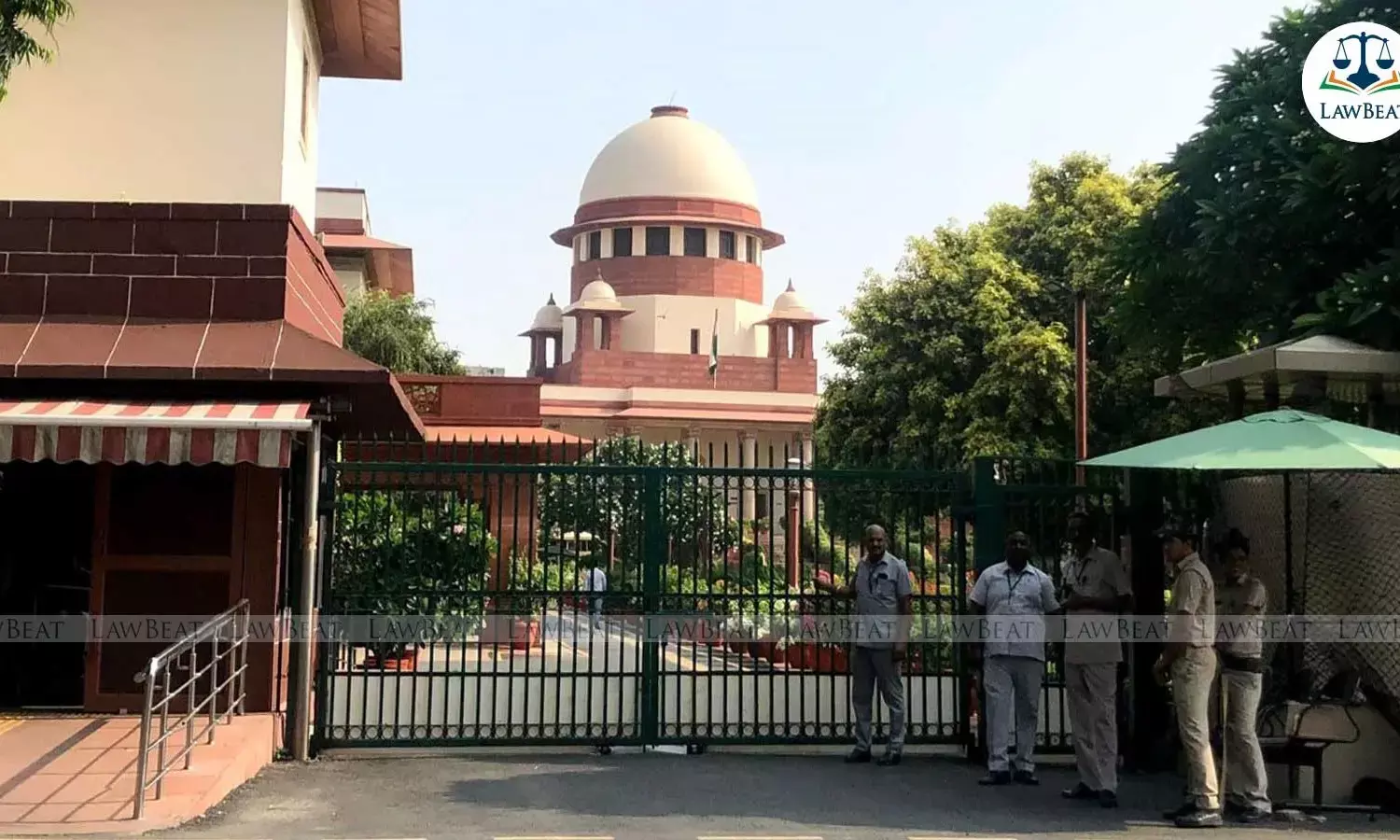
The Supreme Court on July 17 granted interim protection from coercive action for 2 weeks to certain petitioners facing demolition proceedings concerning mosques, madrasas and dargahs situated near the Indo-Pak border in Rajasthan, while permitting them to withdraw their writ petition to pursue appropriate remedies before the Rajasthan High Court.
A Bench of Justices Pamidighantam Sri Narasimha and Alok Aradhe was hearing a writ petition filed by Taj Mohd. and others challenging the Rajasthan High Court's recent judgment refusing to interfere with eviction and demolition proceedings initiated against religious structures located within about 50 kilometres of the Indo-Pak border.
Appearing for the petitioners, Senior Advocate Kapil Sibal sought permission to withdraw the writ petition so that the matter could be pursued before the High Court by filing a writ petition or writ appeal. Accepting the request, the Supreme Court dismissed the petition as withdrawn.
However, the Bench directed that no coercive action shall be taken against the petitioners for two weeks until the writ petition/writ appeal is taken up by the High Court.
The Court clarified that it had not examined the merits of the dispute and expressed no opinion on the issues involved, leaving it open to the High Court to consider the matter independently.
Background: Rajasthan High Court Judgment
The appeal before the Supreme Court arose from a July 13 judgment of the Rajasthan High Court, which decided a batch of petitions filed by committees and managers of mosques, madrasas and dargahs in Jaisalmer, Barmer and Bikaner districts challenging eviction, vacation and demolition notices issued by the authorities.
The notices concerned religious structures situated within approximately 50 kilometres of the Indo-Pak border.
According to the State, the structures had been raised on government land without lawful permission and were located in a strategically sensitive border belt. Relying on official records, complaints and intelligence inputs, the authorities claimed that the existence and operation of some such structures could pose a threat to national security, prompting notices for eviction, resumption of possession and consequential action under the Rajasthan Land Revenue Act, 1956, the Rajasthan Colonization Act, 1954 and other statutory provisions.
Before the High Court, the petitioners argued that many of the religious institutions had existed for decades and that the authorities had ignored the procedural safeguards laid down by the Supreme Court in its demolition jurisprudence.
They contended that adequate show-cause notices had not been served, meaningful hearings were denied and statutory provisions permitting regularisation had not been considered. The petitioners further claimed that nearly 180 properties had received similar notices.
What did the High Court say?
Dismissing the batch of writ petitions, Justice Sameer Jain held that the High Court's extraordinary jurisdiction under Article 226 cannot ordinarily be invoked to bypass statutory remedies, particularly where disputed questions relating to title, authorization of constructions and land records arise.
The Court observed that the petitioners must first respond to the statutory notices and avail the remedies provided under the governing enactments before invoking writ jurisdiction.
In a remarkably poetic discussion on the relationship between constitutional governance, national security and border administration, the Court observed:
"The line between safety and vulnerability is often a thin, trembling cord. When our borders become heavy with the breath of unease, the law cannot merely be a cold document, it must become the beating heart of our protection. Sovereignty is not an abstraction; it is the collective, aching desire to keep our home whole, defended not by silence, but by a vigilant, sleepless love for the soil we walk upon."
The Court further emphasised that while religious faith deserves respect, it cannot override the State's obligation to safeguard national security, observing:
"We must understand that even stones placed in the name of faith cannot hold sacred ground. Our land is a living testament to a shared promise, a Republic's covenant that demands, prioritizing the safety of the many over the quiet demands of the few. True security is not a cage for the spirit; it is the soft, sturdy wall that allows freedom to sleep soundly at night."
Continuing the same theme, the Court said:
"True security is not a cage for the spirit; it is the soft, sturdy wall that allows freedom to sleep soundly at night. It is the embrace that keeps our liberty from being torn away by the winds of chaos. When the voice of our nation calls out, urgent, and true we must answer with a unified strength, understanding that the deepest devotion we can offer to our state, is commitment, and the sense of security, that our land shall always remain sans any bloodshed."
In one of the most unusual features of the judgment, the Court also incorporated a 12-line Hindi poem into the decision to underscore that national security must remain paramount in border areas:
"जब सीमा पर सन्नाटा भी ख़तरे की भाषा बोलता है,
तब राष्ट्रधर्म हर विधि से ऊपर मोलता है।
न मंदिर, न मस्जिद, न कोई दीवार बड़ी होती है,
जब मातृभूमि की रक्षा की बारी खड़ी होती है।
जो भूमि है राष्ट्र की, वह पहले राष्ट्र की ही रहेगी,
हर ईंट उसी से पूछेगी, किसकी आज्ञा सहेगी।
आस्था का सम्मान रहे, पर नियमों का भी मान रहे,
जहाँ सुरक्षा का प्रश्न उठे, वहाँ राष्ट्र प्रधान रहे।
क्योंकि सीमाओं की रक्षा में ही स्वतंत्रता का विस्तार है,
और राष्ट्र की सुरक्षा ही हर नागरिक का संस्कार है।
निज स्वार्थ, न निज पहचान, न कोई भेद-विभाजन हो,
जब देश पुकारे, तब केवल राष्ट्र ही आराधन हो।"
The High Court had rejected the contention that the State's action was motivated by communal considerations, recording that the notices had been issued to all unauthorised structures situated within the sensitive border belt irrespective of religion.
It further took judicial notice of an October 2021 notification issued by the Ministry of Home Affairs extending the Border Security Force's operational jurisdiction up to 50 kilometres from the international border in Rajasthan, Punjab and West Bengal to strengthen measures against infiltration, trans-border crimes and smuggling.
While dismissing the writ petitions as premature challenges to show-cause notices, the High Court directed the constitution of district-level committees comprising the respective District Collector, Superintendent of Police and a representative of the Border Security Force (BSF).
The committees were tasked with examining the documents, land records, permissions, and security implications for each individual property before any final administrative action is taken.
Case title ~ TAJ MOHD. & ORS. v THE STATE OF RAJASTHAN & ORS.