
‘Traditional Knowledge Can Strengthen Climate Resilience’: President Murmu At NGT Conference
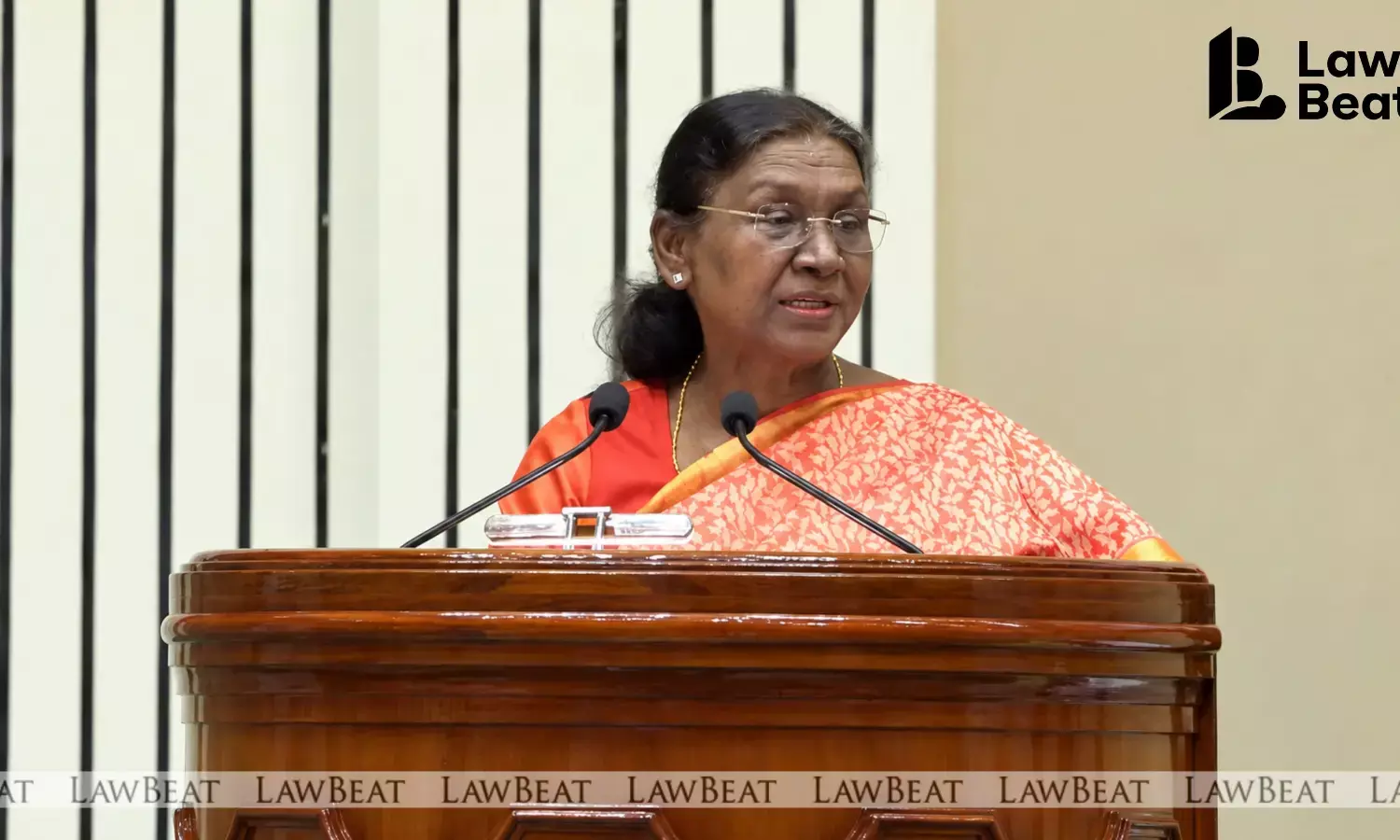
President Droupadi Murmu addressed the valedictory session of the NGT’s International Conference on “The Future of Environment and Climate Dynamics” in New Delhi.
President Droupadi Murmu on Sunday called for stronger people-centric and community-based approaches to climate adaptation, emphasising the role of traditional knowledge and local communities in building climate resilience.
Addressing the valedictory session of the National Green Tribunal’s (NGT) international conference on “The Future of Environment and Climate Dynamics” in New Delhi, President Murmu said the increasing intensity and frequency of climate impacts required coordinated action at the local, regional and global levels.
She congratulated the NGT Chairperson and the Tribunal’s team for bringing together experts, judges, legal professionals and other stakeholders from different countries to deliberate on climate change and environmental challenges.
The President highlighted the NGT’s role in environmental matters and said the Tribunal had developed an effective compliance architecture in cases concerning rivers, air quality and waste management. She also noted that the NGT had disposed of a large number of disputes expeditiously and said the conference continued the Tribunal’s legacy of promoting international dialogue on environmental issues.
Climate change affecting biodiversity, water and livelihoods
President Murmu said recent natural disasters had demonstrated the urgent need for effective climate action.
“Climate Impacts are already appearing with greater intensity and increased frequency,” she said, adding that climate change was having serious consequences for food security, health and livelihoods.
She said climate change was closely linked with biodiversity loss, water stress and land degradation, requiring a coordinated framework of policies and action.
According to the President, climate action should not remain limited to governments and legal experts but should actively involve communities most affected by climate change.
She specifically highlighted the need to remain sensitive to the requirements of rural and tribal communities, small farmers, women and other vulnerable communities, who are often disproportionately affected by natural disasters.
President Murmu also cited farm ponds as an example of locally relevant climate adaptation. She said such ponds could help communities in water-stressed areas by retaining rainwater, providing water for irrigation and contributing to groundwater recharge.
President highlights traditional knowledge in climate adaption
The President stressed the importance of traditional knowledge systems developed by communities over generations. She said traditional communities had preserved knowledge relating to resilience and climate adaptation as part of their way of life, alongside a deep respect for nature.
Recalling her childhood in a remote rural region, President Murmu shared an example involving her father, who used to collect dry wood from a nearby forest for cooking. She said he would bow his head respectfully and seek forgiveness before cutting the wood, describing the practice as an expression of the relationship between humans and nature.
The President also referred to a Vedic verse concerning the relationship between human beings and the Earth, describing it as an example of the principles of sustainable extraction and ecological restoration. “Traditional Knowledge Systems, local community practices and their lived experiences have an important role in enhancing the capacity for Climate Adaptation.”
She called for efforts to strengthen climate resilience through people-centric and community-based adaptation based on traditional knowledge.
Sustainable afforestation should restore ecosystems
President Murmu also highlighted the role of sustainable afforestation in strengthening climate resilience. She said the objective of sustainable afforestation should extend beyond merely planting trees and should instead focus on restoring healthy and self-sustaining ecosystems. “The real objective of Sustainable Afforestation is not merely ‘planting trees’, but restoring a healthy and self-sustaining ecosystem.”
She further said development itself could be viewed as a form of adaptation and described this as an important strategic principle.
According to the President, development aimed at strengthening climate resilience required robust health systems and climate-resilient infrastructure. She linked these objectives with improving agricultural productivity and ensuring access to affordable and reliable energy.