
Voter ID, Ration Card Not Independent Proof Of Indian Citizenship: Gauhati High Court
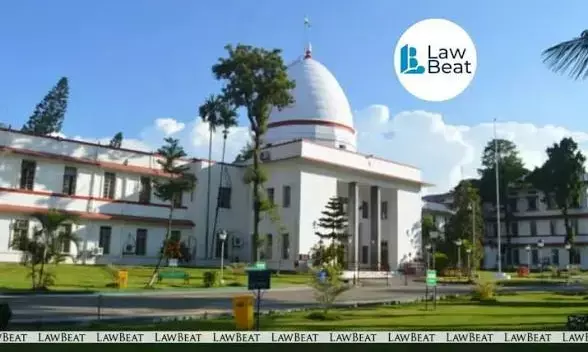
Gauhati High Court rules that Voter ID and ration cards alone are insufficient to establish Indian citizenship without documentary linkage to parents or forefathers.
The Gauhati High Court recently ruled that vital identity documents like Voter Photo Identity Card (EPIC) and a ration card cannot be treated as independent proof of Indian citizenship.
A bench of Justice Sanjay Kumar Medhi and Justice Pranjal Das added that such documents and certificates issued by Gaon Panchayat Secretaries, do not constitute sufficient linkage evidence to establish citizenship unless a clear documentary link is established with the projected parents or forefathers.
The Court thus upheld an order an order of the Foreigners Tribunal declaring a woman as an “illegal migrant” who entered Assam from the stream on or after March 25, 1971.
Brief background of the case
The case originated in 2007 when a preliminary inquiry was conducted by the Superintendent of Police (Border), Sonitpur, who subsequently preferred a reference to the Tribunal regarding the petitioner's citizenship status.
Nearly a decade later, in 2016, the reference was formally registered and notice was issued to the petitioner, Smti. Hiramati Baishya.
In her written statement, she asserted that she was born and brought up at village Sirajuli Pathar within the Sonitpur district of Assam. She also claimed that her parents and forefathers were original inhabitants and citizens of the country.
Before the Tribunal, the petitioner adduced oral evidence of only herself as DW-1 and presented 4crucial documents to discharge her burden of proof:
• A 1964 land Sale Deed in the name of her projected father (late Manmohan Sarkar);
• A certificate issued by the Secretary of the Sirajuli Gaon Panchayat;
• A 2013 Electoral Photo Identity Card (EPIC); and
• A ration card.
She, however, failed to adduce in evidence any voters list of the relevant years pertaining to her father or herself.
Consequently, the Tribunal discarded these exhibits after finding an absence of authentic linkage evidence connecting the petitioner to the pre-1971 resident.
Challenging the Tribunal’s adverse order, the petitioner moved the High Court where her counsel claimed that her voters identity card and the ration card had been erroneously overlooked by the authority.
High Court’s verdict
Hearing her petition, the High Court closely examined the evidentiary value of her Voter ID and ration card. Dealing with the Voter ID card, which was issued in 2013 and indicated her age as 70 years, the Court noted it merely listed her husband's name instead of her projected father's name.
The Court added that in any case, the same would not be sufficient link documentary evidence in support of her claim for citizenship. Relying on its 2018 ruling in Md. Babul Islam v. State of Assam, the Bench pointed out:
"In so far Exhibit-7 Elector Photo Identity Card is concerned, besides not being proved, it is a post 25.03.1971 document. Besides, merely producing such an identity card in the absence of supporting evidence would not be proof of citizenship."
The High Court further highlighted an unexplained gap in the petitioner’s electoral record, which was initially taken note of by the Tribunal. Though she claimed her date of birth was August 2, 1952, her name appeared on the voter's list for the very first time only in 2015.
The Bench remarked that her name ought to have been inserted much earlier, and the lack of explanation regarding this nearly 70-year delay heavily weighed against her.
Regarding the reliance on the ration card, the Court said that administrative records are insufficient to determine nationality, stating:
“…the voter's ID card and the ration card on their own would also not constitute sufficient link evidence in support of her citizenship in view of the laws laid down in this regard as noticed above”.
Though the petitioner had also attempted to refer to a 1964 Sale Deed and a Gaon Panchayat residency certificate, the Bench observed that oral testimony and pleadings cannot substitute for rigorous documentary linkage proof.
The Bench observed:
“What the petitioner as proceedee was required to do before the Tribunal to get a verdict in her favour was to show an evidentiary link with the said Manmohan Sarkar as her father on the basis of documentary evidence...the mere pleading or even oral deposition would not suffice to build that link evidence and in terms of the settled governing law, documentary evidence is essential to show that she was the daughter of the said Manmohan Sarkar”.
Furthermore, the Bench also discarded the Gaon Panchayat certificate because the issuing Secretary was never called to testify to prove its contents or authenticity.
The High Court thus confirmed the order of the Tribunal declaring her to be an “illegal migrant” and dismissed the writ petition, vacating all previous interim protection orders.
However, the petitioner was granted liberty to apply before the competent statutory authority to seek the benefits of the Citizenship (Amendment) Act, 2019 (CAA).
Case title - Hiramati Baishya v. The Union of India and 6 Ors.